The best traffic-free bike rides around Spoleto
4.7
(300)
7,112
riders
27
rides
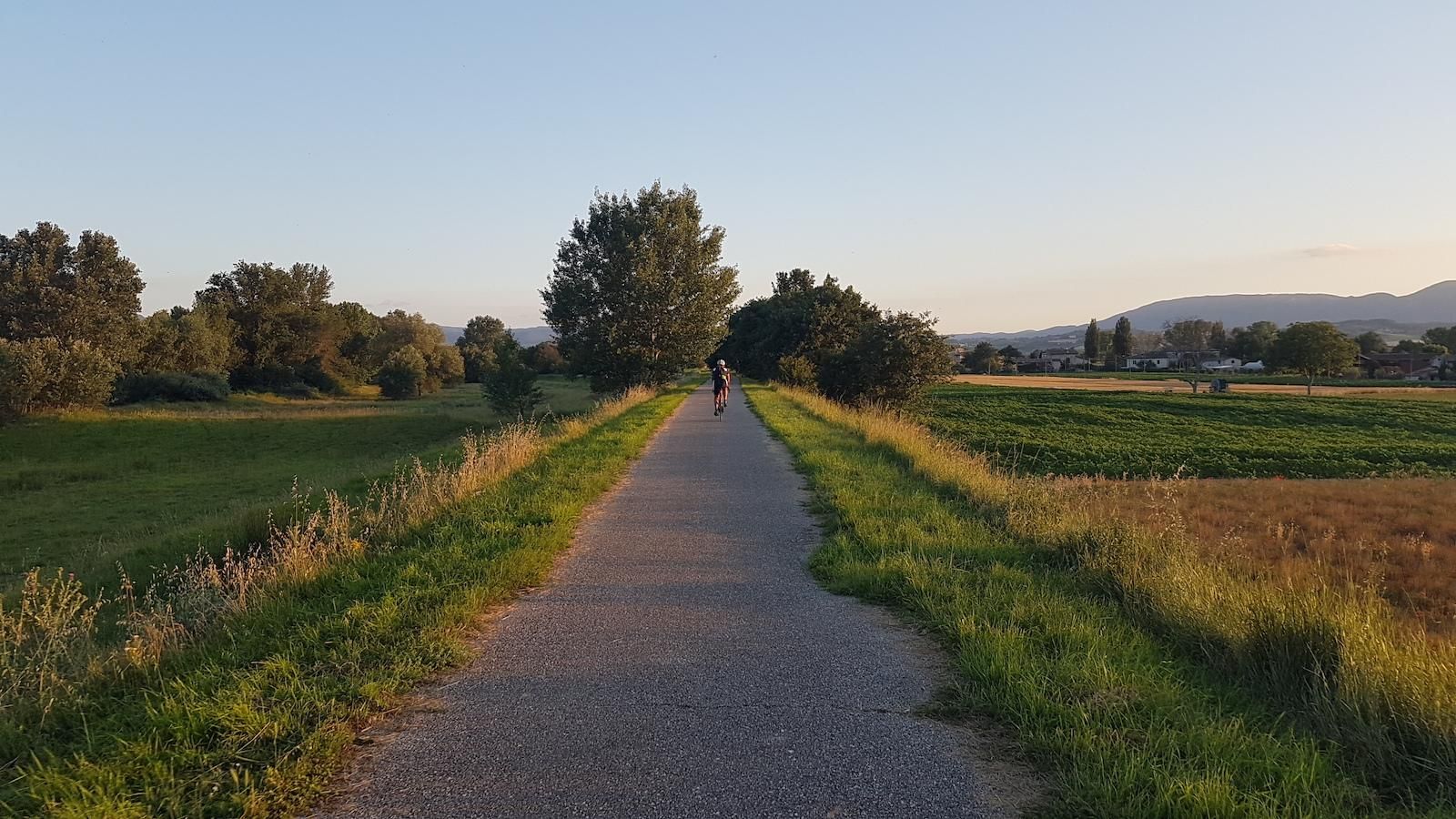
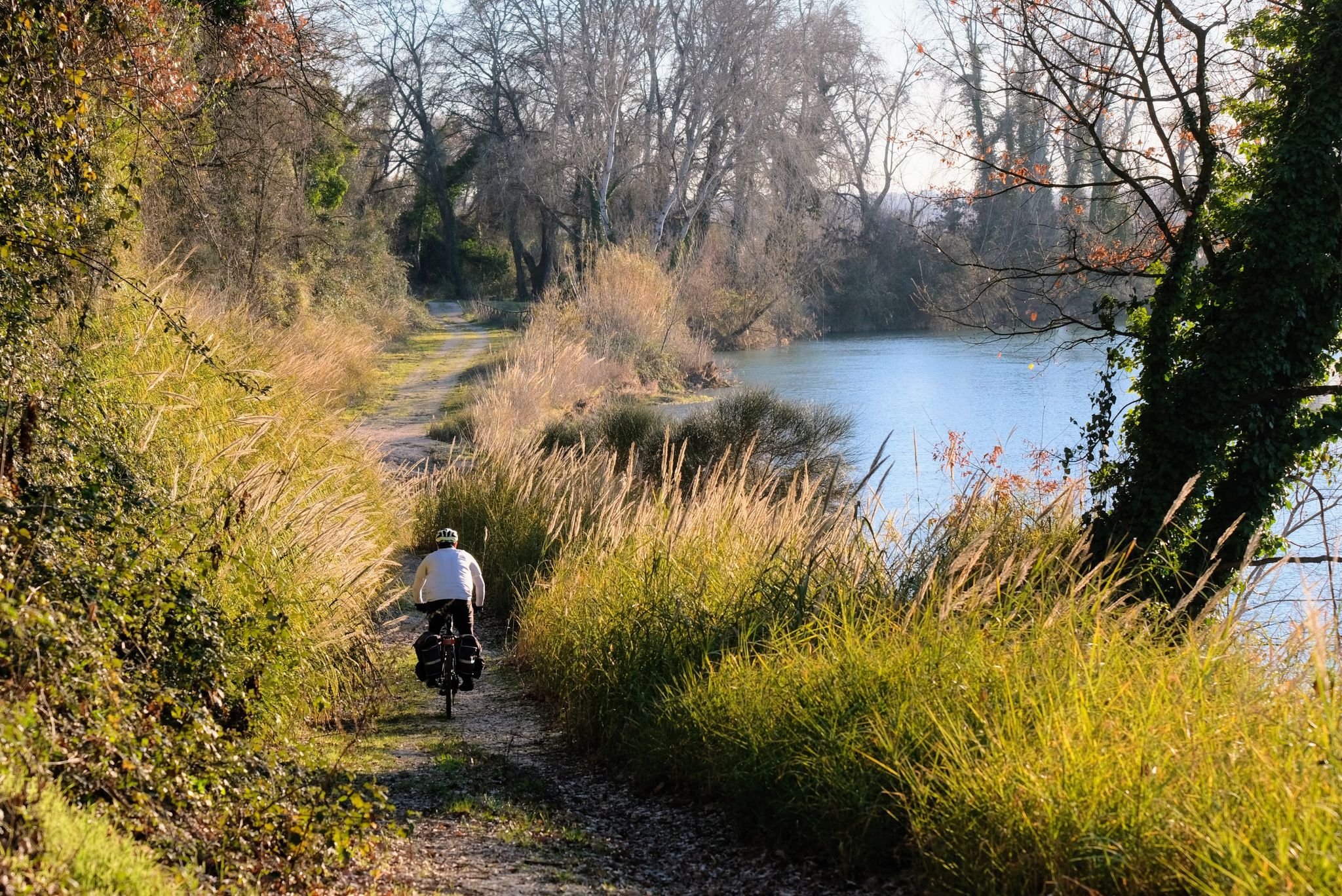
No traffic road cycling routes around Spoleto traverse a landscape characterized by the fertile Valle Umbra, offering flat terrain through vineyards and olive groves, and the more challenging climbs of the Martani Mountains. The region features tranquil river valleys, such as the Maroggia, providing mostly traffic-free cycling experiences. This area of Umbria combines diverse topography with historical sites, making it suitable for various road cycling preferences.
Best no traffic road cycling routes around Spoleto
- The most popular no traffic road…
Last updated: May 19, 2026
21
riders
31.4km
02:03
880m
880m
Moderate road ride. Good fitness required. Mostly well-paved surfaces and easy to ride.
34
riders
Moderate road ride. Good fitness required. Mostly well-paved surfaces and easy to ride.

Sign up for free
7
riders
34.2km
01:56
560m
560m
Moderate road ride. Good fitness required. Some segments of this route may be unpaved and difficult to ride.
13
riders
50.6km
02:44
810m
810m
Moderate road ride. Good fitness required. Mostly well-paved surfaces and easy to ride.
5.0
(1)
8
riders
23.7km
01:34
730m
730m
Moderate road ride. Good fitness required. Mostly well-paved surfaces and easy to ride.
Get access to more routes and recommendations from other explorers.
Sign up for free
Already have an account?
Our route recommendations are based on thousands of hikes, rides, and runs completed by other people on komoot.
Start today with a free account
Your next adventure awaits.
Login or Signup




Tips from the Community

The Roman Theater of Spoleto is one of the most important Roman monuments in the city and represents a significant testimony to the cultural life of ancient Spoletium. It was built in the 1st century BC, in an area near the forum, according to the architectural models of classical Roman theater. The cavea, built against the natural slope of Sant'Elia Hill, was divided into sectors and could accommodate several thousand spectators. Opposite were the orchestra and the monumental stage, originally decorated with columns, niches, and statues, which served as a backdrop for theatrical and musical performances. The building was constructed of masonry and clad in local stone, with technical solutions that ensured good acoustics. After the end of the Roman era, the theater was gradually abandoned and was partially incorporated into medieval buildings. The area was restored in the 20th century, restoring the structure's visibility and highlighting its archaeological importance. Today, the Roman Theatre is part of the National Archaeological Museum of Spoleto and continues to serve a cultural purpose, hosting events and performances that renew the city's connection to its thousand-year-old theatrical tradition.
0
0

Trevi, picturesque and simply beautiful location!
0
0

The village of San Giacomo is suggestive, both simply passing by on the road and stopping to see the Church or the Castle. Worth it.
0
0

Chiesa di San Filippo Neri, Spoleto The beautiful Church of San Filippo Neri stands near Piazza Mentana and was built starting in 1640 by two wealthy citizens of Spoleto who lived in Rome: Ugo Alberici and Loreto Vittori. The design of the building was entrusted to Loreto Scelli and was finally completed in 1671 with the construction of the dome. It was not consecrated until 1724. The Church of San Filippo Neri in Spoleto has the forms and architectural features of 17th-century Roman churches, with an elegant travertine façade decorated with pilasters and a beautiful tympanum. The interior is divided into three naves separated by pillars and a large transept surmounted by the dome. Inside the sacristy is a marble bust of Saint Philip Neri, a work by the sculptor Alessandro Algardi (1650). The side chapels contain altars from the 17th and 18th centuries, while the walls are decorated with 18th-century paintings by artists such as Gaetano Lapis, Sebastiano Conca, Pietro Labruzzi, and the Spoleto painter Francesco Refini. Text T Source: Exploring Umbria srl, https://www.exploring-umbria.com/scopri-spoleto/cosa-vedere-a-spoleto/chiesa-di-san-filippo-neri-a-spoleto/
15
0
Chiesa di San Filippo Neri, Spoleto The beautiful Church of San Filippo Neri stands near Piazza Mentana and was built starting in 1640 by two wealthy citizens of Spoleto who lived in Rome: Ugo Alberici and Loreto Vittori. The design of the building was entrusted to Loreto Scelli and was finally completed in 1671 with the construction of the dome. It was not consecrated until 1724. The Church of San Filippo Neri in Spoleto has the forms and architectural features of 17th-century Roman churches, with an elegant travertine façade decorated with pilasters and a beautiful tympanum. The interior is divided into three naves separated by pillars and a large transept surmounted by the dome. Inside the sacristy is a marble bust of Saint Philip Neri, a work by the sculptor Alessandro Algardi (1650). The side chapels contain altars from the 17th and 18th centuries, while the walls are decorated with 18th-century paintings by artists such as Gaetano Lapis, Sebastiano Conca, Pietro Labruzzi, and the Spoleto painter Francesco Refini. Text T Source: Exploring Umbria srl, https://www.exploring-umbria.com/scopri-spoleto/cosa-vedere-a-spoleto/chiesa-di-san-filippo-neri-a-spoleto/
15
0
The Park - Fonti del Clitunno, Ristorante Pizzeria, Campello Sul Clitunno A body of water with a circumference of just over 400 meters and an area of almost 10,000 square meters, this small lake is home to numerous plant species that contribute to the fame of the Fonti del Clitunno. Moss, seagrass, water horsetail, sedge, curled brosca, giant shrimp, marsh forget-me-not, and water nasturtium, also known as watercress, are just some of the plants found in the pond. Around the banks are the trees that characterize the surroundings, most notably the cypress poplar, covered in dense foliage in summer. Then there's the weeping willow, whose spread dates back to the fashion that spread this plant in Paris in the 1840s, which is said to have shaded Napoleon's tomb on Saint Helena. Text / Source: Fonti del Clitunno - Ristorante Pizzeria, Campello Sul Clitunno https://www.fontidelclitunno.it/
14
0
Fonti del Clitunno - Ristorante Pizzeria, Campello Sul Clitunno Dream apartments, treat yourself to the relaxation you deserve. A gastronomic experience in the Parco della Poesia and a garden with tables for pampering yourself. From here, O Clitumnus, the white herds and the bull, the greatest holocaust, have repeatedly dipped into your sacred waters, bringing Roman triumphs to the temples of the gods. History Have you ever seen the Fonti del Clitunno? If not, and I don't think so, otherwise you would have told me about it, go and see. "I saw it recently and regret having done it too late." Thus wrote Pliny the Younger to a friend, and his advice still holds true today. The Fonti del Clitunno as we see them today are different from those of the first century, during Pliny's time. A violent earthquake in 444 AD changed the face of the area and was likely the cause of the narrowing of the Clitunno River, which had previously been navigable. The layout of the Clitunno springs as we see them today is thanks to the patient work of Paolo Campello della Spina, who, between 1860 and 1865, removed the earth to make room for the pond and encouraged the growth of vegetation that still characterizes the Clitunno springs today. A few years later, Giosue Carducci wrote the barbaric ode "Alle Fonti del Clitunno." Text/Source: Fonti del Clitunno - Ristorante Pizzeria, Campello Sul Clitunno https://www.fontidelclitunno.it/
14
0

17th-century church in the old town of Spoleto
1
0
Frequently Asked Questions
How many traffic-free road cycling routes are available around Spoleto?
There are over 20 dedicated traffic-free road cycling routes around Spoleto, offering a variety of experiences from easy rides through the Valle Umbra to more challenging ascents in the surrounding hills. Most routes are of moderate difficulty, with a few easier and difficult options available.
What kind of terrain can I expect on traffic-free road cycling routes near Spoleto?
You'll find a diverse range of terrain. The Valle Umbra offers mostly flat stretches, perfect for relaxed cycling through vineyards and olive groves. For more challenging rides, routes venture into the Martani Mountains with significant climbs. Many routes also follow tranquil river valleys like the Maroggia, providing pleasant, quiet experiences.
Are there any easy, family-friendly traffic-free road cycling routes in the Spoleto area?
Yes, there are easy routes suitable for families. The Valle Umbra provides mostly flat terrain, ideal for a relaxed pace. For instance, the View of Trevi – Trevi Village loop from Spoleto is an easy option that takes you through picturesque landscapes without significant climbs.
What are some scenic viewpoints or natural features along the traffic-free cycling paths?
Many routes offer stunning views of the Umbrian countryside. You can enjoy panoramic vistas of rolling hills, olive groves, and charming hilltop villages. The Clitunno Springs, celebrated since ancient times, are a serene natural attraction accessible by bike near Campello sul Clitunno, offering a peaceful stop. You might also encounter views of the monumental Ponte delle Torri.
Are there any circular traffic-free road cycling routes around Spoleto?
Yes, many of the routes are designed as loops, allowing you to start and end in the same location. An example is the Roman Theatre – Spoleto loop from Spoleto, which offers a moderate challenge while exploring the area around the historic city.
What do other cyclists say about the traffic-free road cycling routes in Spoleto?
The komoot community highly rates the cycling experience around Spoleto, with an average score of 4.6 stars. Reviewers often praise the quiet roads, the beautiful Umbrian scenery, and the opportunity to combine physical activity with cultural exploration of medieval villages and historical sites.
Can I find cafes or places to stop for refreshments along the traffic-free routes?
Yes, many routes pass through or near charming towns and villages where you can find cafes, restaurants, and local shops. The Valle Umbra, for example, is dotted with places like Montefalco and Trevi, known for their wines and olive oil, offering excellent opportunities for a break and local delicacies.
What historical sites or landmarks can I see while cycling near Spoleto?
Spoleto itself is rich in history, with the Duomo, the imposing Rocca Albornoziana fortress, and the ancient Roman Theater. Routes often pass through or near other historic towns like Bevagna, known for its Roman origins and medieval character. The Stone Bridge Crossing – View of Trevi loop from Spoleto offers a chance to see historical elements.
Are there any challenging traffic-free road cycling routes for experienced riders?
Absolutely. For experienced riders seeking a challenge, the Monti Martani offer difficult road cycling loops with significant climbs and rewarding views. The Fonti del Clitunno – Scenic Road to Pettino loop from Spoleto is an example of a difficult route with substantial elevation gain.
Is there public transport access to the starting points of these routes?
Spoleto is well-connected by regional train services, making it accessible for cyclists. Many routes start directly from Spoleto or nearby towns, which can often be reached by public transport. The Assisi-Spoleto Bike Path, for instance, links major towns, facilitating access via train or bus.
What is the best season for traffic-free road cycling in Spoleto?
Spring and autumn generally offer the most pleasant conditions for cycling in Umbria, with mild temperatures and beautiful scenery. Summers can be hot, especially in the open plains, while winters can be cooler and wetter, though still offering clear days.
Are there any routes that connect Spoleto to other notable towns?
Yes, the Assisi-Spoleto Bike Path is a well-signed route that combines dedicated bike paths and quiet country roads, linking Spoleto with other significant historic towns like Bevagna and Assisi. This route is mostly flat and showcases the beautiful Umbrian landscape.
Most popular attractions around Spoleto

Get inspired with the komoot mobile app


Explore more
Browse the best Road cycling routes in other regions.
