The best traffic-free bike rides around Calzada De Calatrava
5.0
(2)
58
riders
10
rides
No traffic touring cycling routes around Calzada De Calatrava traverse a distinctive volcanic landscape, part of the UNESCO-endorsed Geoparque Volcanes de Calatrava. The region features ancient lava fields, craters, and volcanic lagoons, offering a unique geological backdrop for cycling. This area of Castilla-La Mancha presents varied topography, combining extensive plains with rolling hills and small mountain ranges, providing diverse cycling challenges. Natural features like the Vega del Jabalón Reservoir and Mediterranean ecosystems with virgin forests enhance the scenic appeal for…
Last updated: May 4, 2026
1
riders
37.6km
03:05
300m
300m
Moderate bike ride. Good fitness required. Mostly paved surfaces. Suitable for all skill levels.
10
riders
53.6km
05:08
690m
690m
Hard bike ride. Very good fitness required. Mostly paved surfaces. Suitable for all skill levels.

Sign up for free
10
riders
93.2km
08:39
1,390m
1,390m
Hard bike ride. Very good fitness required. Mostly paved surfaces. Suitable for all skill levels.
6
riders
37.3km
02:47
260m
260m
Moderate bike ride. Good fitness required. Mostly paved surfaces. Suitable for all skill levels.
3
riders
Moderate bike ride. Good fitness required. Mostly paved surfaces. Suitable for all skill levels.
Get access to more routes and recommendations from other explorers.
Sign up for free
Already have an account?
Our route recommendations are based on thousands of hikes, rides, and runs completed by other people on komoot.
Start today with a free account
Your next adventure awaits.
Login or Signup
Popular around Calzada De Calatrava
Other adventures around Calzada De Calatrava

Tips from the Community

The Hermitage of the Virgen de los Santos is a place of worship and devotion on the hill that bears its name, near the town of Pozuelo de Calatrava. It is a construction from the 15th or 16th century, with a Mudejar roof and a baroque altarpiece that houses the image of the patron saint. The sanctuary is located on a magical and once strategic pointy mountain, and its white and luminous architecture stands out in the landscape.
32
0

This church, which dates back to the 17th century, preserves the typical structure of the area, maintaining an exterior uniformity that coincides with the majority of religious temples. It is worth visiting.
2
0
The so-called “hotbeds” are one of the most common phenomena in the Calatrava region, as a consequence of its intense volcanic activity. A unique spectacle that, together with sour springs, maares, wells, and jets or sinas, are part of the history of the region and that the Association for the Development of Campo de Calatrava tries to preserve and make known outside its borders.
21
0
The water reserves in the Vega del Jabalón reservoir, one of the two that is already considered a dead reservoir, are practically nil. This swamp, which can store 33.54 cubic hectometres (hm3), currently has only 0.2 hm3, which is below the cubic hectometre, which is the minimum exploitation level set by the CHG.
22
0
Beautiful environment to enjoy nature and views of the Jabalón River.
7
0
Silo decorated with modern paintings, to give it originality. It is a huge construction from the beginning of the 20th century intended to store the grain (wheat or barley) from the harvest.
1
0
This hermitage is believed to have been founded at the beginning of the 17th century, as a sign of the great faith and devotion of its citizens towards the Holy Trinity, demonstrated through wills, memory foundations and chaplaincies, always including the same phrase "in the name of the Most Holy Trinity, Father, Son and Holy Spirit, three persons, one true God". Hermitage located on the road to Sta. Cruz de Mudela. It was run and assisted by the Trinitarian fathers, who in turn depended on the convent of the Holy Trinity in the town of Membrilla. During the 19th century it was forgotten and left in a dilapidated state. Don Santiago Julio Maldonado y Maldonado-Cisneros, law graduate, natural and resident of the town, in his will when he died on December 10, 1886, ordered that the Hermitage of the Santísima Trinidad y San Antón be rebuilt at his expense, where the mortal remains of the testate, of his deceased parents (D. Santiago Maldonado Treviño and Dª María Antonia Maldonado Cisneros), of his wife (Dª Pilar Forcallo y Morales) and other successors in the board of trustees, ordered the construction of a building immediately next to the Hermitage of San Antón (Santísima Trinidad), which will have the shape and proportions of the plan, whose building would be used as a Hospital for the poor, and the family designated by their heirs must reside in it, in order to attend to its conservation and cleaning and whose family should be natural and neighbor of the Villa.
21
0
This town is located in the valley of the Jabalón river, a tributary of the Guadiana on its left bank. In addition, its municipal term is part of the center of the province. It is characterized by having a landscape with a great presence, especially in the cool mountains of the southwest with gall oaks, pine forests and streams, and in the west, in the area known as the valley, with the presence of rebollos, strawberry trees, heather. Therefore, we will find richness and natural diversity throughout its term. In the urban nucleus is the Palacio de Clavería from the 16th century, home to the clavero, the person who guarded the keys to the Convent of Calatrava. Other religious constructions are the Church of San Jorge Mártir and the Hermitage of Nuestra Señora del Valle. In the town center is the Palacio de Clavería from the 16th century, home to the clavier, the person who guarded the keys to the Calatrava Convent. Other religious constructions are the Church of San Jorge Mártir and the Hermitage of Nuestra Señora del Valle.
25
0
Frequently Asked Questions
How many no traffic touring cycling routes are available in Calzada de Calatrava?
There are 11 dedicated no traffic touring cycling routes around Calzada de Calatrava listed in this guide. These routes are designed to offer a peaceful cycling experience away from vehicular traffic.
What is the best time of year to go touring cycling in Calzada de Calatrava?
The optimal seasons for touring cycling in Calzada de Calatrava are spring and autumn. During these times, temperatures are moderate and comfortable for longer rides, allowing you to avoid the intense heat of summer and the cold of winter.
What kind of terrain can I expect on these no traffic touring cycling routes?
The region offers a varied topography, combining extensive plains with small mountain ranges. You can expect undulating relief, with some routes traversing unique volcanic landscapes, ancient lava fields, and craters, particularly within the UNESCO-endorsed Geoparque Volcanes de Calatrava. This provides a mix of moderate routes with rolling hills and some more demanding ascents.
Are there circular no traffic bike routes in the area?
Yes, many of the routes are designed as loops, allowing you to start and finish in the same location. For example, the Aldea del Rey - Jabalón Reservoir Loop offers a scenic circular ride, and the Bike loop from Calzada de Calatrava also provides a challenging circular option.
What are the difficulty levels of the no traffic touring cycling routes?
The routes in this guide range from moderate to difficult. There are 8 moderate routes, which typically involve rolling hills and manageable distances, and 3 difficult routes, which may feature longer distances and more significant elevation gains. There are no easy routes listed in this specific selection.
What can I see along the no traffic touring cycling routes?
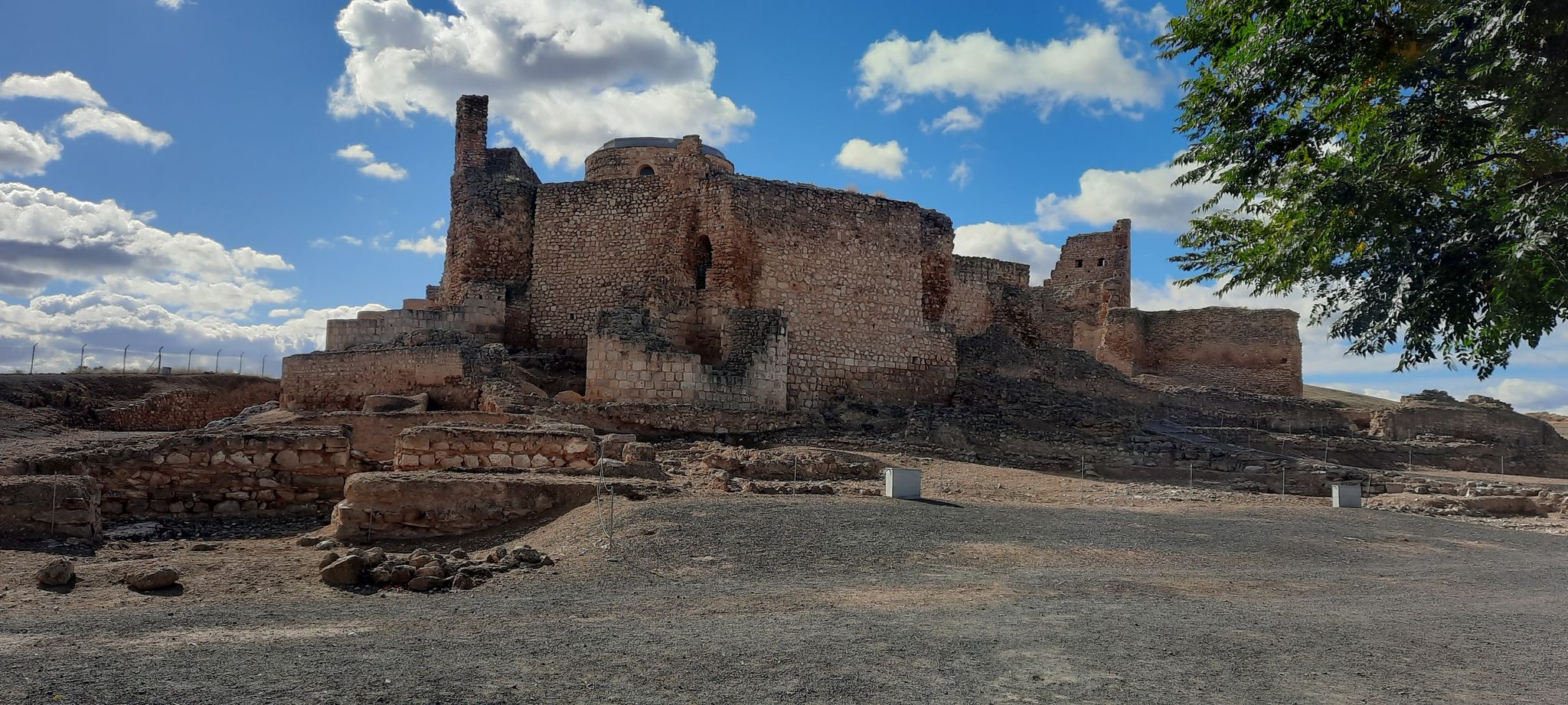
You'll encounter a rich blend of natural beauty and historical sites. Routes often pass by significant landmarks such as the Castle of Calatrava la Nueva and Sacred Convent, offering breathtaking views. You can also explore unique natural features like the Cerro Gordo Volcano and the scenic Vega del Jabalón Reservoir.
Are there any unique natural features to explore on these routes?
Absolutely. The Campo de Calatrava is famous for its volcanic landscape. Cyclists can explore areas with ancient lava fields, craters, and volcanic lagoons. The Campo de Calatrava Volcanic Field is part of a UNESCO Geopark. You might also encounter natural monuments like Hervideros Baños del Barranco and El Chorrillo Spring.
Are these no traffic routes suitable for families?
While this guide focuses on touring cycling routes, which can sometimes be longer or more challenging, the emphasis on 'no traffic' means a safer environment. Routes with moderate difficulty and shorter distances, such as the Silo (Calzada Cva) loop from Calzada de Calatrava, might be more suitable for families with older children or those accustomed to cycling.
Can I bring my dog on these touring cycling routes?
Many rural and natural paths in the Calzada de Calatrava region are generally dog-friendly, especially if your dog is accustomed to running alongside a bike or can be carried in a suitable trailer. However, it's always best to keep dogs on a leash, especially near wildlife or in populated areas, and to check local regulations for specific nature reserves or protected areas you might pass through.
Where can I find accommodation along these routes?
The region is well-suited for bikepacking, with routes often passing through villages where you can find accommodation. Calzada de Calatrava itself, along with nearby towns like Aldea del Rey, offer hotels and rural accommodations. It's advisable to book in advance, especially during peak seasons.
Are there places to eat or drink along the no traffic routes?
Yes, many of the touring routes are designed to pass through charming villages and towns, such as Granátula de Calatrava and Calzada de Calatrava, where you can find cafes, restaurants, and shops to resupply. Planning your route with komoot allows you to identify these points of interest beforehand.
Is parking available near the starting points of these routes?
In Calzada de Calatrava and surrounding villages, you can typically find public parking areas. For routes starting from specific towns, there are usually designated parking spots available. It's recommended to check the starting point of your chosen route for specific parking information.
What do other touring cyclists enjoy the most about touring cycling in Calzada de Calatrava?
The area is highly rated by the komoot community, with an average score of 5.0 stars. Reviewers often praise the unique volcanic landscapes, the historical castles and monuments, and the quiet, traffic-free nature of the routes, which allows for an immersive and peaceful cycling experience.
Most popular routes around Calzada De Calatrava
Most popular attractions around Calzada De Calatrava

Get inspired with the komoot mobile app


Explore more
Browse the best Cycling routes in other regions.
