The best city hikes and walks around Nérac
4.4
(584)
3,404
hikers
8
hikes
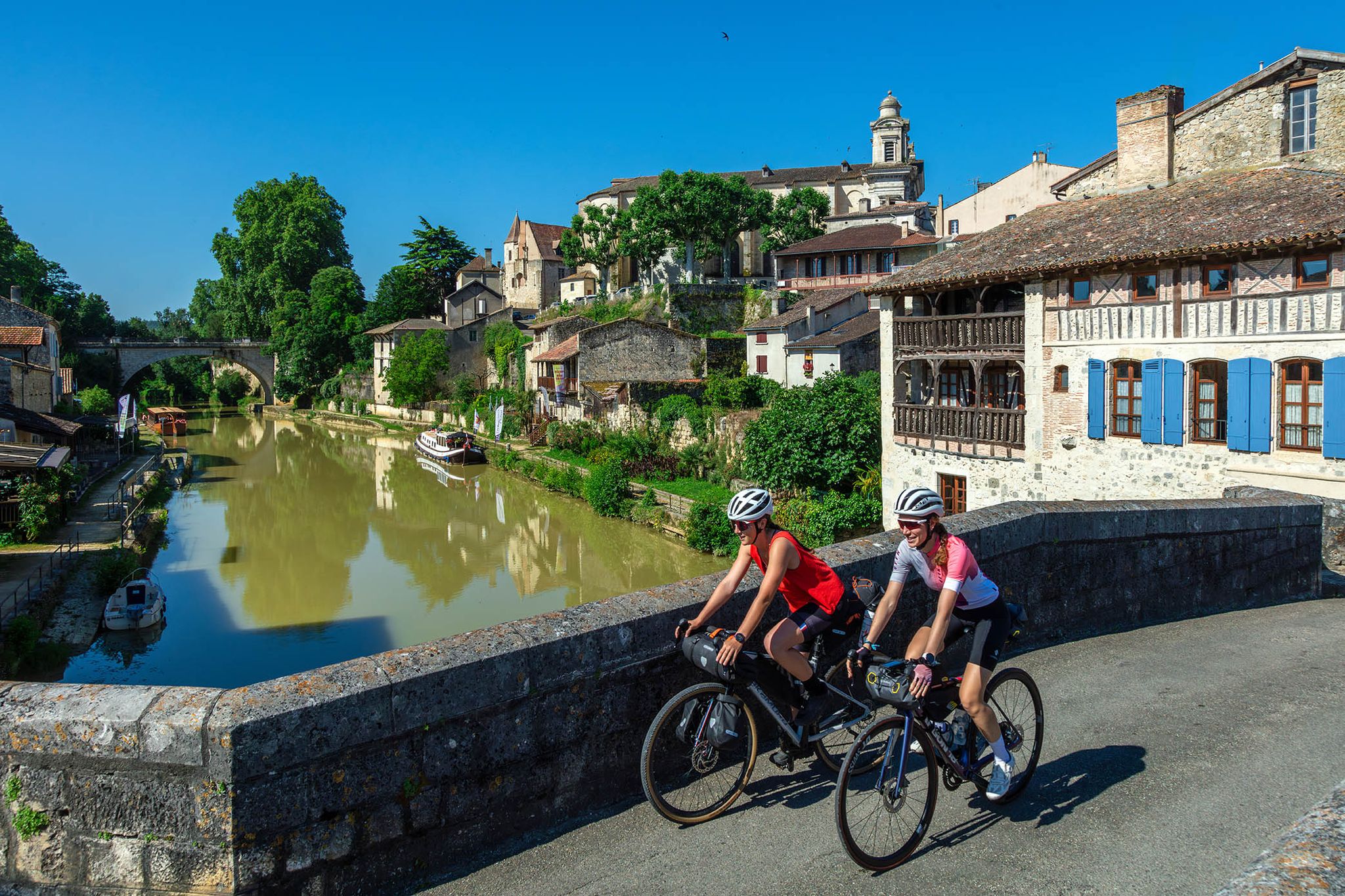
Urban hiking trails around Nérac offer a diverse landscape for exploration. The region is characterized by the scenic Baïse River Valley, featuring tranquil riverside paths and views of the river. Rolling hillsides, plains, and pine forests define the terrain, often interspersed with vineyards and plum orchards. Lakes such as Lac de Clarens also provide opportunities for walks with water views.
Best urban hiking trails around Nérac
- The most popular urban hiking route is The Baïse – Baïse Bridge in Nérac…
Last updated: July 16, 2026
4.8
(4)
46
hikers
8.88km
02:18
50m
50m
Moderate hike. Good fitness required. Easily-accessible paths. Suitable for all skill levels.
3.5
(2)
15
hikers
4.09km
01:04
30m
30m
Easy hike. Great for any fitness level. Easily-accessible paths. Suitable for all skill levels.

Sign up for free
5
hikers
4.13km
01:05
30m
30m
Easy hike. Great for any fitness level. Easily-accessible paths. Suitable for all skill levels.
5.0
(1)
9
hikers
2.44km
00:40
30m
30m
Easy hike. Great for any fitness level. Easily-accessible paths. Suitable for all skill levels.
7
hikers
3.72km
00:58
20m
20m
Easy hike. Great for any fitness level. Easily-accessible paths. Suitable for all skill levels.
Get access to more routes and recommendations from other explorers.
Sign up for free
Already have an account?
Our route recommendations are based on thousands of hikes, rides, and runs completed by other people on komoot.
Start today with a free account
Your next adventure awaits.
Login or Signup
Popular around Nérac
Other adventures around Nérac

Tips from the Community

The Château Henri IV of Nérac, former residence of the lords of Albret, bears witness to the city's rich Renaissance past. Overlooking the Baïse, it was one of the living places of the future King Henri IV and remains today a must-see to discover the history of Albret.
0
0

This cloisters was built at the beginning of the 16th century and is attached to the Saint-Pierre Cathedral.
0
0

The Baïse River Discovery Trail is very pleasant and very bucolic. The Baïse has been a communication and navigation route since the Middle Ages. Barges (gabarres) or bachots (bachots) traveled down the river to Agen, transporting agricultural goods, wheat, wine, Armagnac, timber, and more. Twenty-one locks are located along its length. Today, it is used by unlicensed boats and converted barges. You will pass Flaran Abbey, a superb Cistercian building founded in 1151 and very well preserved. This trail along the Baïse is very well laid out; I even found dry toilets just before Valence-sur-Baïse, next to a picnic area. Bravo again!
0
0
Condom, a former episcopal city crossed by the Baïse River, is renowned for its Saint-Pierre Cathedral and its Armagnac-related past. In front of the cathedral stands the famous statue of the Four Musketeers (D'Artagnan and his companions), a tribute to Alexandre Dumas' novel and the famous captain's Gascon roots.
0
0

The Martrou Chapel was built in the Romanesque period. The presence of these different sanctuaries made Agen a stop on a pilgrimage route to Santiago de Compostela. A Martyr's Hospital[ was built next to the Martrou Chapel, which became its chapel, near the Saint-Caprais collegiate church. A Saint-Jacques Hospital was founded in the second half of the 14th century and not in the 12th century[. In 1562, the different hospitals of Agen, Saint-Antoine, Saint-Georges, Saint-Michel and Saint-Jacques, were united at the Martyr's Hospital[]. The whole was called the Saint-Jacques-du-Martyre Hospital. This hospital was closed in 1819 after its merger with the General Hospital for the Poor, which then took the name Saint-Jacques Hospital, before becoming the Hôtel du Département de Lot-et-Garonne in 1992. The Martrou Chapel was part of the Saint-Caprais collegiate church. It currently belongs to the Sainte-Foy church. It has undergone numerous alterations, from the Romanesque period to the 20th century. It was restored after the merger of the various hospitals of Agen, after 1563. A room was built above the nave, which served as a meeting place for the Grey Penitents. The choir fresco was painted in 1934 by Giovanni Masutti, an Italian-born painter who had worked in other churches in the department. The Diocesan Association of Agen undertook the renovation of the Martrou Church (enhancement of the bell tower, improvement of the acoustics, heating, paving of the crypt, restoration of the façade, painting of the choir, lighting, and whitewashing of the interior walls) in 2007. It was given a non-religious, but rather cultural, purpose. The current chapel consists of a rectangular, paneled nave and a choir with a semi-domed vault. Below is a crypt built in the 4th century by the first Christians of Agen, on the site where the bodies of the first martyrs were buried. The building was listed as a historic monument on November 29, 1995.
0
0
A chapel was built near a Christian cemetery outside the first city wall. The current chapel was built at the end of the 13th century when it became a parish church under the name of Notre-Dame du Bourg. It was included in the second city wall of Agen. In the 15th century, the initially square chevet was replaced by a polygonal apse. On the night of December 1, 1561, the Protestant rulers of the city looted and burned Saint-Étienne Cathedral, the Saint-Caprais collegiate church, and Notre-Dame du Bourg. A report on the condition of the churches was then drawn up by the city authorities. The church was restored and enlarged by piercing the south wall to build a side aisle. The Bishop of Agen, Jules Mascaron, made it a place of devotion, which led to its second name, Notre-Dame de Grâce. Following a decree from Napoleon I, the cemetery was abolished in 1809. The church was decorated with stained-glass windows created by Bordeaux master glassmaker Henri Feur in 1884. The building was listed as a historic monument on February 22, 1926.
0
0
This footbridge is old, dating back to 1835. But the one that exists today is no longer the one from before; it was completely rebuilt, and as it stands, it was completed in 2002. This footbridge is magnificent... it's a bit rocky if you have heavy steps, but I think you'll find it perfectly safe. For those prone to vertigo, don't look at the Garonne through the planks, and be aware that many people use this footbridge every day. On the left bank pillar, you can see a few padlocks that lovers like to place as souvenirs... They're nowhere near as numerous as on the Pont des Arts in Paris, but it's still something... In any case, it's from this footbridge that you can best observe the canal bridge as a whole. Don't miss a visit!
0
0
Construction of the Agen canal bridge was almost halted permanently due to competition from waterways and the railway. Its history is, of course, closely linked to that of the entire Canal Lateral. On August 25, 1839, the foundation stone was laid by the Duke of Orléans, eldest son of Louis-Philippe, and Princess Helene of Mecklenburg, his wife. In 1841, work was halted. The bridge would be used for a time by farmers' carts to avoid a detour via the old stone bridge. On May 5, 1846, a law mandated the resumption of work, and the bridge was completed in 1847. But that wasn't the end of the worries. This bridge could perhaps have become a railway bridge: In 1850, those who exclusively supported the railway raised the question of filling in the canal cut (in its entirety) to lay the tracks. It wasn't until March 1856 that the entire Garonne lateral canal was completed. This bridge itself is 539 meters long, 12.48 meters wide, 2.70 meters deep, and has 23 arches. The waterway is 8.80 meters wide, which prevents crossings. Holding basins were built on either side of the aqueduct. The civil engineers Jean-Baptiste de Baudre and Jean Gratien de Job were responsible for its construction. It is made entirely of freestone from Quercy.
0
0
Frequently Asked Questions
How many urban hiking trails are available around Nérac?
There are 7 urban hiking trails around Nérac listed in this guide, offering a variety of experiences for exploring the town and its immediate surroundings. Most of these are easy, making them accessible for many.
What makes Nérac a good place for urban hiking?
Nérac offers a unique blend of historical charm and natural beauty, making it ideal for urban hiking. Trails often follow the scenic Baïse River Valley, pass through picturesque vineyards and plum orchards, and provide views of the town's heritage. The Nérac Old Town and Château d'Henri IV are frequently part of these routes, allowing you to combine nature with cultural exploration.
What kind of landscapes can I expect on urban hikes in Nérac?
Urban hikes in Nérac often feature diverse landscapes. You'll find tranquil paths along the Baïse River, rolling hillsides dotted with vineyards, and glimpses of the surrounding plains and forests. Routes like the "Nazareth Walk" offer panoramic views of the town and countryside, while the Royal Park of La Garenne provides shaded, historical promenades.
What do other hikers say about the urban trails in Nérac?
The urban trails around Nérac are highly rated by the komoot community, with an average score of 4.3 out of 5 stars. Hikers often praise the well-maintained paths, the charming blend of historical sights and natural scenery, and the accessibility of the routes for various fitness levels.
Are there any easy urban walks suitable for beginners or families in Nérac?
Yes, Nérac has several easy urban walks perfect for beginners or families. Out of the 7 routes in this guide, 6 are rated as easy. A great option is The Baïse – Baïse Bridge in Nérac loop from Nérac, which is just over 3 km long and offers pleasant riverside views.
Are there any circular urban hiking routes in Nérac?
Yes, all the urban hiking routes in this guide are circular, meaning you'll start and end at the same point. This makes planning your walk convenient, as you won't need to arrange transportation back to your starting location. For example, the The Baïse – Baïse Bridge in Nérac loop from Nérac is a popular circular option.
What interesting landmarks or attractions can I see along the urban hiking trails?
Many urban trails in Nérac pass by significant landmarks. You can explore the historic Nérac Old Town and Château d'Henri IV, or discover the Henry IV's Mill. Some routes also offer views of the Canal Latéral à la Garonne or the picturesque Buzet Castle in the wider region.
Can I bring my dog on urban hikes in Nérac?
Generally, dogs are welcome on many outdoor trails in the Nérac region, especially if kept on a leash. However, it's always best to check local regulations for specific parks or protected areas you plan to visit. For urban walks, ensure your dog is well-behaved and that you clean up after them.
What is the best time of year for urban hiking in Nérac?
The Nérac region is enjoyable for urban hiking year-round. Spring (April-May) offers pleasant temperatures and blooming landscapes, while autumn (September-October) provides comfortable weather and beautiful fall colors in the vineyards and forests. Summer can be warm, so early mornings or late afternoons are best, and winter offers crisp, quiet walks.
Are there any urban trails that offer views of the Baïse River?
Yes, the Baïse River is a central feature of Nérac's landscape, and many urban trails incorporate its scenic banks. For instance, The Baïse – Baïse Bridge in Nérac loop from Nérac directly follows the river, offering lovely waterside views and a chance to appreciate the tranquil flow of the Baïse.
Are there any urban hikes near historical sites outside of Nérac itself?
Yes, some urban hikes in the broader Nérac area connect to other historical towns. For example, the Saint Peter's Cathedral – Condom loop from Condom allows you to explore the charming town of Condom and its impressive cathedral, offering a blend of urban exploration and historical discovery.
Are there any urban walks that are particularly good for spotting local wildlife?
While urban areas have less wildlife than deep forests, walks along the Baïse River and through the Royal Park of La Garenne can offer opportunities to spot local birds and small animals. The diverse landscapes of the Nérac region, including its forests and riverbanks, are home to various species, especially during quieter times of day.
Most popular routes around Nérac
Most popular attractions around Nérac

Get inspired with the komoot mobile app


Explore more
Browse the best Hikes in other regions.
