The best hikes from bus stations around Nérac
4.4
(584)
3,404
hikers
15
hikes
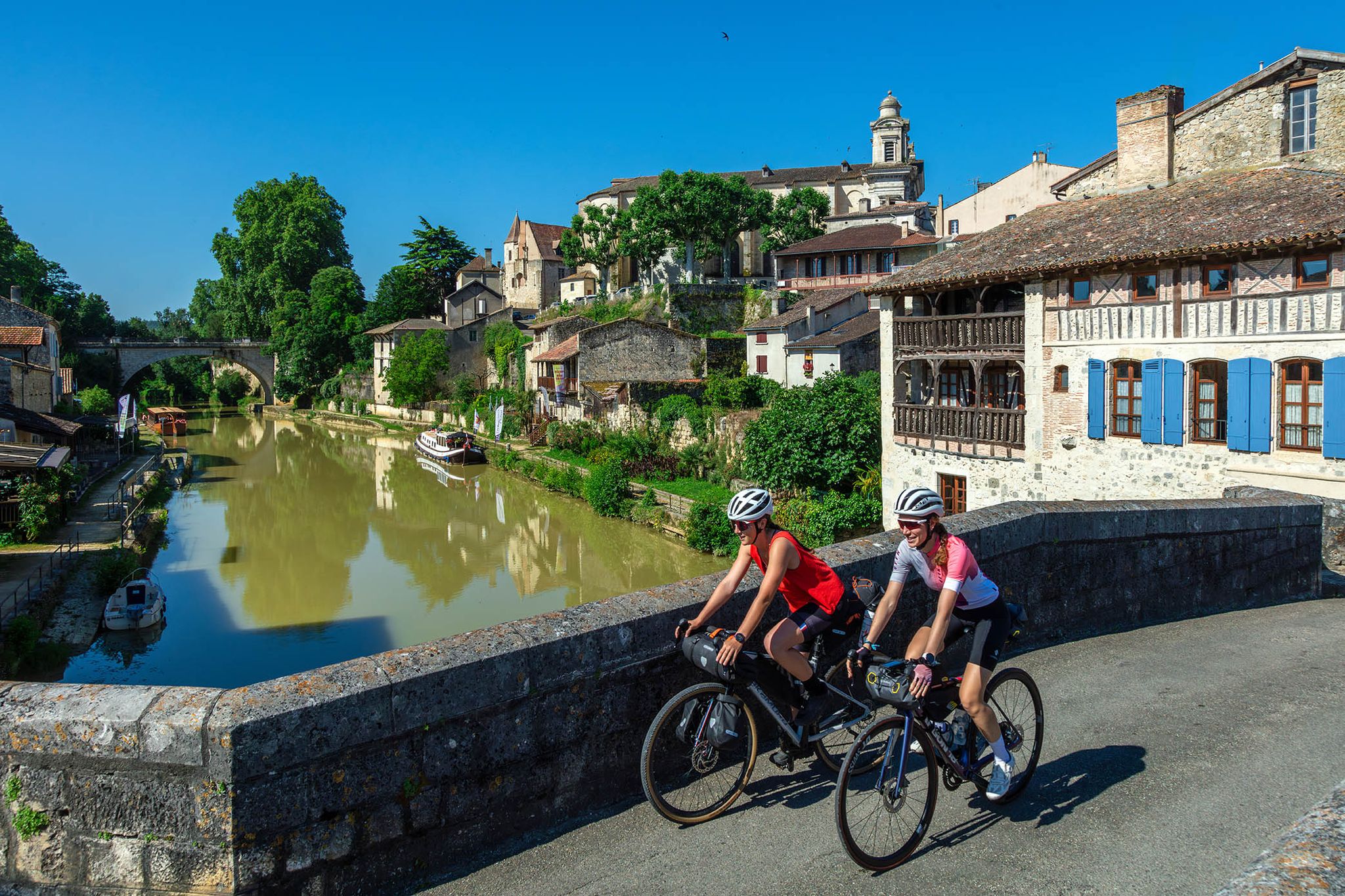
Bus Station hikes Nérac offer access to a diverse landscape characterized by the serene Baïse River, expansive hilly terrain, and rich woodlands. The region features varied elevations, from gentle riverside paths to more undulating routes through vineyards and forests. Hikers can explore natural features like the Parc de la Garenne and the Baïse Valley, often encountering historical sites along the way. This combination provides a range of experiences for different activity levels.
Best bus station hiking trails around Nérac
- The…
Last updated: July 16, 2026
4.5
(11)
42
hikers
10.9km
02:57
150m
150m
Moderate hike. Good fitness required. Easily-accessible paths. Suitable for all skill levels.
4.3
(3)
28
hikers
5.76km
01:30
40m
40m
Easy hike. Great for any fitness level. Easily-accessible paths. Suitable for all skill levels.

Sign up for free
4.5
(2)
33
hikers
3.53km
00:56
30m
30m
Easy hike. Great for any fitness level. Easily-accessible paths. Suitable for all skill levels.
4.3
(4)
10
hikers
7.68km
02:04
100m
100m
Moderate hike. Good fitness required. Easily-accessible paths. Suitable for all skill levels.
4.5
(2)
18
hikers
7.90km
02:02
40m
40m
Moderate hike. Good fitness required. Easily-accessible paths. Suitable for all skill levels.
Get access to more routes and recommendations from other explorers.
Sign up for free
Already have an account?
Our route recommendations are based on thousands of hikes, rides, and runs completed by other people on komoot.
Start today with a free account
Your next adventure awaits.
Login or Signup
Popular around Nérac
Other adventures around Nérac

Tips from the Community

The Château Henri IV of Nérac, former residence of the lords of Albret, bears witness to the city's rich Renaissance past. Overlooking the Baïse, it was one of the living places of the future King Henri IV and remains today a must-see to discover the history of Albret.
0
0

A primitive building dedicated to Saint Mark existed from the medieval period. It was destroyed by the Protestants in 1562. The current church succeeded it in 1868, and was designed by the architect Verdier. It is dedicated to Our Lady. In the shape of a Latin cross, it has a single ribbed vault. The bell tower, perched on the ridge of the west facade, is topped with a long spire. Above the portal, the facade is pierced by three lancet stained-glass windows. It is adorned with two pinnacles.
0
0
A primitive building was consecrated by Pope Urban II in 1096. It was the priory church of the Benedictines. It became a parish church after the priory was sold in 1666. In 1697, the bell tower collapsed. In 1749, the church was in danger of collapse. The current church was rebuilt between 1758 and 1785. During the Revolution, the church became the "supreme temple." In 1855, the bell towers were added and the sacristy was rebuilt. The church, in the shape of a Latin cross, includes a nave. Its façade is adorned with four fluted pilasters with Ionic capitals supporting a triangular pediment. The stained-glass windows are from the 19th century. They depict scenes from the life of Saint Joseph, the Agony of Christ, scenes from the life of the Virgin, Pentecost, Saint Louis, Saint John the Baptist, and the Immaculate Conception. The prophets and kings of Israel can be seen: Abraham, Daniel, Abel, Noah, Moses, Elijah, Aaron, Melchizedek, sibyls, as well as a Virgin and Child, a Pietà, and the coat of arms of Abbot de Vivie.
0
1
The history of the former royal warren is deeply linked to the family of Henry IV, but its legacy dates back to Antiquity. During the Gallo-Roman period, in the 4th or 5th century, a villa stood on the banks of the Baïse River. Excavations conducted in 1832 uncovered numerous mosaics, attesting to the building's presence. Between these two periods, the park underwent numerous developments. At the beginning of the 16th century, Henry I of Albret acquired the land to create a warren and a garden at the foot of the château, accessible only to the royal family. When Henry IV and his wife, Marguerite de Valois, inherited the site, they created the current promenade, known as the "3,000 paces," which runs along the Baïse. But the Wars of Religion and the numerous floods of the river after the king's death would permanently damage the historical and natural heritage. Damaged by the numerous floods of the Baïse in 1909, the park became the first listed site in the Aquitaine region, which enabled the funding of work to ensure its preservation. In 2020, this classification was extended to the other bank, where the Bains du Roy are located.
0
0
Nérac Castle was founded in the 14th century, within a medieval town surrounded by walls and backing onto the Baïse River. Beginning in 1491, Alain d'Albret modernized this first tower and had three wings built. The west wing included the drawbridge and service rooms, the north wing housed Jeanne d'Albret's apartments, and the east wing constituted the main building of the castle. It was in this castle that Marguerite de Navarre, sister of Francis I and author of the Heptaméron, lived. A committed humanist, she brought Jacques Lefèvre d'Étaples, nicknamed the French Erasmus, to Nérac. Jeanne d'Albret, her daughter, was also sensitive to the ideas of her time and brought Théodore de Bèze to her court, before converting to Protestantism. It was in this context that Henry III of Navarre, the future King Henry IV, lived. He lived in this château for about ten years with Queen Marguerite de Valois, known as Queen Margot. The latter was responsible for the creation of the 3000-Step Avenue in the Parc de la Garenne, along the Baïse. This avenue, punctuated over the years with new fountains, was then surrounded by walls and accessible from the château by a bridge. The years following the assassination of Henri IV by Ravaillac in 1610 marked the decline of the château, first due to royal reprisals against Protestants and then due to the destruction caused by the French Revolution in 1793, when the château was declared national property. After the revolutionary destruction, only the north wing of the château remained, with its twisted columns so characteristic of the Renaissance style. The château was divided into lots and inhabited by several owners. Gradually, the municipality became interested in restoring the château, and a restoration project was drawn up by Eugène Viollet-le-Duc, whose sketches are on display in the museum. However, it wasn't until 1925 that the city became the owner of the entire building and began a restoration project to house the municipal museum. Since then, the royal residence and writer's home, the Château-Musée Henri IV, has offered visitors a permanent exhibition dedicated to Henri IV and the d'Albret family on the first floor, and the art of living during the Renaissance on the ground floor through various themes.
0
0


The Baïse river is navigable over 62km from April 1st to November 1st. Beautiful, wild and relaxing, it lets us go with the flow. Its major asset: its tranquillity. Cruising speed is limited to 6km/h. Boaters cross Gascony at a slow pace, the departments of Gers and Lot-et-Garonne to stop over in the territories of Albret and Ténarèze. Nérac, one of the most beautiful river ports in France, welcomes you for a colorful stopover!
0
0

The Baïse is a fairly abundant river. The amount of water flowing into the catchment area is 285 millimeters per year, which is certainly slightly lower than the average for France as a whole for all the basins together (320 mm/year ), but clearly higher than most of the waterways of the Gers . The specific flow (or Qsp) reaches 9.0 liters per second and per square kilometer of basin.
3
0
Frequently Asked Questions
How many bus station accessible hiking trails are available around Nérac?
There are 13 hiking trails accessible from bus stations around Nérac. These routes offer a mix of easy and moderate options, perfect for exploring the region without a car.
Are there any easy hiking trails accessible from the Nérac bus station?
Yes, there are 5 easy hiking trails accessible from bus stations in the Nérac area. For a pleasant, shorter walk, consider the Port of Nérac – The Baïse loop from Nérac, which is just under 4 km. Another easy option is the Pont de Nérac – Foulon Garden loop from Nérac, offering a 6.2 km stroll.
What kind of landscapes can I expect on hikes around Nérac?
Hikes around Nérac offer a diverse range of landscapes. You'll find picturesque riverside paths along the Baïse River, trails through the historic Parc de la Garenne with its woodlands and clearings, and routes that traverse hilly terrain, providing panoramic views of vineyards and the surrounding countryside. The region's character is shaped by its waterways and gentle rolling hills.
Are there any circular routes starting near the Nérac bus station?
Yes, many of the trails are circular, allowing you to start and end at the same point, which is convenient when relying on public transport. For example, the The Baïse – View of Nérac loop from Nérac is a moderate 10.9 km circular route that showcases the river and town.
What historical landmarks or attractions can I see along these bus station accessible routes?
Many routes integrate Nérac's rich history. You can explore the Nérac Old Town and Château d'Henri IV, or discover the historic Henry IV's Mill. The Baïse River itself is central, and you might encounter features like the Buzet-sur-Baïse Lock on some trails.
What do other hikers say about the trails around Nérac?
The hiking trails around Nérac are highly regarded by the komoot community, with an average rating of 4.37 out of 5 stars from over 500 reviews. Hikers often praise the scenic beauty of the Baïse River, the tranquility of the routes, and the blend of natural landscapes with historical sites.
Are there any longer, more challenging hikes accessible by bus from Nérac?
While most trails are easy to moderate, some offer a good distance and elevation gain. The The Baïse – View of Nérac loop from Nérac is a moderate 10.9 km route with over 150 meters of elevation, providing a good workout while offering beautiful views of the town and river valley.
Can I find trails that lead through forests or natural parks?
Yes, the region boasts natural areas like the Parc de la Garenne, a 35-hectare royal park with woodlands and clearings that are perfect for walking. While not directly listed as a route here, many local trails will pass through similar natural settings or offer views of the nearby Landes de Gascogne pine forests.
Are there any specific bus routes I should be aware of for accessing trailheads outside of Nérac?
The guide focuses on trails accessible from bus stations, implying that local bus services connect to these starting points. For specific bus routes and schedules to towns like Sos or Lamontjoie, where trails like the Hiking loop from Sos or the Food market in Lamontjoie loop from Lamontjoie begin, it's best to consult the local public transport authority's website for up-to-date information.
What is the best season for hiking around Nérac?
Nérac offers pleasant hiking conditions for much of the year. Spring and autumn are particularly ideal, with mild temperatures and vibrant natural colors. Summer can be warm, so early morning or late afternoon hikes are recommended. Winter offers crisp air and quieter trails, though some paths might be muddy after rain.
Are there any trails that follow canals or rivers?
Absolutely. The Baïse River is a central feature of Nérac, and many trails follow its banks, offering tranquil riverside walks. The broader region also features the Baïse Valley Greenway, a 27 km route built on an old railway line, and the Garonne Canal, both providing excellent opportunities for scenic walks along waterways.
Most popular routes around Nérac
Most popular attractions around Nérac

Get inspired with the komoot mobile app


Explore more
Browse the best Hikes in other regions.
