The best traffic-free bike rides around Mouzillon
4.5
(249)
1,559
riders
14
rides
No traffic touring cycling routes around Mouzillon are characterized by vineyard-covered hillsides and the presence of the Sèvre and Maine rivers. The landscape features rolling terrain, offering scenic routes through the Muscadet Sèvre et Maine appellation. This region provides a network of paths that often transition from dedicated cycle tracks to smaller roads winding through vineyards. The area's viticultural heritage is a defining feature, with routes passing numerous wineries.
Best no traffic touring cycling routes around Mouzillon
- The most popular…
Last updated: May 5, 2026
4.8
(4)
16
riders
20.6km
01:17
120m
120m
Easy bike ride. Great for any fitness level. Mostly paved surfaces. Suitable for all skill levels.
5.0
(2)
10
riders
19.4km
01:19
120m
120m
Easy bike ride. Great for any fitness level. Mostly paved surfaces. Suitable for all skill levels.

Sign up for free
4.7
(3)
5
riders
28.1km
01:44
190m
190m
Moderate bike ride. Good fitness required. Mostly paved surfaces. Suitable for all skill levels.
5.0
(2)
4
riders
31.4km
01:58
250m
250m
Moderate bike ride. Good fitness required. Mostly paved surfaces. Suitable for all skill levels.
5.0
(1)
3
riders
15.8km
01:01
110m
110m
Easy bike ride. Great for any fitness level. Mostly paved surfaces. Suitable for all skill levels.
Get access to more routes and recommendations from other explorers.
Sign up for free
Already have an account?
Our route recommendations are based on thousands of hikes, rides, and runs completed by other people on komoot.
Start today with a free account
Your next adventure awaits.
Login or Signup
Popular around Mouzillon

Tips from the Community

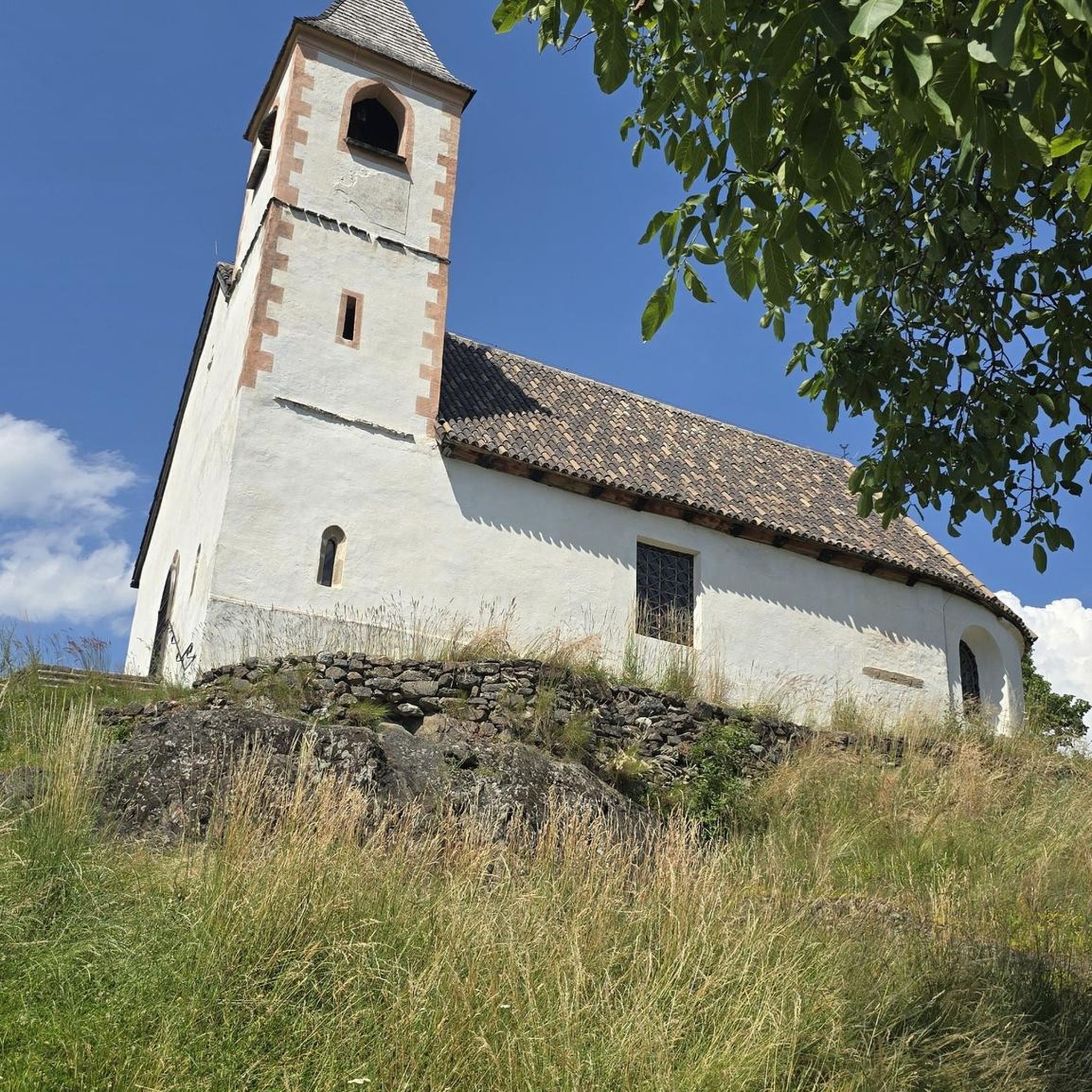
I often pass by the Chapelle-Heulin church. This spot offers a great place to take a break in the shade and has restrooms nearby.
1
0

12th century church, burned down during the Vendée wars and restored under Napoleon.
0
0

Owned by the Departmental Council, the Bois de Buis is easily accessible from the parking lot of the Moulin du Liveau site, located along the RD 113, near the Château de l'Oiselinière. This woodland was once the grounds of the Château de l'Oiselinière, which is situated on the slopes of the Sèvre River in Nantes. The site was left to nature for about fifty years, before being purchased by the Department in 2007. In 2014, the former park was restored to create structures that will allow visitors to better appreciate this natural setting, where some one hundred animal and plant species thrive. It features a scenic lookout overlooking the Sèvre River and offers panoramic views of the village of Gorges. Activities and guided tours are regularly organized for the public. This site is classified as a sensitive natural area. Surface area (in m²): 30,000 m² (3 ha) Play area: No Bowling court: No Pets allowed: Yes Bathrooms: Yes (near the Moulin du Liveau) Other: For more information, visit the Loire-Atlantique nature walks website.
0
0
The municipality installed interpretive panels in the fall of 2022. Outside the mill, furniture reminiscent of the old mill sails showcases the mill's history and mechanism, while also promoting the vineyard's tourist attractions. Inside the mill, on both floors, glazed lava orientation tables present the various sites visible from the mill while evoking the work of the vineyard throughout the four seasons. A picnic table is available on site. The site is only accessible on foot or by bicycle. Nearest parking is at the Tuileries Pond.
0
0
This temple, built on the Saint-Gilles hillside, has been listed as a Historic Monument since March 14, 1988. It owes its name to the friendship between the Cacault brothers and the sculptor François-Frédéric Lemot, initiators and creators of Clisson's Italianate architecture in the early 19th century. Pierre Cacault wanted to build a mausoleum in memory of his brother François, who died in Clisson on October 10, 1805, but he lacked sufficient financial means. ➢ It was François-Frédéric Lemot who helped his friend carry out his project. He purchased the former Saint-Gilles-et-Saint-Brice chapel and its outbuildings at the end of 1808. The buildings are part of the cemetery, which has long been used for the burial of parishioners from all over Clisson, except for La Trinité. ➢ Paul de Berthou states in his work "Clisson and its Monuments" that "...the church of St. Gilles and St. Brice had been large and beautiful, but a lord of Clisson had its proportions reduced because it overlooked the castle too closely and posed a danger to him in the event of a siege." ➢ The remodeled church includes two chapels forming arms of the cross, one dedicated to the Blessed Virgin and the other to St. John the Evangelist, whose brotherhood once sat on this site. A small bell tower, containing two bells, stands at the crossing of the transept. ➢ Pierre Cacault died on January 29, 1810. François-Frédéric Lemot took over the project and decided that the monument would be dedicated to the memory of the two brothers. In 1811, he acquired land on the Saint-Gilles hillside and commissioned the architect Mathurin Crucy to draw up the plans. ➢ The first project was inspired by Greek temples. Mr. Crucy proposed a plan representing a peripteral temple of the Doric order, without a base, with six columns on the façade, surmounted by a pediment. F.F. Lemot simplified the plan, retaining a "cella" and four Doric columns surmounted by a triangular pediment on the façade. This choice recalls the Temple of the Sybil in Tivoli and is found in other contemporary monuments (the Temple of Friendship in Belz, the memorial monument to the victims of Quiberon in Auray). ➢ The Temple of Friendship was built between 1812 and 1824 on the former foundations of the parish church of Saint Gilles. The side chapels were razed, their foundations later serving to build a small, asymmetrical transept. The old nave was demolished and the walls rebuilt in line with those of the choir, with the entrance door on the side of the current cemetery. ➢ It took several years before the roof was laid and the plastering completed (1824). ➢ This temple was to house the tombs of the Cacaults. Antoine Peccot (1766-1814), a friend of Mr. Crucy, the Cacaults, and F.F. Lemot, had proposed, before 1814, that a dedication be inscribed to the Cacault brothers. The poem invited passersby to remember the talents, virtues, and prodigal benefits of these two brothers. The inscription was never engraved. The tombs were never built because the heirs of the Cacault brothers did not authorize the transfer of the ashes of Pierre and François (buried in Nantes). .➢ On May 6, 1827, François-Frédéric Lemot died in Paris. His body, repatriated to Clisson on May 18, was buried in the Temple of Friendship. ➢ On September 17, 1829, this tomb was blessed by the vicar of Notre-Dame. From then on, the site was designated: "Lemot Chapel" or "Chapel of the Blessed Virgin." Permission was granted to sing the station mass there on St. Mark's Day, as well as on Rogation Day, and to say devotional low masses. ➢ The monument underwent restoration in 1995.
0
0
The last remaining witness to the region's papermaking industry, the association "Pour les arts graphiques en Vallée de Clisson" (For Graphic Arts in the Clisson Valley) has been working with local authorities since 1998 to revive the 19th-century papermaking industry at Le Liveau in Gorges. The Moulin du Liveau is a superb example of the region's Italianate architecture. With the active support of local authorities, the mill, owned by the municipality of Gorges, was restored to its original purpose as a paper mill. This magnificent site on the Sèvre Nantaise River in the Clisson Valley opened to the public in spring 2015. MORE THAN A MUSEUM, IT'S A LIVING WORKSHOP The association "Pour les arts graphiques en Vallée de Clisson" offers activities centered around the history and manufacture of paper. Children and adults alike can discover the mechanisms of the paper mill, handcraft their own sheets of paper, and learn about printing. An informative journey through history, accompanied by the ever-present pleasure of playfully recreating the gestures of the past. Inside, a hammer mill powered by a paddle wheel driven by the Sèvre River evokes the preparation of paper pulp from rags. Visitors can also practice calligraphy, participate in writing workshops, take bookbinding courses, and enjoy many other activities.
1
0
The Liveau Paper Mill in Gorges in the Clisson Valley (Loire Atlantique, 44) offers guided tours, educational outings, group visits to the paper mill, papermaking workshops, events, and exhibitions. The mill welcomes you south of Nantes and also offers a shop with a wide selection of paper, stationery, and books. The Liveau Paper Mill is located in Loire-Atlantique, in Gorges on the banks of the Sèvre Nantaise. Two flour mills, one on the right bank, the other on the left bank, made up the Liveau hydraulic site, first mentioned in 1407. Until 1561, it was owned by the lords of Clisson. • 1826, transformation of the right bank mill into a paper mill, a more prosperous activity at that time, and construction of the drying rack (drying rack), marked in its architecture by the strong Italian influence prevalent at that time in the canton of Clisson. • 1827: Papermaking begins at the mill. It produces "large gray paper" or "envelope paper" (wrapping paper) sold to the sugar refineries of Nantes. • 1850: Papermaking ends. • 1851 to 1952: Milling resumes. • 2001: The municipality of Gorges acquires the abandoned mill. • 2004: The "Pour les arts graphiques en vallée de Clisson" association wins first prize from the Fondation du Patrimoine for its project to rehabilitate and promote the Moulin du Liveau, with the support of Gorges elected officials and the Clisson Valley community of municipalities. • 2006: The Fondation du Patrimoine approves the project and brings in financial partners. • 2008-2009: Airtight and watertight construction of the buildings (mill and dryer), half of which was financed by the Total Foundation. Additional funding was provided by the Fondation du Patrimoine, the Crédit Agricole Foundation, parliamentary funds, the Pays de Loire Regional Council, the Loire-Atlantique General Council, the Clisson Valley Community of Communes, the municipality of Gorges, and various private funds. . 2014: Rehabilitation work in preparation for an artisanal papermaking activity, for cultural and tourist purposes. • April 2015: The Liveau paper mill in Gorges welcomes its first visitors.
1
0
The modest Chapel of Saint Anne is the last vestige of the parish church of Saint Vincent. In the second half of the 11th century, the Chapel of Saint Anne was built. It adjoins the southern flank of a pre-existing castle chapel, probably contemporary with the keep, which dates from the late 10th or early 11th century. At an undetermined date, the two chapels were extended westward and became the chevet of the parish church of Saint Vincent. This extension was completed before 1646, the date at which a drawing by L. Doomer, preserved at the Dobrée Museum in Nantes, shows the complete building. In 1683, Archdeacon Binet described the dilapidated Church of Saint Vincent and the choir on the verge of ruin. No one dared touch it because it belonged to the lord of La Galissonnière and Le Pallet. We can therefore assume that the nave itself belongs to the parish, which is responsible for its upkeep. The choir, a former castle chapel, disappeared during the Revolution. The old church was razed in 1853, and only the Sainte-Anne chapel was spared thanks to the intervention of Prosper Mérimée. A new church was built on a new site in the village, reusing the stones from the old building. In addition to its dilapidated condition, the old church had the disadvantage of being located far from the village. The chapel was listed as a historical monument in 1941 (decree of August 9). It was restored in 1957. NOTE: THE CHURCH HAS BEEN CLOSED SINCE JULY 23, 2018, FOR INDEFINITE WORK.
1
0
Frequently Asked Questions
How many no-traffic touring cycling routes are available around Mouzillon?
There are over a dozen dedicated no-traffic touring cycling routes around Mouzillon, offering a variety of experiences through the region's picturesque vineyards and along tranquil waterways. Most of these routes are rated as easy, making them accessible for many cyclists.
Are there any easy, family-friendly no-traffic routes suitable for beginners?
Yes, the Mouzillon area is ideal for families and beginners, with 10 of the available routes rated as easy. These routes often follow greenways and quiet vineyard paths. A great option is the Saint Martin's Church – Logne Greenway loop from Mouzillon, which covers over 20 km on mostly paved surfaces.
What kind of terrain can I expect on these no-traffic cycling routes?
The no-traffic routes around Mouzillon primarily traverse rolling vineyard-covered hillsides and follow paths along the Sèvre and Maine rivers. You can expect a mix of dedicated cycle tracks and smaller, very quiet roads winding through the Muscadet wine region. The elevation changes are generally gentle, making for pleasant touring.
Are there any circular no-traffic touring cycling routes?
Yes, many of the no-traffic routes around Mouzillon are circular, allowing you to start and end your ride in the same location. For example, the Lovely stretch along the Sanguèze – Moulin de Gervaud loop from Mouzillon offers a scenic circular tour through the local landscape.
What attractions or points of interest can I see along the no-traffic routes?
The routes often wind through the heart of the Muscadet wine region, offering opportunities to see vineyards and charming wine villages. You can also find historical sites and panoramic viewpoints. Consider visiting the Picture frame by Emmanuel Ritz in Château-Thébaud for exceptional views, or the historic Château de Clisson, which is accessible from some routes.
What is the best season for touring cycling on no-traffic routes in Mouzillon?
The mild climate, influenced by the Atlantic Ocean, makes Mouzillon suitable for cycling for much of the year. Spring and autumn are particularly pleasant, with comfortable temperatures and beautiful scenery as the vineyards change color. Summer can also be enjoyable, especially in the mornings or late afternoons.
Are there any cafes or pubs along the no-traffic bike routes?
While specific cafes directly on every no-traffic path might be limited, the routes often pass through or near charming wine villages and towns like Mouzillon itself or nearby Clisson. These locations offer opportunities to stop for refreshments, sample local produce, or visit wineries. Planning your route with potential stops in mind is recommended.
What do other touring cyclists enjoy most about the no-traffic routes in Mouzillon?
The no-traffic touring cycling routes in Mouzillon are highly rated by the komoot community, with an average score of 4.5 stars from over 230 reviews. Cyclists frequently praise the tranquility of the vineyard paths, the scenic beauty of the rolling hills, and the immersive experience of cycling through a renowned wine region away from vehicle traffic.
Can I find parking near the starting points of these no-traffic routes?
Yes, starting points for many routes, especially those originating in Mouzillon or nearby villages, typically have accessible parking options. It's advisable to check the specific route details on komoot for information on parking facilities near your chosen starting point.
Are there any longer no-traffic routes for more experienced touring cyclists?
While most routes are easy, there are moderate options for those seeking a slightly longer ride. For instance, the Moulin de Gervaud – Lovely stretch along the Sanguèze loop from La Grange offers a moderate 28 km ride with more elevation, providing a greater challenge while still enjoying traffic-free sections.
Are there opportunities for wildlife viewing along the no-traffic routes?
Cycling through the natural landscapes of the Muscadet region, especially along the Sèvre and Maine rivers and through wooded areas, can offer opportunities for wildlife viewing. Keep an eye out for local bird species and other small animals that inhabit the vineyards and riverbanks, particularly during quieter times of the day.
Most popular attractions around Mouzillon

Get inspired with the komoot mobile app


Explore more
Browse the best Cycling routes in other regions.
