The best cycling routes in Costa Da Mariña Occidental
4.9
(58)
626
riders
70
rides
Touring cycling in Costa Da Mariña Occidental offers routes through a diverse landscape along the Galician coast in the province of Lugo, Spain. The region features a dynamic coastline stretching over 70 miles (114 km), characterized by rugged cliffs, unique rock formations like Fuciño do Porco, and numerous beaches. Inland, the terrain transitions to estuaries such as the Ría de Viveiro, and further into hills like the Sierra de O Xistral and forests containing natural monuments like Souto da Retorta.…
Last updated: July 12, 2026
5.0
(3)
14
riders
11.6km
00:47
130m
130m
Easy bike ride. Great for any fitness level. Mostly paved surfaces. Suitable for all skill levels.
5.0
(1)
16
riders
35.9km
02:32
640m
640m
Hard bike ride. Very good fitness required. Mostly paved surfaces. Suitable for all skill levels.

Sign up for free
7
riders
33.7km
02:45
790m
790m
Hard bike ride. Very good fitness required. Mostly paved surfaces. Suitable for all skill levels.
4.0
(1)
6
riders
23.8km
01:53
510m
510m
Hard bike ride. Very good fitness required. Mostly paved surfaces. Suitable for all skill levels.
6
riders
15.3km
01:15
430m
430m
Moderate bike ride. Good fitness required. Mostly paved surfaces. Suitable for all skill levels.
Get access to more routes and recommendations from other explorers.
Sign up for free
Already have an account?
Our route recommendations are based on thousands of hikes, rides, and runs completed by other people on komoot.
Start today with a free account
Your next adventure awaits.
Login or Signup
Tips from the Community

Beautiful viewpoint on the climb - perfect for a break!
0
0

The spectacular bike path of Cabo de Burela makes it easy to get out of the town by bicycle along the coastal cliffs and the little beaches of Reliño and Marosa, then comes the crossing near the Cervo business park and again the charms of the coastal towns in San Cibrao, a beautiful fishing port formed by two neighborhoods that were created when the coastal sediments joined the coastal point with the islet where the Punta da Atalaia lighthouse is now located. The Nature Trail draws a curious perimeter route through the town that culminates in views of the coast from the spectacular overhanging balcony of the Miradoiro da Atalaia and descends through O Pedregal. The landmarks of the route move away from the coast to surround the industrial complex of an immense aluminum factory and return again to coastal fantasies in the port of Morás, an important whaling port during the Middle Ages. The entrance to the port and the surrounding area are decorated with hundreds of idols, which are the remains of the concrete pieces that were made to build the docks of the current industrial port of San Cibrao. The coastal landscape changes its atmosphere, the first serious slopes arrive. Near the famous Paper Cliffs, a fun stretch along mountain trails begins on the cliffs of Morás and the viewpoints of Monte Castelo, in Punta Roncadoira, accumulating a good positive gradient before descending again to the shore of the Cantabrian Sea and passing through Viveiro. and Covas for the first time. The stage ends in Viveiro although there is still the fabulous final stretch to the Ortigueira estuary and the return. In Covas there is a bicycle shop, it is next to a giant specimen of Monterrey cypress, 32 meters high, planted in 1880. The Natural Trail leaves the urban environment of the Viveiro estuary through Mount O Facho and the surprising viewpoint of the Cruz de San Román, between the beaches of San Román and Area Grande. The route is a constant see-saw through eucalyptus and pine forests between beaches, estuaries and small coves that seem inaccessible from the edge of the cliffs. The crossing of the Barqueiro estuary is another environmental fantasy, on the eastern bank is the port of O Vicedo and on the western bank the fishing streets of O Porto do Barqueiro, staggered on the slope of the mouth of the Sor river, the gateway to the Estaca de Bares, the northernmost point of the Iberian Peninsula.
0
0

The Cantabrian Route does not go up to Cabo de la Estaca de Bares, the milestones continue directly towards the Esteiro estuary, another hidden gem in the repertoire of dune beaches on the Galician Cantabrian coast. The Camino crosses the sandy beaches of the estuary via a wooden walkway, passes by the O Picón tower and reaches the “most beautiful bench in the world”, placed on a natural balcony on the coast at the entrance to the Ortigueira estuary, between the Estaca de Bares and Cape Ortegal. The viewpoint is not only landscape, it combines the sound of the waves, the contemplation of the movement of the waves fifty meters high, the coastal islets, the coastal wall melted in the mist of foam that floats in the air after colliding with the rocks, light, colors, it is a place with a special magic, especially when the weather allows you to enjoy a good sunset. The Nature Trail ends shortly after, passing through Espasante beach and closing the route at the viewpoint where the Santa Eulalia de Ladrid church is located, in the environmental environment of the protected natural space of the Ortigueira-Ladrid estuary, included in the Network Natura as a Special Protection Area for Birds. The return to Viveiro is along the same path, instead of returning through Os Castros, you can go around Monte da Croa to the east towards O Porto do Espasante and travel through the seductive coastal landscapes again until the end of the long day of cycling in Viveiro.
0
0

Founded by the Franciscans in 1219, this church is just outside the old Roman wall and has a well-preserved Romanesque portal and Gothic apse (renovated in 1965!). A visit to the cloister is worthwhile.
1
0
Three city gates and the walls of the historic old town of Viveiro are still partially preserved. The gate in honor of Emperor Carlos (German: Charles V) dates from 1548. After a few steps you reach the living room of the old town of Viveiro: the Praza Maior.
2
0

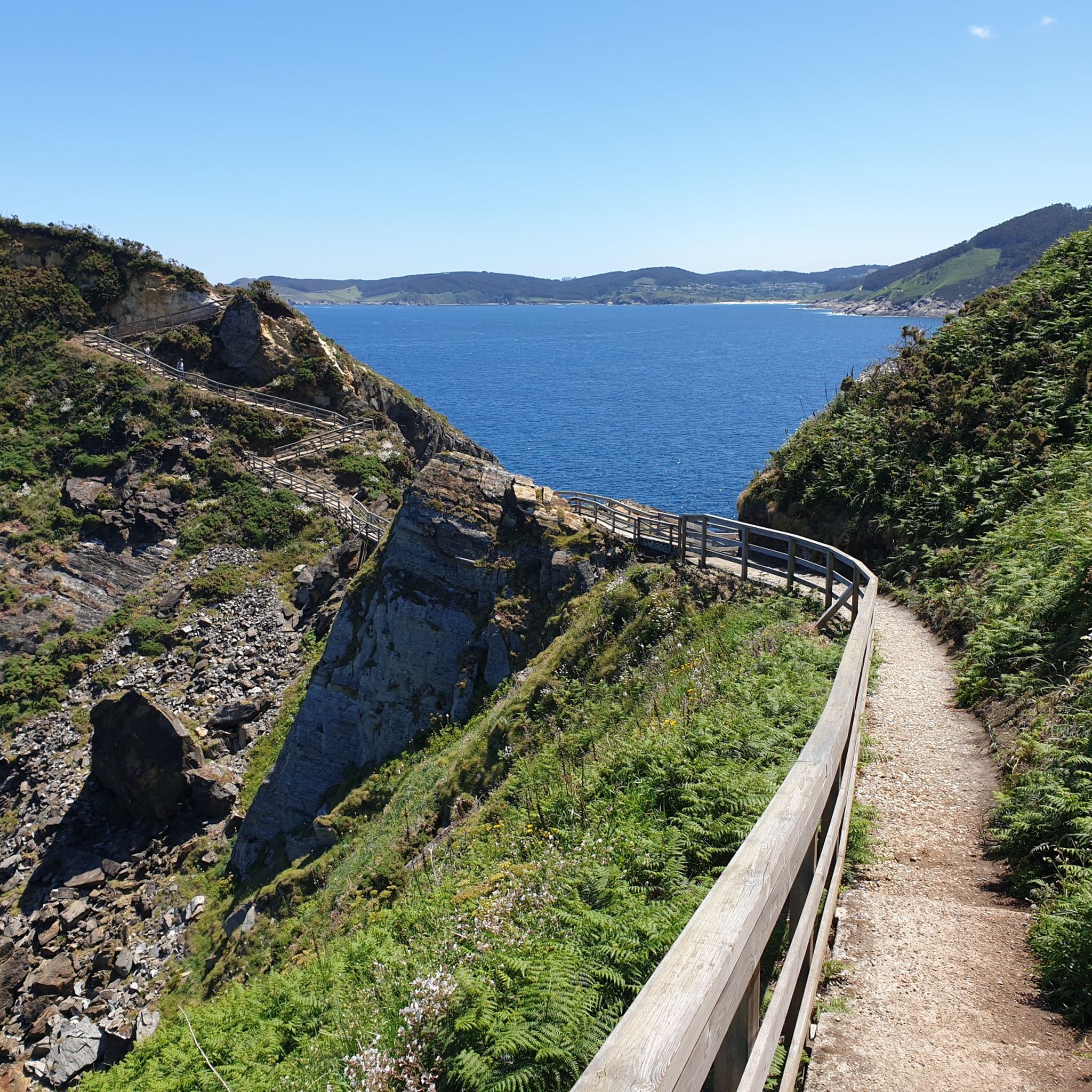
This section of the path runs along a wooden footbridge exclusively for pedestrians and cyclists. The path is perfectly marked along the entire route.
0
0
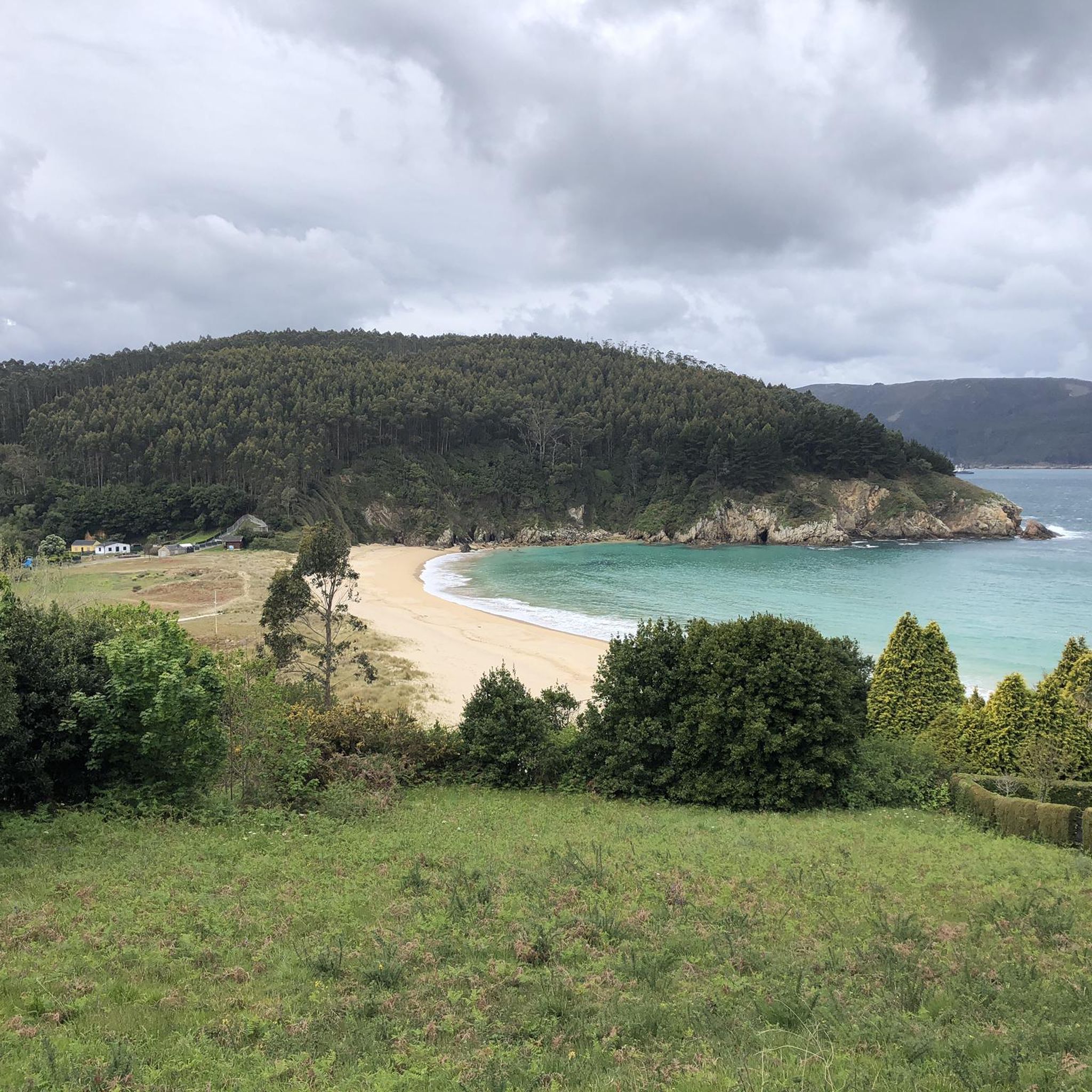
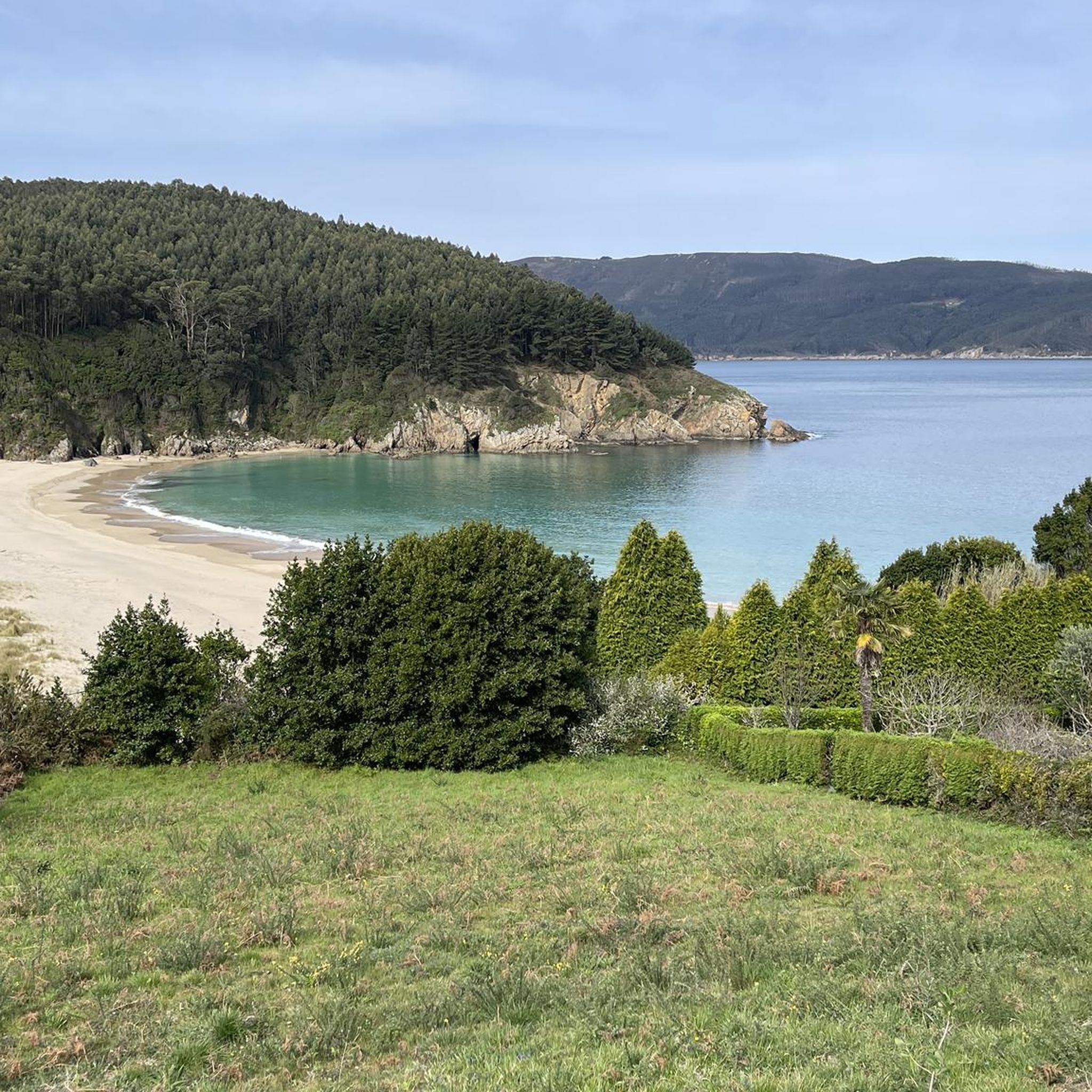
Covas is a small coastal residential complex that enjoys a long white sand beach. The contrast formed by the shape and color of the rocks when breaking the sand mantle forms a spectacular landscape.
3
0
Frequently Asked Questions
How many touring cycling routes are available in Costa Da Mariña Occidental?
There are over 70 touring cycling routes in Costa Da Mariña Occidental, offering a wide range of options for exploring the region's diverse landscapes. These routes are highly rated by the komoot community, with an average score of 4.7 stars.
What is the typical terrain like for touring cycling in Costa Da Mariña Occidental?
The terrain in Costa Da Mariña Occidental is quite varied. You'll find routes that hug the dramatic coastline, offering continuous ocean views along roads like the N642 and N634. Inland, the landscape transitions to picturesque estuaries, and further into mountains and lush forests, including areas like the Sierra de O Xistral. Some routes involve continuous ascents and descents, making them challenging, while others offer easier coastal rides.
Are there touring cycling routes suitable for beginners or families in Costa Da Mariña Occidental?
Yes, there are options for various ability levels. While many routes are challenging, there are at least 3 easy touring cycling routes available. An excellent choice for a more relaxed ride is the Mariña de Celeiro – Covas loop from A Casanova, which is 7.2 miles (11.6 km) long and offers pleasant coastal scenery.
What natural features can I expect to see along touring cycling routes?
Costa Da Mariña Occidental is rich in natural beauty. Cyclists can encounter dramatic coastlines with rugged cliffs and unique rock formations like the famous Fuciño do Porco Point. The region also features beautiful beaches such as Arealonga Beach and estuaries like the Ría de Viveiro. Inland, you might cycle through areas reminiscent of the Scottish Highlands in the Sierra de O Xistral or past the towering eucalyptus trees of Souto da Retorta.
Are there any notable viewpoints along the touring cycling routes?
Absolutely. The region offers numerous panoramic viewpoints. The Tixoso Viewpoint provides stunning views of the Viveiro estuary, while San Román Viewpoint offers expansive coastal vistas. The wooden walkway at Fuciño do Porco Point also provides breathtaking views of the clifftops and the Viveiro estuary.
What is the best time of year for touring cycling in Costa Da Mariña Occidental?
The region's mild climate, influenced by the Cantabrian Sea, generally makes it suitable for cycling for much of the year. However, the spring and autumn months typically offer the most pleasant weather with moderate temperatures and less rainfall, ideal for enjoying the coastal and inland routes. Summers can be warm, and winters cooler and wetter, though still navigable for determined cyclists.
Are there any circular touring cycling routes in the region?
Yes, many of the touring cycling routes in Costa Da Mariña Occidental are designed as loops, allowing you to start and end at the same point. For example, the challenging View of Illa de Sarón – Paper Cliffs loop from Auga Doce and the scenic Covo River Bridge – Caosa Beach ⛱️ loop from O Neto Grande are both circular routes.
What kind of historical or cultural attractions can I explore while cycling?
Beyond natural beauty, the region boasts charming coastal towns with rich heritage. Viveiro, for instance, has a significant medieval historic center and the Puente de la Misericordia. Ribadeo is known for its traditional houses and 'Indiano' architecture. Cycling routes often pass through or near these towns, offering opportunities to explore their cultural dimensions.
Are there any challenging touring cycling routes for experienced riders?
Yes, Costa Da Mariña Occidental offers numerous challenging routes. Over 60 of the available routes are classified as difficult, often featuring significant elevation gains and descents. A notable example is the O Picón Tower – The most beautiful bench in the world loop from O Barqueiro, which covers 24.5 km with over 475 meters of elevation gain.
Can I find places to eat or stay near the cycling routes?
Yes, the charming coastal towns and villages scattered throughout Costa Da Mariña Occidental offer various amenities. Towns like Viveiro, Ribadeo, and Foz provide options for cafes, restaurants, and accommodation, many of which are conveniently located near popular cycling routes or serve as excellent starting points for tours.
What makes touring cycling in Costa Da Mariña Occidental unique?
Touring cycling in Costa Da Mariña Occidental is unique due to its exceptional blend of dramatic coastal scenery, ecologically protected areas, and cultural experiences. The region is a Special Conservation Zone (ZEC) and a Special Protection Area for Birds (ZEPA), ensuring rich biodiversity. Cyclists can enjoy continuous ocean views, explore unique geological formations, and discover charming towns, all within a varied landscape that transitions from rugged coast to lush inland forests.
Most popular routes in Costa Da Mariña Occidental
Most popular attractions in Costa Da Mariña Occidental

Get inspired with the komoot mobile app


Explore more
Browse the best Cycling routes in other regions.
