The best walks and hikes around Palagianello
4.1
(49)
138
hikers
27
hikes
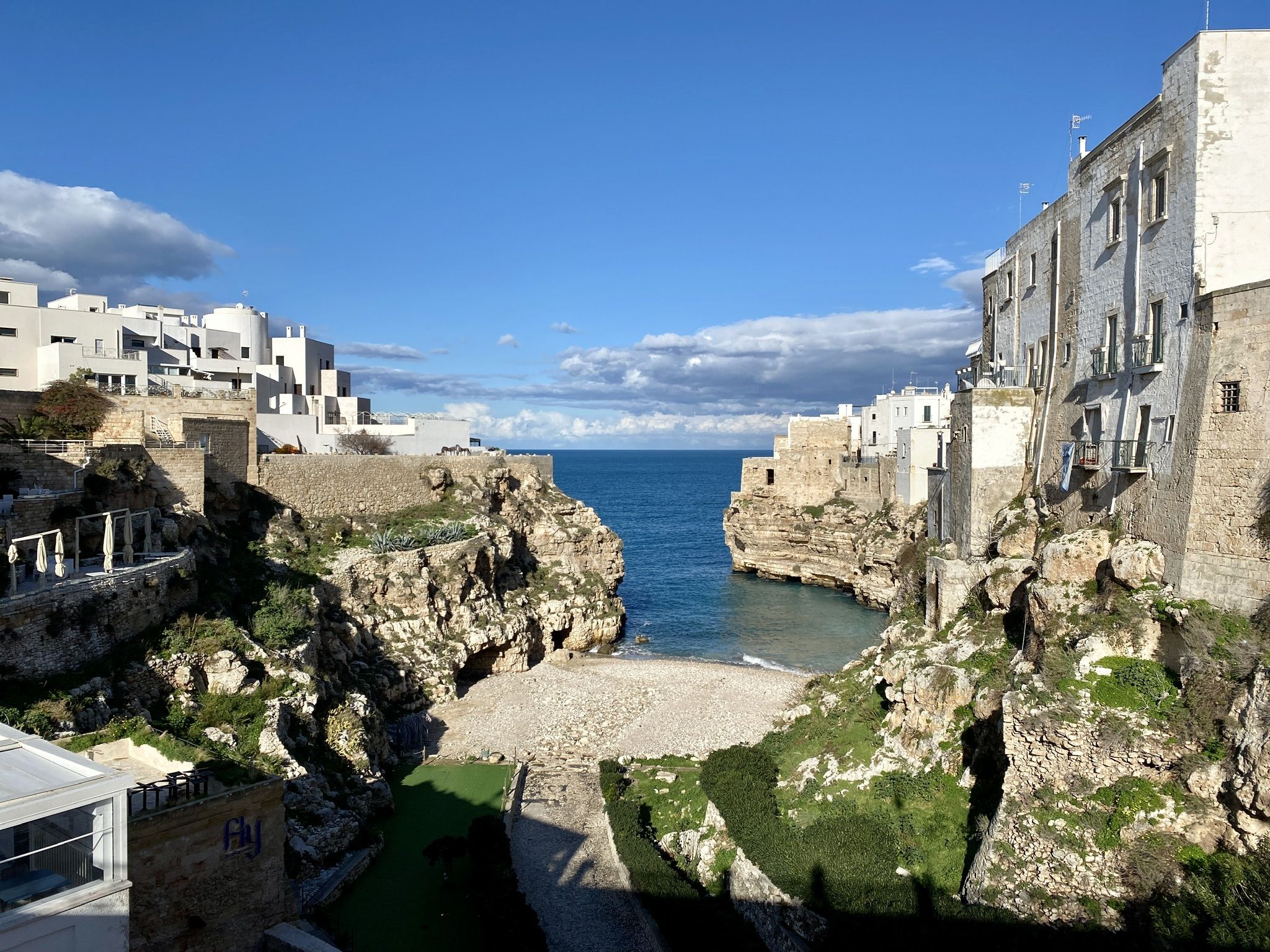
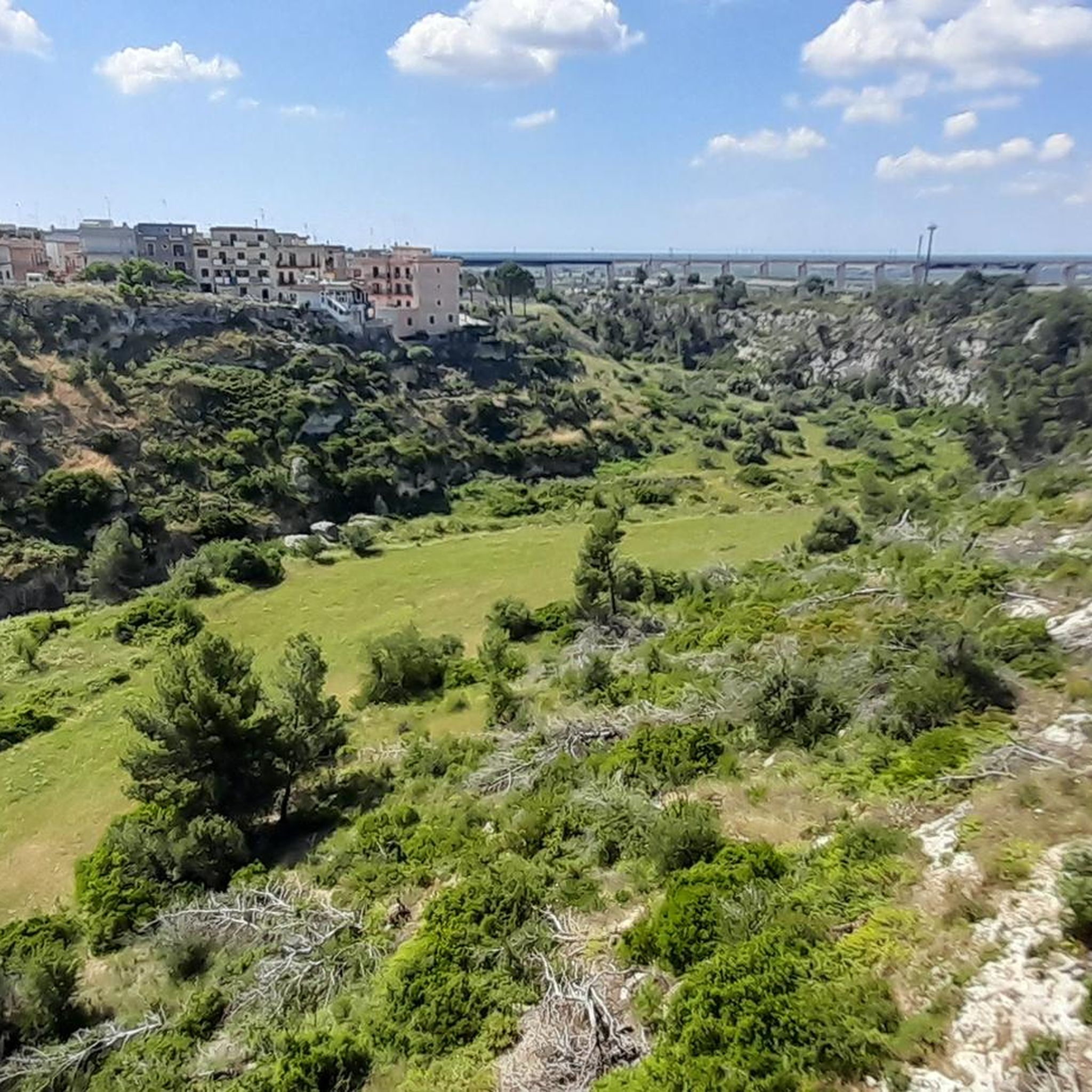
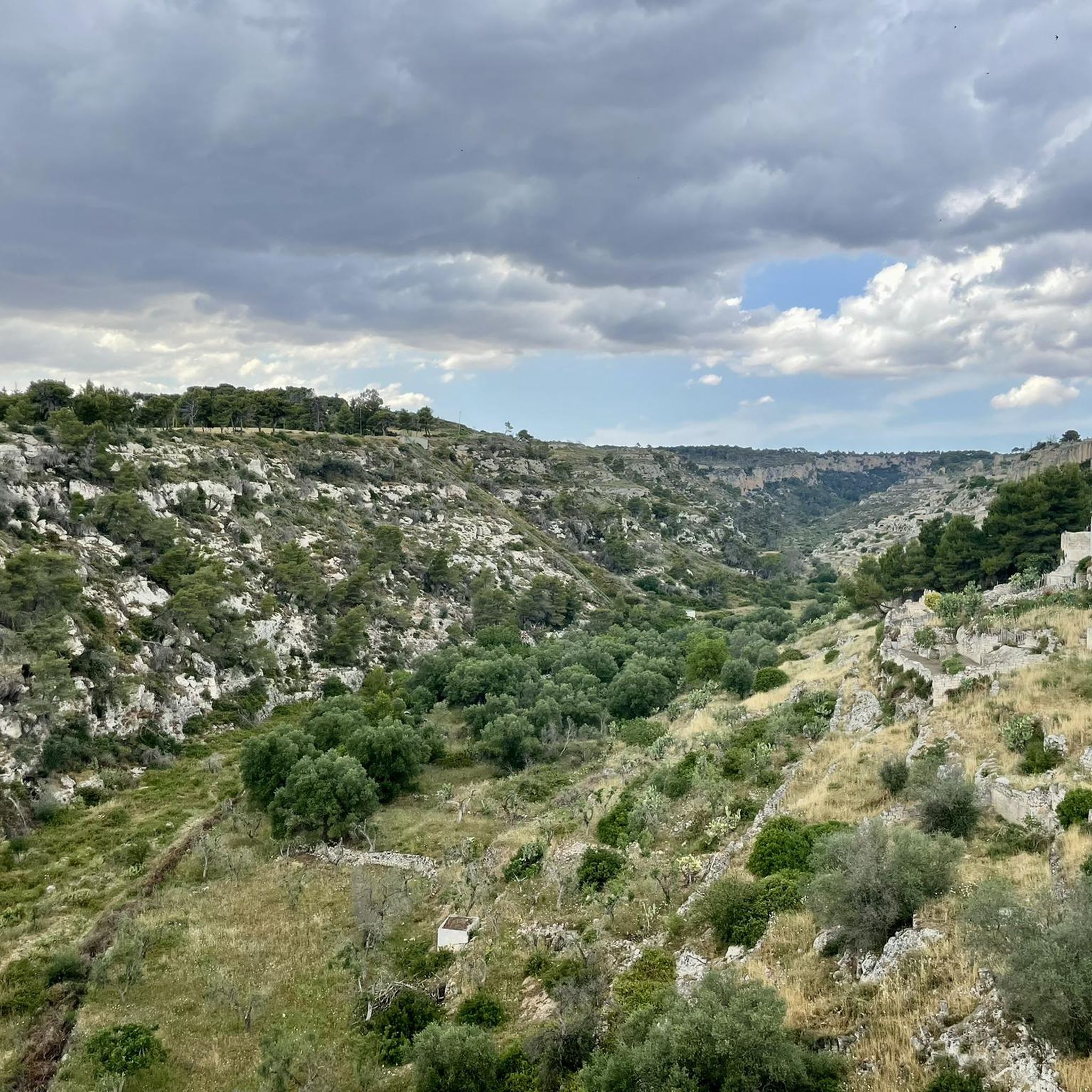
Hiking around Palagianello offers exploration of distinctive gravine, which are deep karst gorges carved into the landscape of Apulia. These geological features, formed by water erosion on limestone, create unique scenery rich in biodiversity and historical significance. The area is characterized by steep canyon walls, Mediterranean scrubland, and ancient rock-hewn settlements integrated into the natural environment. This region is part of the Parco Naturale Regionale Terra delle Gravine, highlighting its ecological importance.
Best hiking trails around Palagianello
- The most popular…
Last updated: July 8, 2026
4.5
(14)
42
hikers
24.2km
06:40
410m
410m
Hard hike. Very good fitness required. Easily-accessible paths. Suitable for all skill levels.
4.7
(3)
10
hikers
5.84km
01:40
130m
130m
Easy hike. Great for any fitness level. Easily-accessible paths. Suitable for all skill levels.

Sign up for free
9
hikers
12.0km
03:14
150m
150m
Moderate hike. Good fitness required. Easily-accessible paths. Suitable for all skill levels.
4.0
(8)
9
hikers
5.59km
01:31
70m
80m
Easy hike. Great for any fitness level. Easily-accessible paths. Suitable for all skill levels.
4.2
(6)
4
hikers
8.45km
02:18
130m
130m
Moderate hike. Good fitness required. Easily-accessible paths. Suitable for all skill levels.
Get access to more routes and recommendations from other explorers.
Sign up for free
Already have an account?
Our route recommendations are based on thousands of hikes, rides, and runs completed by other people on komoot.
Start today with a free account
Your next adventure awaits.
Login or Signup
Other adventures around Palagianello

Tips from the Community

The Church of Sant'Angelo, the only rock church of Italy to be arranged on two floors.
0
0
By the street artist Tommaso Resta, known as Tommy il Monello. The work, a clear sign of a new beginning, portrays two children embracing each other, giving each other energy and pure love. «We decided to make it happen - the comment of Mayor Borracci and Councilor Galante - with the hope of looking to the future with enthusiasm, soon putting this negative period linked to the pandemic behind us.
0
0
Monello ist a street artist from Puglia.
0
0
The castle stands on the highest point of the town, in a strategic position to control the surrounding territory. From its summit you can observe the territory at 360 degrees up to the mountains of Sila (Calabria). There is a relationship of continuity between the houses dug into the ravine and the castle, whose construction probably began in the first half of the 16th century by the Domini Roberti family for the defense of the hamlet of Palagianello , finished, but not completely, in the 18th century under the rule of the Caracciolo. The castle, which has a massive quadrangular plan with a large central courtyard , equipped with four towers at the external corners, has all the defensive structural characteristics of the 16th century fortresses . The current entrance to the castle is located on the south side, while originally it was located to the west and was accessed via a drawbridge located over a moat, still existing today, which runs along the entire west side and part of the north side. The drawbridge has been replaced by a brick bridge with two arches. On the lower floor there are the warehouses and stables while on the upper floor there are the rooms that were used as the feudal lord's residence; in correspondence with the entrance , at the end of the staircase that leads to the upper floor there is a large hall for representative meetings with a vaulted ceiling, supported by apse arches, on which the family coat of arms is frescoed. In a room on the ground floor there is a trap door that leads to a secret passage that flows into the ravine of Palagianello. In 1874 the old entrance was closed to create a chapel in honor of the Virgin of the Seven Sorrows designed by the architect Gabriele Califano , commissioned by Count Antonio Stella Caracciolo . The Chapel was given in perpetual use by Count Caracciolo to the Confraternity of the Addolorata.
0
0
Entirely dug in tuff, the chapel entitled to the Madonna delle Grazie is the heart of the namesake sanctuary lying on the ravine in Palagianello.
0
0
Two railway bridges (one current, one now uses as bicycle/pedestrian path) parallel to each other over the Gravina di Santa Lucia/Gravina Grande.
0
0
The first documents about the rupestrian settlement of Pesco date back to 1236, but legend has it that the construction of the church took place as an ex voto by an English captain, led to safe shore by a mysterious light during a stormy night in the Ionian Sea. The search for the miraculous light bought the captain on the edge of the ravine, where in one of the caves of the rock settlement, with an entrance facing the sea, a votive lamp was lit in front of a painting of the Virgin with Child. Here he built the ship-shaped building and from that moment on, people began to call it "Our Lady of the Light". Other sources associate the name "Pesco" to "piscus" or rocky spur, and it is precisely in this position that the church still stands today. The church has a Romanesque facade with some Gothic elements. The rould-arched main portal has prothyrun and columns decorated with vegetal, animal and fantastic motifs. The rose window ist flanked by two lions in profile on asymmetrical frames. In the left side of the nave, the portal leads to a small courtyard and to the rupestrian settlement (about 300m from the church).
0
0

functioning AQP fountain, near the Carmine church
1
0
Frequently Asked Questions
How many hiking trails are available in Palagianello?
There are over 25 hiking routes around Palagianello, offering a variety of experiences. These include 13 easy trails and 13 moderate trails, ensuring options for different fitness levels.
What kind of terrain can I expect on hikes around Palagianello?
Hiking in Palagianello primarily involves exploring the distinctive 'gravine'—deep karst gorges carved into limestone. You'll encounter steep canyon walls, Mediterranean scrubland, and paths that integrate with ancient rock-hewn settlements. The trails range from easy to moderate, with varied elevation changes as you traverse the unique geological features.
Are there any family-friendly hiking options in Palagianello?
Yes, Palagianello offers several easy trails suitable for families. For instance, the Hiking loop from Mottola is an easy 3.5-mile (5.6 km) path that can be completed in about 1 hour 30 minutes, leading through the local countryside. Many trails allow for exploration of the gravine without excessive difficulty.
Can I bring my dog on the hiking trails in Palagianello?
While specific regulations for dogs in the Parco Naturale Regionale Terra delle Gravine are not detailed, generally, dogs are welcome on trails in Italy if kept on a leash and waste is properly disposed of. It's always advisable to check local signage or park rules upon arrival, especially when entering protected natural areas or historical sites within the gravine.
Are there circular hiking routes available?
Yes, many of the hiking routes around Palagianello are circular, allowing you to start and end at the same point. Examples include the View of Palagianello – FS 851.113 locomotive loop from Castellaneta and the View of Gravina Santa Lucia – Steam Locomotive loop from Palagianello, both offering comprehensive exploration of the area's natural and historical highlights.
What historical or cultural sites can I discover while hiking?
The gravine are rich in history. You can explore ancient crypts, rock-cut settlements, and cave houses, some with original frescoes. Notable sites include the rock church of Santa Lucia and the church of Jazzo Rivolta. The FS 851.113 locomotive and the impressive Ponte di Santo Stefano, an old railway bridge, are also significant landmarks along some routes.
What are some notable natural features to see in the gravine?
The primary natural feature is the Gravina of Palagianello itself, a stunning karst canyon. You'll encounter steep limestone walls, diverse Mediterranean scrubland, and a variety of flora and fauna, including holm oaks, Aleppo pines, wild orchids, and various bird species. The area is part of the Parco Naturale Regionale Terra delle Gravine, highlighting its ecological importance.
Where can I park when hiking in Palagianello?
While specific parking locations for every trailhead are not listed, Palagianello, as a village, typically offers public parking areas. Many routes, like those starting from Castellaneta or Palagianello itself, likely have accessible parking near their starting points. It's advisable to check komoot tour details for specific parking suggestions for your chosen route.
What is the best time of year to go hiking in Palagianello?
The best time to hike in Palagianello is generally during the spring (April-May) and autumn (September-October) when temperatures are milder and the Mediterranean vegetation is at its most vibrant. Summers can be very hot, making early morning or late afternoon hikes more comfortable. Winters are generally mild, but some trails might be slippery after rain.
Are there any specific attractions or landmarks I should look out for?
Absolutely! Beyond the natural beauty of the gravine, you can visit the FS 851.113 locomotive, a historic steam engine, and the Rock Church of San Nicola. The Mouth of the Lato River is also a significant natural attraction, particularly for birdwatching. The Renaissance Massafra Castle is another nearby point of interest.
What do other hikers say about the trails in Palagianello?
The trails in Palagianello are highly rated by the komoot community, with an average score of 4.0 stars from over 20 reviews. Hikers often praise the unique karst canyon landscapes, the historical rock-hewn settlements, and the blend of natural beauty with archaeological intrigue.
Are there any longer or more challenging hikes for experienced hikers?
While most trails are easy to moderate, some routes offer longer distances and more varied elevation changes. For example, the Santa Lucia Bridge – Cathedral of Castellaneta loop from Castellaneta is a moderate 7.8-mile (12.6 km) hike with over 220 meters of elevation gain, providing a more extended exploration of the gravine and surrounding areas.
Most popular attractions around Palagianello

Get inspired with the komoot mobile app


Explore more
Browse the best Hikes in other regions.
