The best MTB trails around Bagnoli Del Trigno
3.5
(9)
67
riders
32
rides
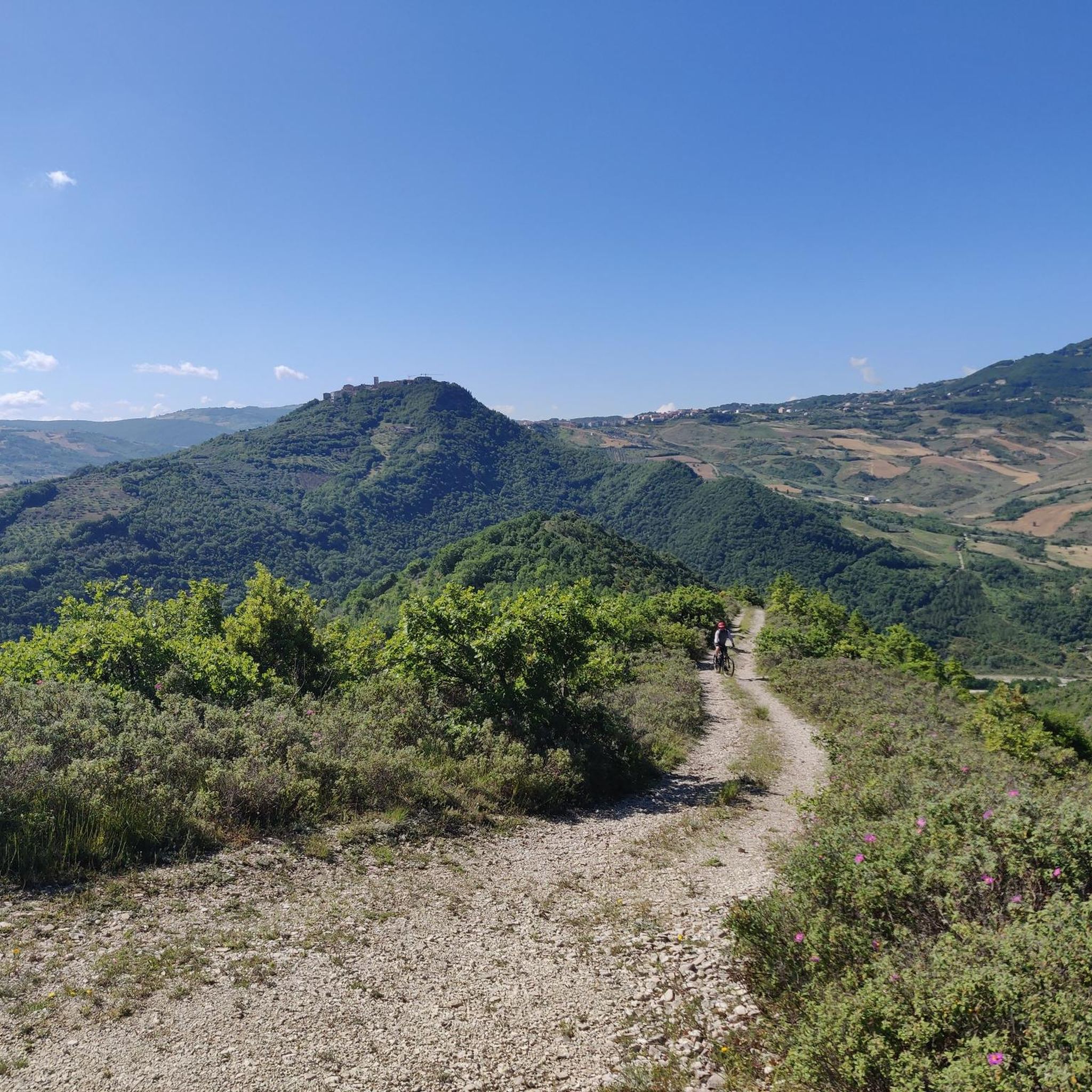
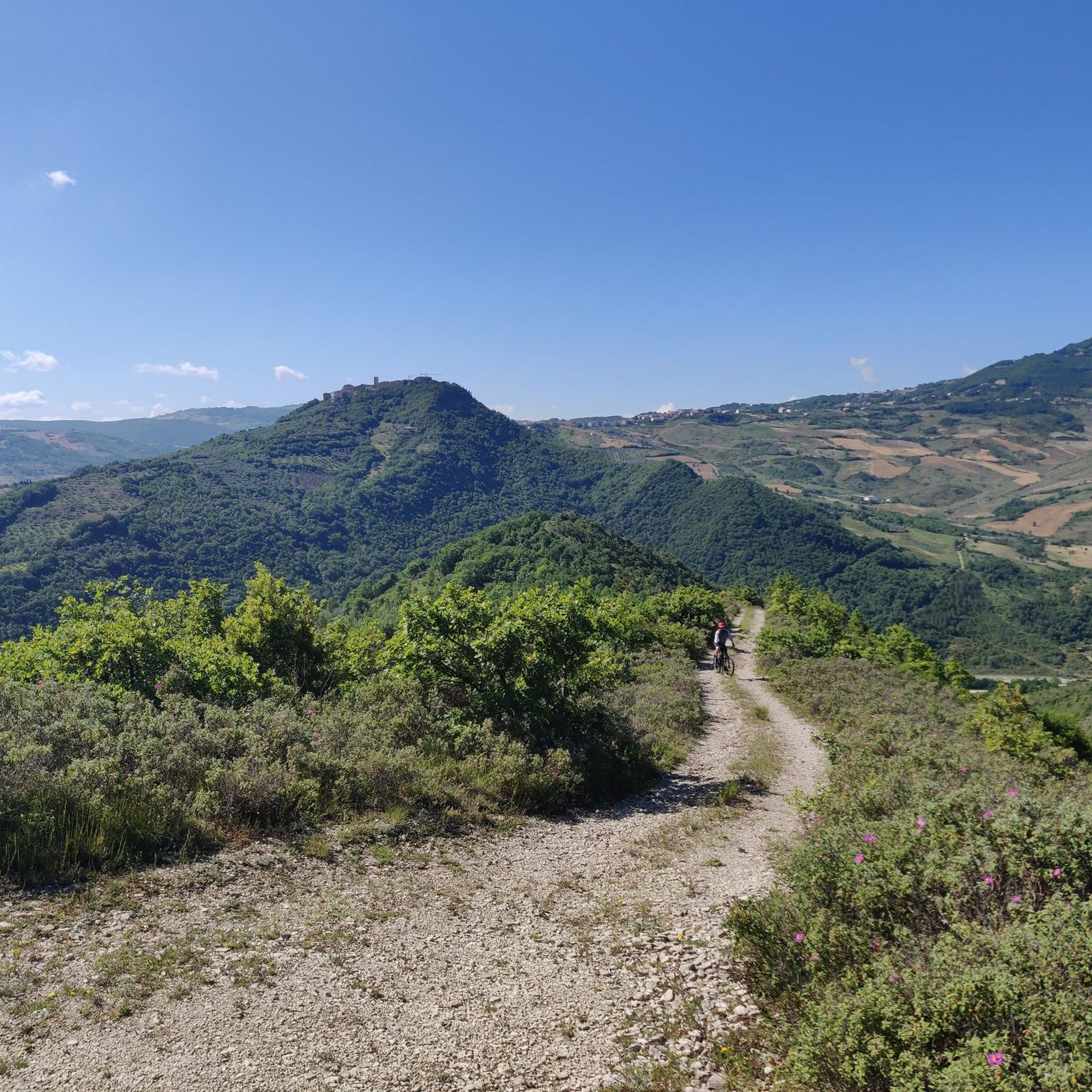
Mountain biking around Bagnoli Del Trigno features a landscape characterized by rolling hills, dense woodlands, and river valleys, providing varied terrain for mountain bike enthusiasts. The region offers a mix of ascents and descents, often on natural trails and gravel paths. Riders can expect to navigate through forested areas and open countryside, with some routes offering views of the surrounding Molise landscape. The area's topography lends itself to a range of mountain bike trail difficulty levels.
Best mountain bike trails…
Last updated: October 8, 2026
22.6km
02:00
580m
580m
Moderate mountain bike ride. Good fitness required. Suitable for all skill levels.
25.0km
02:14
750m
750m
Moderate mountain bike ride. Good fitness required. Advanced riding skills necessary.

4.0
(1)
13
riders
53.3km
03:41
880m
880m
Moderate mountain bike ride. Good fitness required. Suitable for all skill levels.
1.0
(1)
8
riders
43.8km
02:57
640m
640m
Moderate mountain bike ride. Good fitness required. Advanced riding skills necessary.
5
riders
49.7km
03:55
1,180m
1,180m
Hard mountain bike ride. Very good fitness required. Suitable for all skill levels.
Get access to more routes and recommendations from other explorers.
Already have an account?
Our route recommendations are based on thousands of hikes, rides, and runs completed by other people on komoot.
Start today with a free account
Your next adventure awaits.
Popular around Bagnoli Del Trigno

Tips from the Community

Madonna at Lake Carpinone, devotion from the people of Carpinone for having been saved from German barbarity in 1944.
1
0

I knew the name for being the destination of the "Trans-Siberian of Italy" is a secondary railway line in Abruzzo and Molise. It is now crossed by tourist trains as part of the "Timeless Tracks" project
0
0

The Hermitage, at the foot of the Morgia Quadra of Frosolone (IS), is a true pearl. To welcome visitors, the ancient church of Sant'Egidio which, in the Middle Ages, was a chapel, dependent on the nearby convent of Sant'Onofrio. Protected by the Antonians, according to tradition, it has become famous for the numerous miraculous healings of which the monks were protagonists. At the beginning of 1300, after the Church of Rome excommunicated the congregation, the chapel was destroyed together with the convent of Sant'Onofrio. In the following years, it was rebuilt, probably by hermits and livestock sellers, who went to Sant'Egidio for the end-of-summer fair. In 1704, thanks to Michele Vago and Antonio Zaccagnino, a real church was built in place of the chapel. Falling to pieces with the earthquake of 1805, the small complex was rebuilt and subsequently restored several times. The last renovation took place in the 1980s. The church of Sant'Egidio represents a place of worship very dear to the people of Frosolone, above all because it houses the statue of the Crowned Virgin which, according to tradition, has appeared near the church several times. Furthermore, inside the sacred walls, an ancient and precious manuscript is preserved which lists some miracles performed by Sant'Egidio. Going beyond the church, what is most striking is, certainly, the surrounding landscape. In these sections, it is possible to see some horses in the wild or, more simply, calm herds of cows and flocks of sheep that, at sunset, go to water, after an abundant meal of fodder. The same one that makes Frosolone milk and cheeses so good as to satisfy the palates of the most severe gourmets. Source: www.moliseeccellenze.it There is also a fountain for hikers!
1
0
Lake San Lorenzo, in the territory of Civitanova del Sannio, is a small karst lake located at approximately 1,100 meters above sea level.
0
0
Mountain refuge immersed in the woods equipped with tables and fire points
0
0

The Bosco di Trivento is a splendid nature reserve located in Molise, characterized by large wooded extensions. Ideal for hiking and mountain biking. In this area you can also find the park's wind turbines.
0
0

Morgia di Pietravalle or Morgia dei Briganti in Salcito Millions of years ago, while the most important mountain ranges in Europe were forming, the movements of the earth's crust brought to the surface large rocky spurs born in a marine environment: these are the famous Morge, monumental rocks rich in fossils.
0
0

The Carpinone waterfalls and the town center are very beautiful.
8
0
Frequently Asked Questions
What are the difficulty levels of mountain bike trails around Bagnoli Del Trigno?
The mountain bike trails around Bagnoli Del Trigno primarily feature moderate and difficult routes. There are 18 moderate trails and 9 difficult trails available, offering varied terrain for different skill levels.
Are there challenging mountain bike routes for experienced riders?
Yes, for experienced riders seeking a challenge, there are 9 difficult mountain bike routes. One notable difficult route is the Rifugio Valle Canla – Hermitage of Sant'Egidio loop from Pescolanciano-Chiauci, which covers 31.3 miles (50.4 km) with over 3,800 feet (1,165 meters) of elevation gain.
What is the typical length and duration of mountain bike trails in this region?
The mountain bike trails in Bagnoli Del Trigno vary in length and duration. For example, the Morgia di Pietravalle Loop is 14.1 miles (22.6 km) and takes about 2 hours, while the View of Venafro – Strada Salita di Melfi loop from Pescolanciano-Chiauci is 33.1 miles (53.3 km) and typically takes around 3 hours 41 minutes.
Are there family-friendly mountain biking options near Bagnoli Del Trigno?
While there are no trails specifically classified as 'easy' for beginners or very young children, many of the moderate routes can be enjoyed by active families with some mountain biking experience. These trails often feature a mix of natural paths and gravel roads through woodlands and open countryside.
When is the best time of year to go mountain biking in Bagnoli Del Trigno?
The best time for mountain biking in Bagnoli Del Trigno is generally during spring and autumn when temperatures are milder and the landscape is vibrant. Summer can also be suitable, especially in the mornings or late afternoons, though some routes might be exposed to the sun. Winters can be cold and some trails may be affected by snow or wet conditions.
Do the mountain bike trails offer scenic viewpoints?
Yes, many mountain bike trails in the region traverse rolling hills and open countryside, offering panoramic views of the surrounding Molise landscape. For instance, the View of Venafro – Strada Salita di Melfi loop from Pescolanciano-Chiauci is known for its varied rural landscapes and potential vistas.
Are there many loop mountain bike trails in the area?
Yes, the majority of mountain bike routes around Bagnoli Del Trigno are designed as loops, allowing riders to start and finish at the same point. Examples include the Morgia di Pietravalle Loop and the Sant'Angelo Limosano and Bosco di Trivento Loop.
What can I see along the mountain bike trails or nearby?
Beyond the natural beauty, you can explore several interesting sites. The Sant'Angelo Limosano and Bosco di Trivento Loop passes near the historic village of Sant'Angelo Limosano. Other nearby attractions include the town of Castropignano with its Castello d'Evoli, and the charming village of Bagnoli del Trigno itself.
Is parking available near the mountain bike trails?
While specific parking areas are not always explicitly marked for each trail, you can typically find parking in or near the starting points of the routes, especially in the villages or designated areas within the natural landscapes. It's advisable to check the route details on komoot for suggested starting points.
What do other mountain bikers enjoy the most about mountain biking in Bagnoli Del Trigno?
The area is highly rated by the komoot community, with an average score of 4.4 stars from 8 reviews. Riders often praise the diverse scenery, which includes wooded paths, open countryside, and rolling hills, providing a good mix of terrain for exploration.
Are there any less-known or 'hidden gem' mountain bike trails worth exploring?
While the guide highlights popular routes, the region has 27 mountain bike tours in total, suggesting many opportunities for discovery beyond the most frequented paths. Exploring routes like the Hermitage of Sant'Egidio – Valle della Morte Summit Cross loop from Frosolone can lead to less crowded experiences and unique natural settings.
Most popular attractions around Bagnoli Del Trigno

Get inspired with the komoot mobile app


Explore more
Browse the best MTB trails in other regions.
