Attractions and Places To See around Tuscania - Top 20
Best attractions and places to see around Tuscania include a rich tapestry of ancient Etruscan heritage, medieval architecture, and picturesque natural landscapes. This historic town, nestled in the Tuscia region of Italy, was once an important Etruscan city and later a Roman stronghold along the Via Clodia. The surrounding countryside, crisscrossed by the Marta River, is largely protected as a nature reserve, offering rolling hills and lush olive groves.
Best attractions and places to see around Tuscania
- The most popular…
Last updated: October 10, 2026
Historic Center of Marta
Highlight • Historical Site
Translated by Google •
Tip by

Rocca Farnese of Capodimonte
Highlight • Castle
Translated by Google •
Tip by

Sign up now to discover places like this
Get recommendations on the best single tracks, peaks, & plenty of other exciting outdoor places.
Vulci Archaeological Site
Highlight • Historical Site
Translated by Google •
Tip by

Gravel section along the lake
Highlight (Segment) • Cycleway
Translated by Google •
Tip by

Historic Center of Tarquinia
Highlight • Historical Site
Translated by Google •
Tip by

Sign up for free to discover even more attractions around Tuscania.
Already have an account?
Start today with a free account
Your next adventure awaits.

Tips from the Community

Located in the heart of the village of Marta, on the southern shore of Lake Bolsena, the Clock Tower is one of the main historical and tourist attractions of the area. This medieval tower, which stands majestically in the historic center, is not only a symbol of the city, but also a witness to centuries of history, art and local traditions. The Clock Tower stands imposingly at 21 meters high. Its structure is characterized by a truncated pyramid base with a square plan and an octagonal body that culminates with a small octagonal tower about 2.5 meters high, where the clock bells are located. This clock, installed in 1575 during the Farnese domination, is one of the distinctive elements of the tower. Originally, the tower was part of the Rocca, a medieval fortification that has seen numerous restorations and alterations due to the turbulent historical events of the village. The tower has survived various modifications and reconstructions, and today represents one of the most fascinating testimonies of Marta's past. (c) https://www.visittuscia.eu/torre-orologio-marta/
0
0

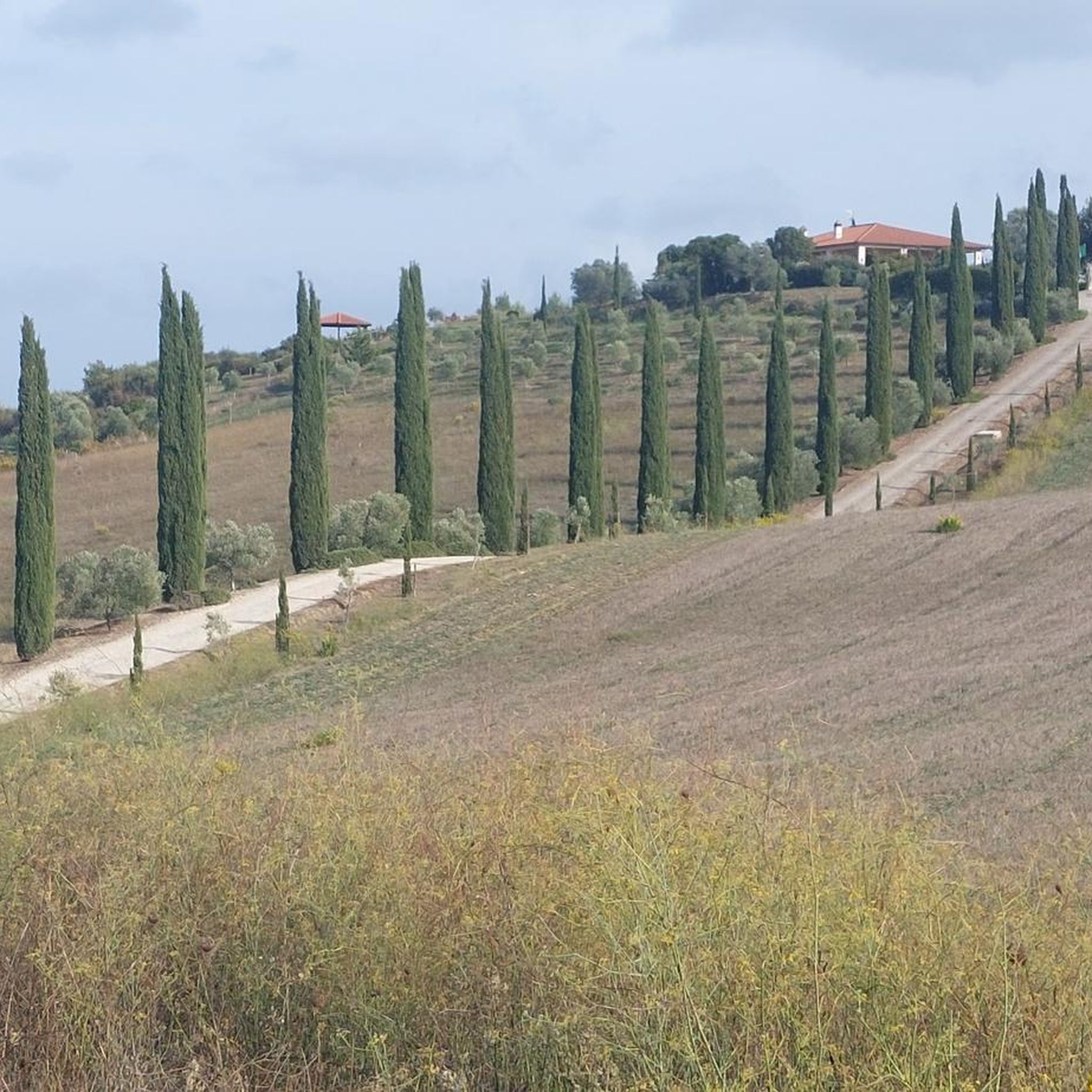
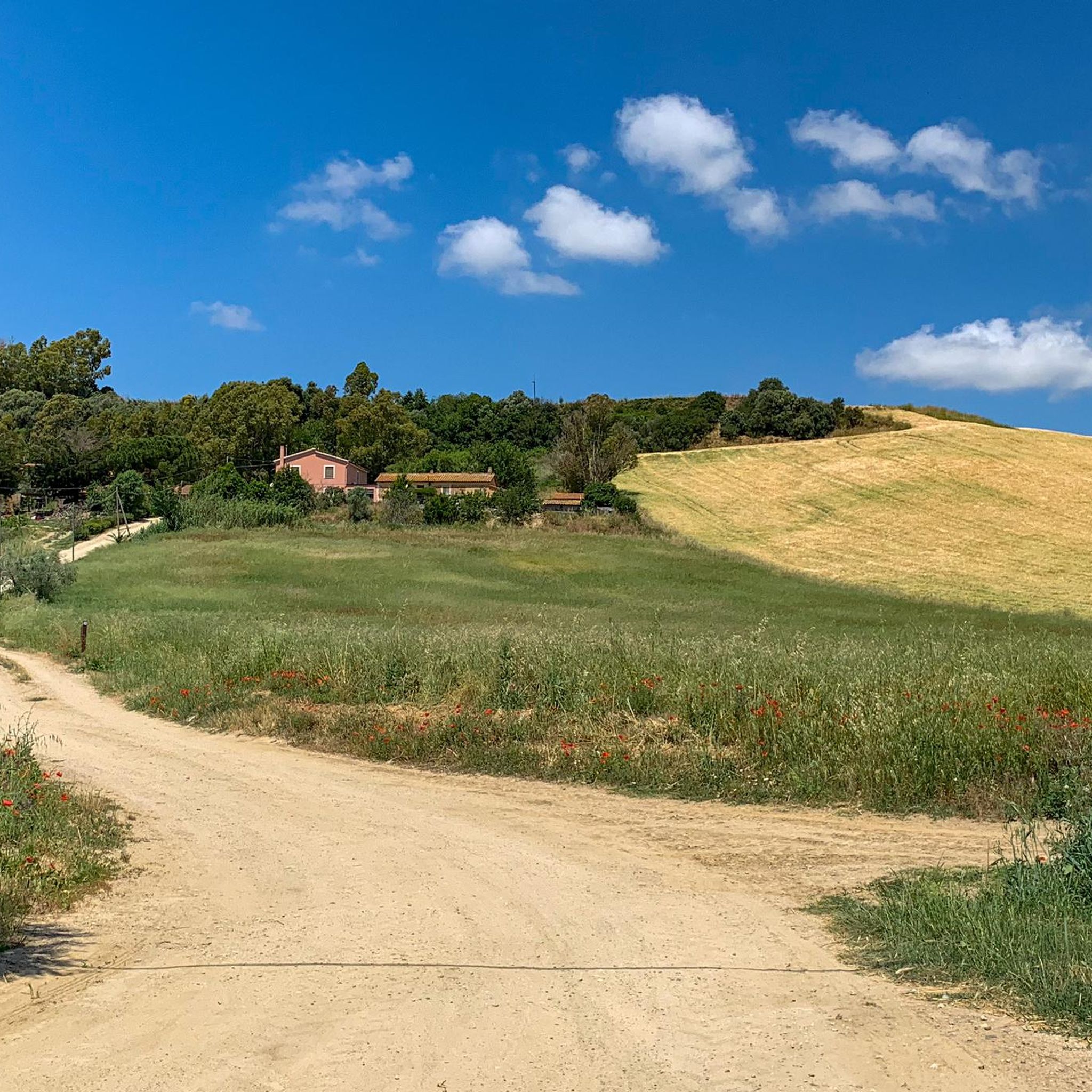
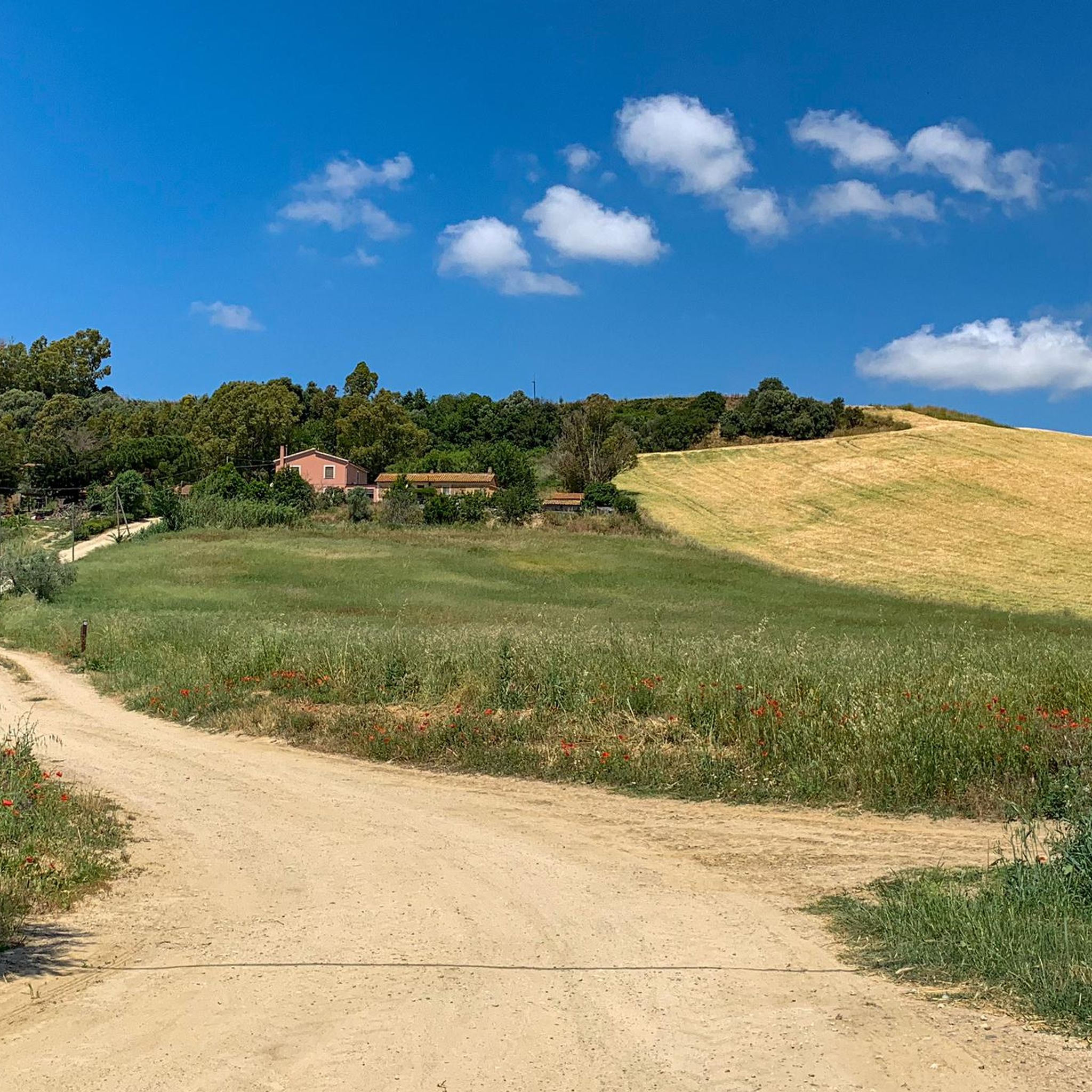
Gravel suitable for road bikes. It's worth it, because the road then becomes a good-quality paved section along the lake. Most paved secondary roads in Italy are in significantly worse condition than this gravel.
0
0

The Rocca Farnese, located in Tuscia, is an imposing 16th-century structure built around a medieval tower, which dominates the historic center of Ischia di Castro. The palace, unfinished for centuries, was recently restored by the new owner, bringing to light ancient forms and a walled Renaissance loggia. Originally built in the 13th century as a fortress, it was transformed into a palace in the 16th century, perhaps designed by Antonio da Sangallo the Younger. It was the residence of the Farnese, lords of the Duchy of Castro, and, after the end of the duchy in 1649, it passed to the Apostolic Chamber and various families.
3
0

Unfortunately I have to disagree. It will definitely be nicer. The gravel path, which is suitable for racing bikes but is borderline, is followed by asphalt paths directly by the lake, partly without any development until about 7 km before Bolsena. Everything can be ridden on a racing bike, although not too fast. The lap around the lake is not a racing tour if you want to get off the roads.
0
0

That's exactly how it is! Wonderfully secluded beach, clear water, you just have to swim! Further towards Bolsena there is more infrastructure (restaurants, boat rentals), but it doesn't get any nicer.
0
1

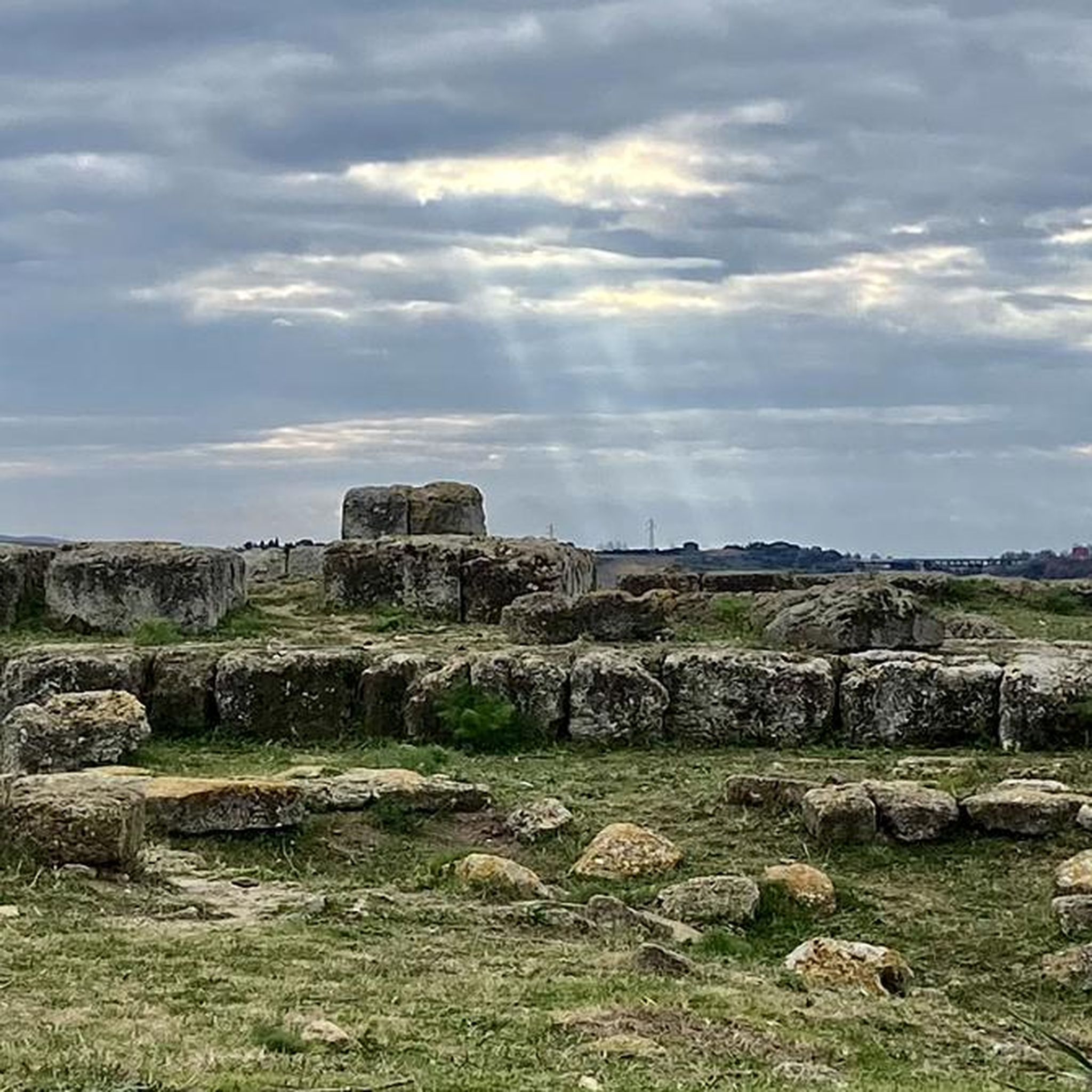
Vulci is an ancient Etruscan city 8 km from the Tyrrhenian Sea. Vulci was one of the Etruscan Twelve Cities. In history the city is mentioned only once on the occasion of a 280 BC. Mentioned of the triumph celebrated by the Romans over Vulci in the 4th century BC, when it was conquered by an army led by Tiberius Coruncanius. In 273, the Romans also made Cosa, which was part of Vulci as a port (today the ruins of Ansedonia), a colony. (Source: Wikipedia) The first parts of this ancient city were discovered in the 1950s. In 1970 another house was being built (party house?). The excavations are still ongoing. A visit to the archaeological park costs €10. There are signs for a long loop and a short loop. The long one supposedly lasts 3 hours, the short one 2 hours. We walked the long way (5km). It is advisable to follow the recommended walking direction, as most of the excavations can be seen at the beginning. You can then still decide whether to go the full round or not. It also makes sense not to go when it's too hot, as there is almost no shade.
1
0

Tarquinia is a city in the province of Viterbo, famous for being the cradle of the ancient Etruscan people. Here you can visit the archaeological museum and the Etruscan necropolis, a UNESCO World Heritage Site.
2
0
Stretch of a couple of km unpaved, but it is a gravel in good condition that can also be traveled by road bike. The road runs along one of the best beaches of Lake Bolsena.
2
0
Frequently Asked Questions
What historical and cultural sites can I explore in Tuscania?
Tuscania is rich in history, offering several significant sites. You can visit the impressive Basilica of San Pietro and the Basilica di Santa Maria Maggiore, both showcasing beautiful Romanesque architecture. Wander through the well-preserved Historic Center of Tuscania with its medieval walls and towers, or explore the ancient Etruscan Necropolises surrounding the town. For a deeper dive into the past, the National Archaeological Museum of Tuscania houses a collection of Etruscan and Roman artifacts.
Are there any ancient Roman or Etruscan sites to visit around Tuscania?
Yes, Tuscania has a strong connection to both Etruscan and Roman civilizations. You can explore various Etruscan Necropolises, such as those around Colle San Pietro, Madonna dell'Olivo, and Carcarello, which provide insight into the region's ancient inhabitants. Additionally, remnants of the ancient Roman road, Via Clodia, and other Roman archaeological sites can be found, highlighting Tuscania's past as a Roman stronghold.
What natural attractions are there around Tuscania?
The area around Tuscania offers beautiful natural landscapes. You can enjoy panoramic views from Colle San Pietro or the Parco di Torre Ravello. The surrounding countryside is part of the Tuscania Natural Reserve, featuring rolling hills and lush olive groves. A unique natural area is the Sughereta di Tuscania, a protected cork oak forest known for its diverse plant and animal species.
Can I find good viewpoints in Tuscania?
Absolutely. For majestic views of the area, head to Colle San Pietro, where the ancient basilica stands. Another excellent spot is the Parco di Torre Ravello, which offers sweeping panoramic views of Tuscania's landscape. The medieval walls and towers within the historic center also provide picturesque vistas of the surrounding countryside.
Are there opportunities for outdoor activities like hiking or cycling near Tuscania?
Yes, the region around Tuscania is excellent for outdoor enthusiasts. You can find numerous routes for hiking, gravel biking, and mountain biking. For hiking, explore trails like the 'Ancient Via Clodia Stage 08 Loop' or the 'Lavello Tower Park – Tuscania Historic Center loop'. Cyclists can enjoy routes such as 'Marta – Tuscania loop from Capodimonte' or the 'Gravel section along the lake' near Lake Bolsena. You can find more details and routes in the Hiking around Tuscania, Gravel biking around Tuscania, and MTB Trails around Tuscania guides.
What are some family-friendly attractions in the area?
Families will enjoy exploring the Historic Center of Tarquinia, which is noted as a family-friendly destination. It's a city rich in history, offering a mix of different historical periods, including towers, churches, and medieval walls. The charming cobblestone streets and ancient sites provide an engaging experience for all ages.
What is the Historic Center of Marta known for?
The Historic Center of Marta is a beautiful, flowery old town characterized by its stepped alleys. It's a historical site located not far from the Marta river, offering a picturesque setting for a stroll and exploration.
What can I expect at Rocca Farnese of Capodimonte?
The Rocca Farnese of Capodimonte is a significant 16th-century castle built around a medieval tower. While the castle itself is private property, visitors can enjoy excellent views from the old castle grounds and explore the narrow, charming roads in the surrounding old city center. It's a great spot for history enthusiasts and those seeking scenic vistas.
What makes the Historic Center of Tarquinia a significant place to visit?
The Historic Center of Tarquinia is a city rich in history, recognized as one of the most important Etruscan settlements. It presents a fascinating mix of different historical periods, featuring ancient towers, churches, and medieval walls. It's also home to an Etruscan UNESCO World Heritage Site, making it a must-visit for those interested in ancient civilizations.
Are there any interesting fountains in Tuscania's historic center?
Yes, Tuscania's historic center features a couple of notable fountains. The Fontana Grande (also known as Fontana di San Giacomo) is a stunning 17th-century fountain located in Piazza Domenico Bastianini, with its basin carved from a single block of stone. You can also find the Fontana delle Sette Cannelle, considered the oldest spring in Tuscania.
What do visitors enjoy the most about the cycling routes near Lake Bolsena?
Visitors particularly enjoy the 'Gravel section along the lake' near Lake Bolsena. This stretch, while unpaved for a couple of kilometers, is generally in good condition and can even be traveled by road bike. It runs along one of the best beaches of Lake Bolsena, offering scenic views and a pleasant cycling experience. Many find it a worthwhile detour, especially as it often connects to good-quality paved sections along the lake.
What kind of medieval architecture can I see in Tuscania?
Tuscania is renowned for its well-preserved medieval architecture. You can admire the town's Medieval Walls and Towers, built with local volcanic stone, which once protected the city. Many towers, originally symbols of wealth, are now integrated into residential dwellings. The narrow, winding cobblestone streets of the Historic Center of Tuscania are filled with ancient stone buildings and noble palaces, offering a true step back in time.
Most popular attractions around Tuscania

Get inspired with the komoot mobile app


Explore more
Still not found the Highlight you’re looking for? See guides of the top attractions in other regions:
