Attractions and Places To See around Portomaggiore - Top 20
Attractions and places to see around Portomaggiore offer a blend of historical landmarks, cultural sites, and natural beauty within the province of Ferrara, Italy. The town's past as an important river port shaped its historical significance. Visitors can explore ducal residences, archaeological sites, and protected natural areas. This region provides diverse opportunities for exploration and discovery.
Best attractions and places to see around Portomaggiore
- The most popular attractions is Delizia del Verginese, a historical site that was originally a country farmhouse transformed into a ducal residence in the early 16th century. It is recognized as a UNESCO site, illustrating the impact of Renaissance culture on the natural landscape.
- Another must-see spot is Delizia di Benvignante, a castle built in 1464 by Pietro Benvenuto degli Ordini. This Delizia was commissioned by Borso d'Este and later declared a World Heritage Site by Unesco.
- Visitors also love Le Vallette di Ostellato Nature Reserve, a natural monument consisting of 4 valley loops which form a freshwater wetland. This oasis is home to over 150 species of aquatic birds and offers opportunities for bird watching, walking, and cycling.
- Portomaggiore is known for its historical landmarks, ducal residences, and natural oases. The area offers a variety of sites to explore, from ancient Roman necropolises to Renaissance gardens.
- The attractions around Portomaggiore are appreciated by the komoot community, with more than 30 upvotes and 8 photos shared.
Last updated: July 6, 2026
Delizia del Verginese
Highlight • Historical Site
It is public, can be visited.
Source Wikipedia
Translated by Google •
Tip by

Le Vallette di Ostellato Nature Reserve
Highlight • Natural Monument
They consist of 4 valley loops which constitute a biotope of a wetland of fresh water.
In the Vallette there are 150 species of aquatic birds, nesting.
You can see all kinds of herons, the great white, the gray and the red, numerous waders, including the Black-winged stilt, birds of prey, such as the marsh harrier, the buzzard.
The vegetation is typical of freshwater wetlands, characterized in the permanently flooded areas by reeds, white and yellow water lilies, flowering rush. On the banks there are white willow, water chestnut and elderberry.
The Oasis is well equipped for various activities such as bird watching, walking, cycling and horseback riding, sport fishing.
At the entrance there is also an astronomical observatory.
N.B. I would add a negative note: the final part of the Oasis is closed and not usable for about 6 km of path and there is an access price to the Oasis for both walking and cycling of € 2 per person.
Apart from the cost of the ticket which would certainly be worth the price for the beauty of the area, it is not acceptable to find rotten and decaying unused wooden bridges and piers with closed routes due to general neglect.
Translated by Google •
Tip by

Sign up now to discover places like this
Get recommendations on the best single tracks, peaks, & plenty of other exciting outdoor places.
Sign up for free
Delizia di Benvignante
Highlight • Castle
The Delizia, built in 1464 by Pietro Benvenuto degli Ordini, was commissioned by Borso d'Este who donated it to his faithful secretary Teofilo Calcagnini, who made the residence available for meetings of the Filareti Academy. In 1481 the beautiful Beatrice d'Este stayed there. It then passed to various owners, in the 19th century the Delizia was purchased by Count Luigi Gulinelli (whose coat of arms still appears today above the entrance door) who modified the structure by raising it and making it more imposing and squared and surrounding it by four hectares of park. He also endowed it with famous stables for breeding racing horses which were also visited by Vittorio Emanuele II. Currently the residence belongs to the municipality of Argenta.
In 2000, the Delizia di Benvignante was declared a World Heritage Site by Unesco, together with other Delights.
Translated by Google •
Tip by

Belriguardo Castle
Highlight • Castle
Source Wikipedia
Translated by Google •
Tip by
Villa della Mensa
Highlight • Historical Site
The Villa della Mensa is an ancient villa of the fifteenth century counted among the "delizie", residences linked to the Este family built in the surroundings of Ferrara. It is located in the municipality of Copparo, near the hamlet of Sabbioncello San Vittore. The Villa bears this name because in the past it was owned by the Archbishop's Mensa of Ferrara.
The villa was never part of the Este family's assets, but is linked to the lords of Ferrara for the illustrious people who frequented it and for those who used it as a residence, especially the Bishops of the Este dynasty.
The rumor has been circulating for several years that ambiguous events occur in the villa, both inside and outside, in fact in the past some people have abandoned it for having had the perception of "unwanted presences".
The visit is only possible on the occasion of some events.
Translated by Google •
Tip by
Sign up for free to discover even more attractions around Portomaggiore.
Sign up for free
Already have an account?
Start today with a free account
Your next adventure awaits.
Login or Signup

Tips from the Community

Built at the behest of Niccolò d'Este in 1435, it was the first of the famous Este residences to be built outside the walls of Ferrara and always remained the richest and most sumptuous. ... The castle of Belriguardo was arranged around two courtyards. In front of the majestic entrance tower, beyond the first large courtyard, was the so-called high court, the prince's residence, entirely built on two floors (today we unfortunately only see it at half its original height) with loggias and porticoes everywhere, the walls were plastered and painted with the Este weapons and at the back there were endless gardens marked by perfect geometric rhythms with waterways, fountains, bridges, exotic plants and hedge mazes, to make the stay of the guests and the Court as pleasant as possible Este. (Source: https://www.ferraraterraeacqua.it/it/voghiera/scopri-il-territorio/arte-e-cultura/ville-dimore-teatri-storici/delizia-di-belriguardo)
0
0
Originally a country farmhouse, the Verginese was transformed into a ducal residence in the early sixteenth century by Alfonso I d'Este and donated to Laura Eustochia Dianti. Upon the Duke's death, the lady retired there, making it her small private court and ordered its renovation, carried out mainly by Girolamo da Carpi. ... To the side there is a small eighteenth-century church, joined to the building via a portico, also from the same period. ... The nearby dovecote tower is a remnant of the appurtenances originally located around the delight and dates back to the 16th century. (Source: https://www.ferraraterraeacqua.it/it/portomaggiore/scopri-il-territorio/arte-e-cultura/ville-dimore-teatri-storici/delizia-estense-del-verginese)
0
0

Beautiful villa. The best side is the one on the side of the Po di Volano - which already deserves in itself. If you arrive from the provincial road, you will notice a small road on the side of the Po. Take that and maybe take a ride in the park along the river
0
0

one of the many very beautiful structures in the area, it would be nice to re-evaluate them for tourism
0
0

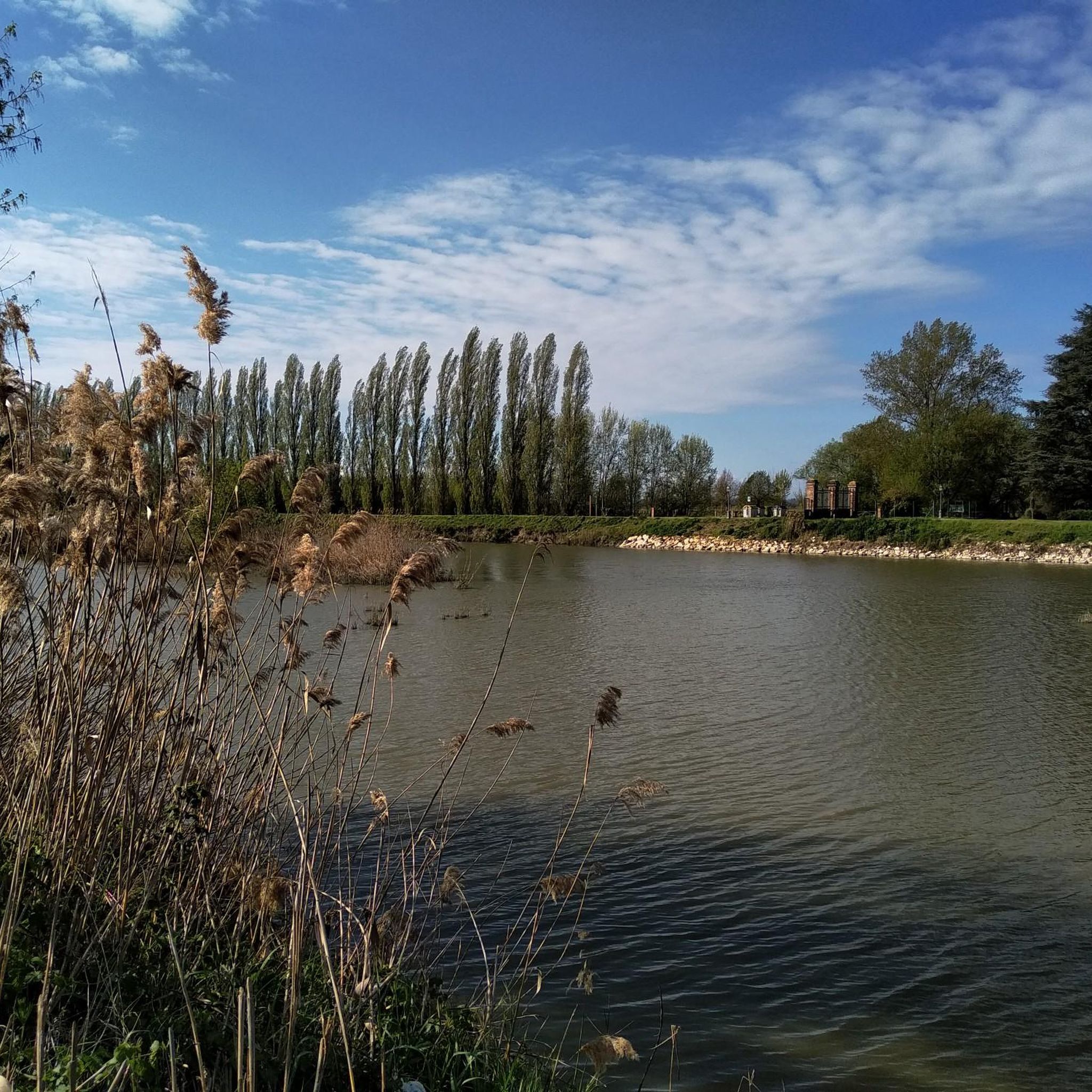
The Oasis of the Vallette of Ostellato is what remains of the ancient valleys that surrounded the town, spared from the last reclamation of the Mezzano valley and today an oasis of wildlife protection. They consist of 4 valley loops which constitute a biotope of a wetland of fresh water. In the Vallette there are 150 species of aquatic birds, nesting. You can see all kinds of herons, the great white, the gray and the red, numerous waders, including the Black-winged stilt, birds of prey, such as the marsh harrier, the buzzard. The vegetation is typical of freshwater wetlands, characterized in the permanently flooded areas by reeds, white and yellow water lilies, flowering rush. On the banks there are white willow, water chestnut and elderberry. The Oasis is well equipped for various activities such as bird watching, walking, cycling and horseback riding, sport fishing. At the entrance there is also an astronomical observatory. N.B. I would add a negative note: the final part of the Oasis is closed and not usable for about 6 km of path and there is an access price to the Oasis for both walking and cycling of € 2 per person. Apart from the cost of the ticket which would certainly be worth the price for the beauty of the area, it is not acceptable to find rotten and decaying unused wooden bridges and piers with closed routes due to general neglect.
0
0

History The Villa della Mensa is an ancient villa of the fifteenth century counted among the "delizie", residences linked to the Este family built in the surroundings of Ferrara. It is located in the municipality of Copparo, near the hamlet of Sabbioncello San Vittore. The Villa bears this name because in the past it was owned by the Archbishop's Mensa of Ferrara. The villa was never part of the Este family's assets, but is linked to the lords of Ferrara for the illustrious people who frequented it and for those who used it as a residence, especially the Bishops of the Este dynasty. The rumor has been circulating for several years that ambiguous events occur in the villa, both inside and outside, in fact in the past some people have abandoned it for having had the perception of "unwanted presences". The visit is only possible on the occasion of some events.
1
0
Beautiful and little known. One of the most important delights of the Borso d'Este period. The Delizia, built in 1464 by Pietro Benvenuto degli Ordini, was commissioned by Borso d'Este who donated it to his faithful secretary Teofilo Calcagnini, who made the residence available for meetings of the Filareti Academy. In 1481 the beautiful Beatrice d'Este stayed there. It then passed to various owners, in the 19th century the Delizia was purchased by Count Luigi Gulinelli (whose coat of arms still appears today above the entrance door) who modified the structure by raising it and making it more imposing and squared and surrounding it by four hectares of park. He also endowed it with famous stables for breeding racing horses which were also visited by Vittorio Emanuele II. Currently the residence belongs to the municipality of Argenta. In 2000, the Delizia di Benvignante was declared a World Heritage Site by Unesco, together with other Delights.
2
0
The Delizia del Verginese is one of the Este delights, a monumental residence that the Este family had built in Portomaggiore, in the current hamlet of Gambulaga. It was built in the form of a simple agricultural farmhouse near the Primaro and Sillaro rivers as early as the end of the 15th century and could therefore be reached from Ferrara by water. Then under the duke of Ferrara Alfonso I d'Este it was perhaps remodeled by Girolamo da Carpi and assumed its maximum splendour. In that period, the corner towers with a square plan, the elegant tympanums on the windows and the brick ashlar that frames the doors and towers were built.
0
0
Frequently Asked Questions
What historical sites can I explore around Portomaggiore?
Portomaggiore is rich in history. You can visit the Delizia del Verginese, a UNESCO-recognized ducal residence with a Renaissance garden. Another significant historical site is the Delizia di Benvignante, a castle built in 1464 and also a UNESCO World Heritage Site. Don't miss the Belriguardo Castle, known as the "Versailles of the Este family," which houses a civic museum. The Villa della Mensa, an ancient 15th-century villa, also offers a glimpse into the region's past.
Are there natural areas or wildlife spots near Portomaggiore?
Absolutely. The Le Vallette di Ostellato Nature Reserve is a freshwater wetland and a biotope for over 150 species of aquatic birds, perfect for birdwatching. You can also explore the Oasi di Porto / Oasi di Porto Trava, an 11-hectare natural oasis ideal for birdwatching and sport fishing, featuring islets connected by wooden bridges.
What kind of outdoor activities can I do around Portomaggiore?
The flat terrain around Portomaggiore is excellent for various outdoor activities. You can enjoy cycling, running, and mountain biking. For cycling, explore routes like the "Argine degli Angeli – Valle di Pesca loop" or the "Valle di Pesca – Flamingos in the Po Delta loop" which are part of the Gravel biking around Portomaggiore guide. Runners can find trails such as the "Running loop from Masi Torello" or "Running loop from Argenta" in the Running Trails around Portomaggiore guide. Mountain bikers have options like "The Cherry on the Cake – Pathway Along the Canal loop" from the MTB Trails around Portomaggiore guide.
Are there any family-friendly attractions in the Portomaggiore area?
Yes, several attractions are suitable for families. The Delizia del Verginese offers a historical experience with its Renaissance garden. The Le Vallette di Ostellato Nature Reserve is great for nature walks and birdwatching, engaging for all ages. Belriguardo Castle also welcomes families to explore its historical grounds and museum.
What is the best time of year to visit Portomaggiore's attractions?
The spring and autumn months generally offer pleasant weather for exploring historical sites and natural areas. If you're interested in local culture, the town's historical fair, documented since 1424, is a significant annual event held in the third week of September.
Can I find archaeological sites around Portomaggiore?
Yes, the region has notable archaeological sites. Near the Delizia del Verginese, you'll find the Archaeological Museum (Sepolcreto dei Fadieni), which documents a small Roman necropolis from the 1st and 2nd centuries A.D. Additionally, the Necropoli Romana di Voghenza, an imperial-age Roman necropolis, is always open to the public, showcasing burials from the 1st to 3rd centuries A.D.
Are there any cultural museums or centers in Portomaggiore?
Beyond the archaeological findings, you can visit the Centro di Documentazione del Mondo Agricolo Ferrarese (Ferrarese Agricultural Documentation Center) in San Bartolomeo. This museum provides insights into the history and traditions of Ferrara's rural civilization.
What are some hidden gems or lesser-known spots to visit?
While popular attractions are well-known, consider exploring the historic town center of Portomaggiore itself. Wander the streets between Via Garibaldi, Corso Vittorio Emanuele II, Via Alighieri, and Via Bernagozzi to discover Piazza Verdi and the 17th-century oval-shaped Church of Madonna dell'Olmo. The Villa della Mensa, though sometimes only open for events, is also a beautiful, less-frequented historical villa.
Are there cycling routes that connect multiple attractions?
Yes, a dedicated cycle-tourist route connects several key points of interest. This route links the Pieve di San Vito, the Valleys of Ostellato, the Delizia del Verginese, and the Roman necropolis of Voghera, offering a scenic way to explore the area's history and nature.
What do visitors enjoy most about the attractions around Portomaggiore?
Visitors particularly appreciate the blend of historical landmarks, such as the UNESCO-listed Delizie, and the serene natural beauty of the wetlands. The opportunity for birdwatching at places like Le Vallette di Ostellato Nature Reserve, combined with exploring ancient Roman sites and Renaissance architecture, creates a diverse and enriching experience. The komoot community has shown strong appreciation, with over 30 upvotes and 8 photos shared across the highlights.
What is the significance of the 'Delizie Estensi' in this region?
The 'Delizie Estensi' are monumental residences built by the Este family, who ruled Ferrara. These country estates, like the Delizia del Verginese and Delizia di Benvignante, were used for leisure, hunting, and as symbols of their power and refined taste. Many are recognized as UNESCO World Heritage Sites, illustrating the impact of Renaissance culture on the natural landscape.
Can I find places for birdwatching near Portomaggiore?
Definitely. The Le Vallette di Ostellato Nature Reserve is a prime location, home to over 150 species of aquatic birds, including various herons and waders. The Oasi di Porto / Oasi di Porto Trava is another excellent spot for birdwatching, offering a tranquil environment to observe local birdlife.
Most popular routes around Portomaggiore
Most popular attractions around Portomaggiore

Get inspired with the komoot mobile app


Explore more
Still not found the Highlight you’re looking for? See guides of the top attractions in other regions:
