Attractions and Places To See around Capalbio - Top 20
Best attractions and places to see around Capalbio include a diverse range of natural landscapes and historical sites in southern Tuscany. This region features a 12 km coastline, extensive nature reserves, and a rich cultural heritage. Capalbio is characterized by its well-preserved medieval village, ancient fortifications, and unique art installations. The area offers opportunities to explore both pristine natural environments and significant historical landmarks.
Best attractions and places to see around Capalbio
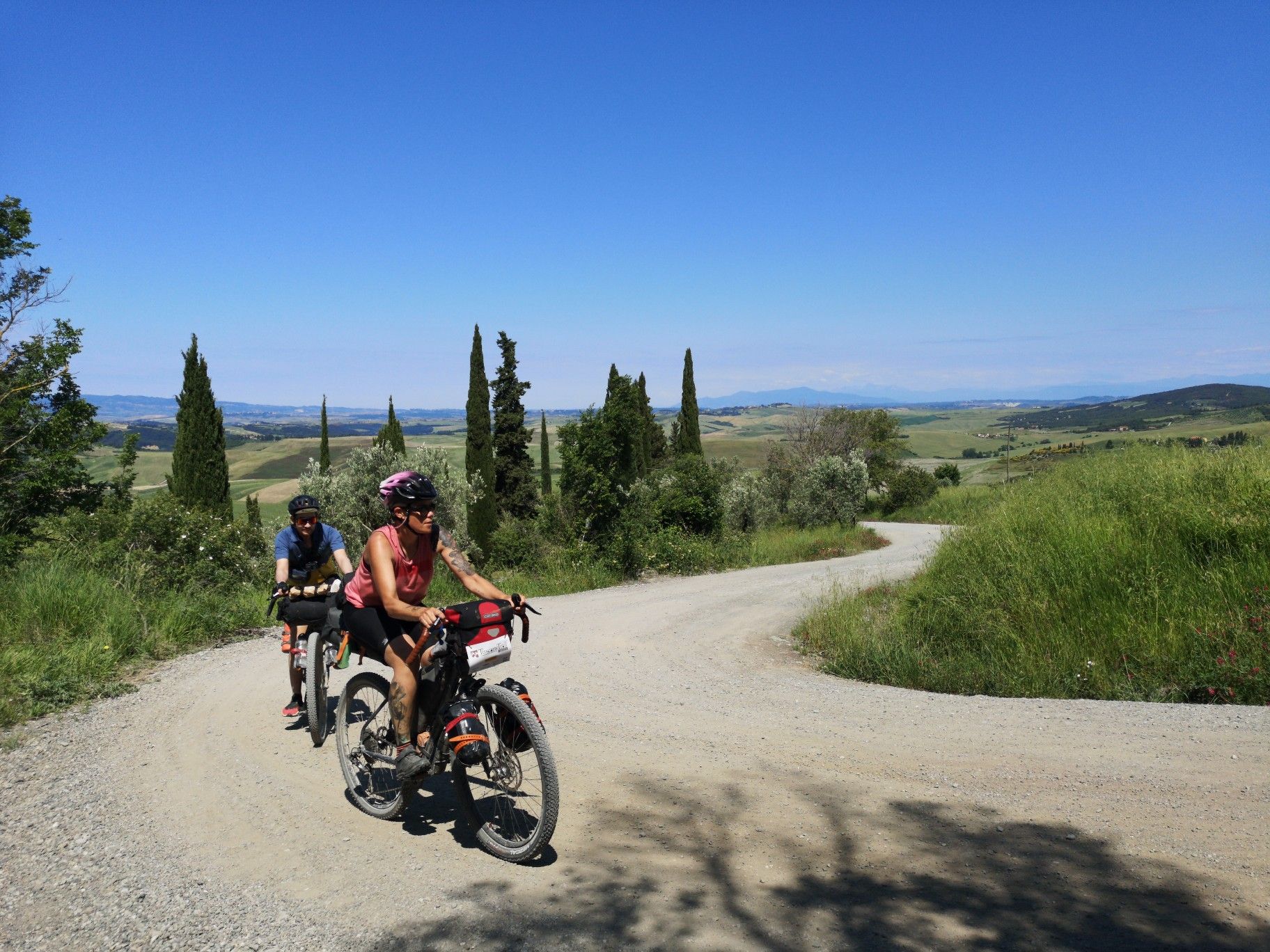
- The most popular attractions is La Feniglia Pine Forest Trail, a trail that extends for 10 km as a gravel path. It is a flat route suitable for cycling or walking, offering shade and access to the sea and lagoon.
- Another must-see spot is Spanish Windmill of Orbetello, a man-made monument. This is the last of 9 fifteenth-century mills that once operated in the lagoon, initially using wave motion and later converted to wind power.
- Visitors also love Duna Feniglia Nature Reserve, a protected forest area. This reserve separates the Orbetello lagoon from the sea, featuring a 6-kilometer dune and offering paths for walking, cycling, and ornithological observation.
- Capalbio is known for its nature reserves, historical monuments, and scenic trails. The area provides a variety of attractions to see and explore, from coastal dunes to ancient mills.
- The attractions around Capalbio are appreciated by the komoot community, with more than 280 upvotes and over 70 photos shared.
Last updated: July 6, 2026
Spanish Mill of Orbetello
Highlight • Monument
Source: it.wikipedia.org/wiki/Laguna_di_Orbetello
Translated by Google •
Tip by

Duna Feniglia Pine Forest Trail
Highlight • Forest
The vegetation is composed of maritime pines, stone pines, cork oaks, holm oaks, sea lilies, junipers and shrubs of the Mediterranean scrub. The flora is instead composed of many deer, some wild boars, foxes, badgers, weasels and other rodents.
The entire reserve can be explored on foot or by bicycle on a dirt but beaten road and is an ideal itinerary to avoid having to travel along the Aurelia between Ansedonia and Orbetello.
Translated by Google •
Tip by

Sign up now to discover places like this
Get recommendations on the best single tracks, peaks, & plenty of other exciting outdoor places.
Sign up for free
Spanish Windmill of Orbetello
Highlight • Monument
Translated by Google •
Tip by

La Feniglia Pine Forest Trail
Highlight • Trail
Tip by

Historic Center of Capalbio
Highlight • Settlement
Translated by Google •
Tip by

Sign up for free to discover even more attractions around Capalbio.
Sign up for free
Already have an account?
Start today with a free account
Your next adventure awaits.
Login or Signup



Tips from the Community

The Orbetello Lagoon is a coastal nature reserve of 27 km² located in the Maremma grossetana, in Tuscany. This unique brackish ecosystem is enclosed between the Monte Argentario promontory and the mainland by two 6 km long sand spits, known as Tombolo della Giannella and Tombolo della Feniglia. In the center of the lagoon lies the town of Orbetello, connected to Argentario by the historic Leopoldina Dam (built in 1842), which divides the body of water into the Western Lagoon and the Eastern Lagoon.
0
0

Who doesn't have a photo with this mill?😁
1
0

This surprising sight, which immediately makes you think of a city sunken in the sea (who has never heard of 'Atlantis'), is what visitors see at the end of the headland that separates the northern 'Laguna di Ponente' from the southern 'Laguna di Levante'. Even early in human history, people were clever enough to harness the power of the elements - which could be a threat on the one hand, but also helpful on the other. A total of nine tidal mills once diligently did their work here.
1
0

the wild boar festival is held at the beginning of September
1
0

Nine mills were built in the 15th century, all in a single line in the lagoon. They were built by the Sienese to grind grain (which was brought to the mill on the local boats) to produce flour. At the time, they were powered by the force of the water (which flowed in and out of the lagoon every six hours from the Giannella tombolo, causing a vast hydraulic phenomenon), which turned the millstones. A century and a half later, in 1557 to be precise, Orbetello became the capital of the Stato dei Presìdi, created by order of King Philip I of Spain. It was under Spanish rule that sails were added to the mill, so as to harness the power of the many winds (four mistral and five sirocco) that blew across the lagoon. The nine mills, arranged in a row by the inhabitants of Orbetello, managed to produce enormous amounts of water by exploiting both the currents and the winds, thus creating a phenomenon of hydraulic and wind engineering of great historical significance. Today, only one of the nine mills mentioned above remains, recently restored.
2
0
The road to follow in the pine forest is beautiful with two types of routes, one running along the lagoon and being able to admire the landscape as well as the wonderful pink flamingos, the other running along the part towards the sea where different outlets take you to admire the beautiful beach
2
0
Opportunity to admire hordes of pink flamingos up close
2
0

La Feniglia can be reached easily on the beach using the dirt road accessible to all bicycles, moderating the speed according to the vehicle you are using. If you go inside the paths you could reach some houses for bird watching, but don't get your hopes up, it is very difficult to see them especially pelicans. Sometimes you may find paths closed by the feniglia consortium due to the birds' breeding season
2
0
Frequently Asked Questions
What natural attractions can I explore around Capalbio?
Capalbio offers a rich variety of natural landscapes. You can visit the Duna Feniglia Nature Reserve, a protected forest area separating the Orbetello lagoon from the sea, ideal for walking and cycling. Another significant natural site is the WWF Oasis of Lake Burano, Italy's first WWF oasis, perfect for birdwatching. The region also boasts a 12 km coastline with clear waters, including popular spots like Macchiatonda and Playa Torba.
Are there good hiking or cycling opportunities near Capalbio's attractions?
Yes, the area around Capalbio is excellent for outdoor activities. The La Feniglia Pine Forest Trail is a popular 10 km gravel path suitable for both cycling and walking, offering shade and access to the sea. For more options, you can explore various routes like the easy "Hiking loop from Capalbio" or the moderate "Old Abandoned Quarry – Ruins of Monte Capalbiaccio loop from Giardino". Cyclists can enjoy routes such as the "Capalbio and Lake Burano Loop" or longer gravel biking tours that include the La Feniglia Pine Forest Trail. You can find more detailed routes for hiking, gravel biking, and cycling around Capalbio.
What historical sites should I visit in Capalbio?
Capalbio is rich in history. The Capalbio Historic Center is a medieval village with well-preserved 15th-century city walls offering panoramic views. Don't miss the Rocca Aldobrandesca, an imposing medieval castle featuring a square tower and the Renaissance Palazzo Collacchioni, which houses antique furniture and a fortepiano once played by Giacomo Puccini. The Chiesa di San Nicola, a 12th-century Romanesque church, contains noteworthy 15th-century frescoes.
Where can I find unique cultural experiences or art installations?
Near Capalbio, you'll find the extraordinary Giardino dei Tarocchi (Tarot Garden). This unique and colorful sculpture garden, created by artist Niki de Saint Phalle, features monumental sculptures inspired by tarot cards and covered with mirrors, glass, and colored ceramics. Capalbio also hosts cultural events like the Capalbio International Short Film Festival and 'Capalbio Libri,' a festival promoting books and reading.
Are there any family-friendly attractions around Capalbio?
Many attractions in Capalbio are suitable for families. The Duna Feniglia Nature Reserve offers easy paths for walking and cycling, and children often enjoy spotting deer and other wildlife. The La Feniglia Pine Forest Trail is also a flat, shaded route perfect for family bike rides. The colorful and whimsical sculptures at the Giardino dei Tarocchi are often a hit with children and adults alike.
What is the best time of year to visit Capalbio's attractions?
Capalbio is charming throughout the year, but the best time to visit depends on your interests. Spring (April-May) and early autumn (September-October) offer pleasant temperatures for exploring historical sites and enjoying outdoor activities like hiking and cycling. The summer months (June-August) are ideal for enjoying the Capalbio beaches and coastal areas, though it can be quite warm. Cultural events often take place during the warmer months.
Can I explore the ancient city walls of Capalbio?
Yes, the medieval city walls of Capalbio are remarkably well-preserved and offer a unique experience. You can walk along the patrol walkway of these walls, which are accessible from Piazza Magenta. This walk provides breathtaking views of the surrounding Tuscan countryside and the coastline. You'll also pass through the historic Porta Senese, adorned with a Medici coat of arms.
Are there any archaeological sites to visit near Capalbio?
Yes, for those interested in ancient history, the Roman Villa delle Colonne is an archaeological site near Capalbio that offers a glimpse into the region's Roman past. It provides an opportunity to explore remnants of ancient architecture and understand the historical significance of the area.
What do visitors enjoy most about the attractions around Capalbio?
Visitors frequently praise the diverse offerings around Capalbio. They particularly enjoy the serene beauty of the La Feniglia Pine Forest Trail for its shade and access to pristine beaches. The unique sight of the Spanish Windmill of Orbetello, standing in the lagoon, is also a popular highlight. The combination of well-preserved historical sites, like the Capalbio Historic Center, and stunning natural reserves makes the area a favorite for many.
Are there any viewpoints offering panoramic vistas of the Capalbio area?
Absolutely. The Capalbio Historic Center, perched on a hill, provides excellent views of the surrounding countryside and coastline from its medieval city walls. For an even higher perspective, the Rocca Aldobrandesca (Aldobrandeschi Fortress) offers panoramic views from its tower. Additionally, the Spanish Windmill of Orbetello is a picturesque spot that offers scenic views across the lagoon.
Can I visit wineries in the Capalbio region?
Yes, the Capalbio region is known for its viticulture. There are numerous wineries in the area that offer wine tastings and guided tours. This provides an excellent opportunity to sample local Tuscan wines and learn about the winemaking process in this beautiful part of Italy.
Is the Duna Feniglia Nature Reserve accessible for wheelchairs or strollers?
Yes, the Duna Feniglia Nature Reserve is noted for its accessibility. It features a nature trail specifically designed for the blind, complete with a handrail and olfactory and tactile stations. The main paths within the reserve are generally flat and well-maintained, making them suitable for wheelchairs and strollers, allowing everyone to enjoy the lush environment and access points to the beach.
Most popular routes around Capalbio
Most popular attractions around Capalbio

Get inspired with the komoot mobile app


Explore more
Still not found the Highlight you’re looking for? See guides of the top attractions in other regions:
