The best walks and hikes around Santo Stefano D'Aveto
4.6
(387)
1,758
hikers
104
hikes
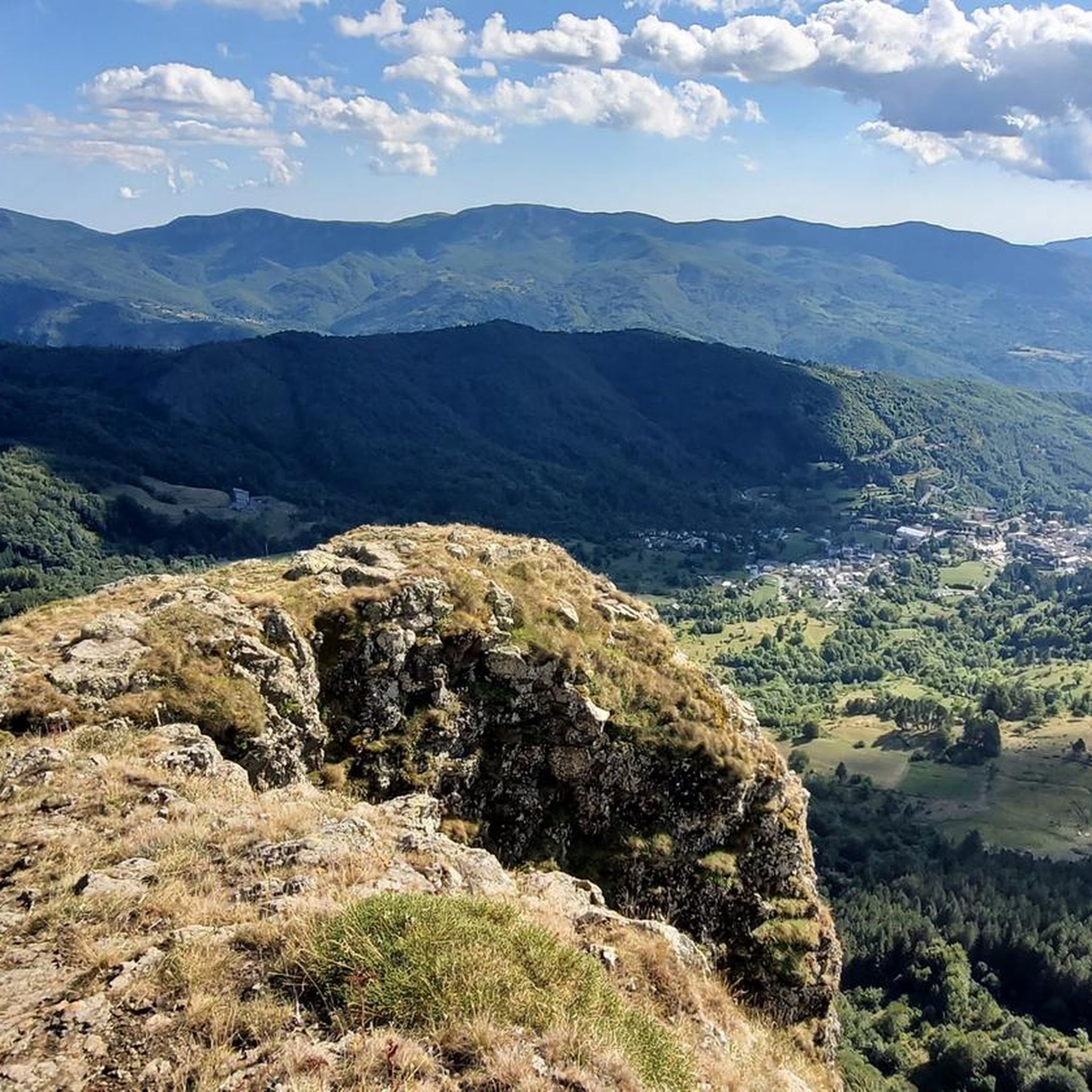
Hiking around Santo Stefano D'Aveto offers diverse landscapes within the Aveto Valley, serving as a gateway to the Apennines in Liguria, Italy. The region features significant peaks like Monte Maggiorasca and Monte Bue, alongside extensive beech and fir forests. Much of the area is protected within the Parco Naturale Regionale dell'Aveto, ensuring preserved natural beauty. This varied terrain provides numerous opportunities for exploration, from high mountain trails to routes leading to waterfalls.
Best hiking trails around Santo Stefano D'Aveto
- The most popular hiking route is Passo dell'Incisa, Faggio dei Tre Comuni e Monte Trevine – loop tour, a 5.2 miles (8.4 km) trail that takes 2 hours 56 minutes to complete. This moderate loop offers varied forest and mountain scenery.
- Another top favourite among local hikers is Monte Aiona, Passo dell'Incisa e Rifugio Prato Mollo, a moderate 5.2 miles (8.3 km) path. This route includes mountain ascents and leads to a refuge, providing expansive views.
- Local hikers also love the Monte Maggiorasca Loop Trail (A15), a 6.3 miles (10.1 km) trail leading through high mountain terrain, often completed in about 4 hours 1 minute.
- Hiking around Santo Stefano D'Aveto is defined by high mountain peaks, dense forests, and protected natural parkland. The network offers options for various ability levels, from moderate forest paths to more difficult mountain ascents.
- The routes in Santo Stefano D'Aveto are highly rated by the komoot community with an average score of 4.5 stars from over 330 reviews. More than 1500 hikers have used komoot to explore Santo Stefano D'Aveto's varied terrain.
Last updated: July 7, 2026
5.0
(11)
39
hikers
8.40km
02:56
330m
330m
Moderate hike. Good fitness required. Mostly accessible paths. Sure-footedness required.
4.8
(12)
47
hikers
8.34km
03:23
410m
410m
Moderate hike. Good fitness required. Mostly accessible paths. Sure-footedness required.

Sign up for free
4.8
(8)
37
hikers
10.1km
04:01
540m
540m
Moderate hike. Good fitness required. Mostly accessible paths. Sure-footedness required.
4.8
(5)
15
hikers
12.9km
05:01
630m
630m
Hard hike. Very good fitness required. Mostly accessible paths. Sure-footedness required.
5.0
(1)
3
hikers
Moderate hike. Good fitness required. Mostly accessible paths. Sure-footedness required.
Get access to more routes and recommendations from other explorers.
Sign up for free
Already have an account?
Our route recommendations are based on thousands of hikes, rides, and runs completed by other people on komoot.
Start today with a free account
Your next adventure awaits.
Login or Signup
Other adventures around Santo Stefano D'Aveto

Tips from the Community

It is easily well marked along the forest road.
0
0
Beautiful hiking structure located at 1,400 meters, surrounded by beech trees and positioned on the border with the municipalities of Bedonia and Tornolo for the province of Parma, and Santo Stefano d'Aveto for the metropolitan city of Genoa. Too bad it is never open despite the structure being recent and in good condition.
0
0
Beautiful pass of the Ligurian Apennines located at 1,468 meters. Strategic point that offers various alternatives to start a walk or a long hike.
0
0


Only the two wooden beams form a cross here in its simplest form. And yet, this small sacred monument—like all crosses encountered by travelers—is an essential Christian symbol. It stands as a reminder of his crucifixion, but also of the resurrection of Jesus Christ. The following quote comes from the important French religious founder and Doctor of the Church, Saint Bernard of Clairvaux: "Here on earth, His memory exists, but in the Kingdom of Heaven is His presence: This presence is the joy of those who have already attained salvation. The memory is our comfort, we who are still wanderers, traveling toward our homeland."
0
0

Pria Burgheisa (Pietra Borghese) is a massive outcrop of mantle peridotites, among the best-known and most significant in the area. It lies on the southwestern edge of the Prato Mollo plateau, on the southern slopes of Mount Aiona, at an altitude of 1,465 m. It is a geosite of considerable petrographic, mineralogical, and regional geological interest, allowing us to study the evolution of a portion of the lithospheric mantle subsequently involved in the Apennine orogeny. The outcrop has a highly irregular shape: 30 m long, 10 m wide at its maximum, and 7–8 m high. The rocks are dark in color, ranging from blackish to brownish; the mass is affected by three main fracture systems, more or less orthogonal to each other, which fragment it into numerous square-shaped blocks. The surface of the blocks has a pitted appearance, as the pyroxene crystals, more resistant to erosion than olivine, remain prominent. At the outcrop, mantle foliation is evident, due to the presence of frequent pyroxenite bands. Source: Liguria Geosite Registry.
0
0

The Rifugio Faggio dei Tre Comuni (1,400 m), opened in 2011, is located in a beautiful clearing among the beech forests of the Ligurian-Emilian Apennines, at the symbolic meeting point of the municipalities of Bedonia, Tornolo, and Santo Stefano d'Aveto. Built of wood and concrete, it offered approximately 20 beds and was managed by the Parma branch of the Italian Alpine Club (CAI). Unfortunately, with the agreement between the CAI and the Unione Montana (Mountain Union) having expired, the refuge is now closed and abandoned. A real shame: if the facility were reopened at least during the summer months, it could once again become an ideal base for hiking and biking excursions to Monte Trevine, Monte Penna, and the source of the Taro River. The beauty of the site remains intact, and the refuge's clearing is a perfect stop for a break in the silence of the forest.
0
0
The Taro River's sources are located on the slopes of Mount Penna, at approximately 1,500 meters above sea level, in the heart of the Ligurian Apennines, within the Taro and Ceno Valleys Park. Here, in a cool beech forest, several springs merge to form the river's first rivulets. The Taro River originates as an Apennine torrent and flows for over 120 km toward the Po River, crossing valleys, plains, and areas of great natural beauty. Its course is known for its high biodiversity and the presence of well-preserved river environments, protected by protected areas and nature reserves.
0
0
Frequently Asked Questions
How many hiking trails are available in Santo Stefano D'Aveto?
Santo Stefano D'Aveto offers a comprehensive network of over 100 hiking trails. These routes cater to various fitness levels, ranging from moderate forest paths to more challenging mountain ascents, all set within the beautiful Apennine landscape.
Are there easy hiking trails suitable for beginners or families in Santo Stefano D'Aveto?
Yes, Santo Stefano D'Aveto has several easy trails perfect for beginners or families. While many routes are moderate, there are at least 8 easy routes available. These often traverse dense forests of beech and fir, providing a pleasant and accessible outdoor experience.
Can I find circular hiking routes in the Santo Stefano D'Aveto area?
Absolutely. Many trails in Santo Stefano D'Aveto are designed as circular routes, allowing you to start and end at the same point. A notable option is the Passo dell'Incisa, Faggio dei Tre Comuni e Monte Trevine – loop tour, which offers varied forest and mountain scenery over 8.4 km.
Are there any hiking trails that feature waterfalls in Santo Stefano D'Aveto?
Yes, the region is home to natural attractions like the Cascate del Diavolo (Devil's Waterfalls). You can explore these via hiking trails, such as the Cascate del Diavolo from Passo dell'Incisa route, which offers a moderate 7.2 km walk to this scenic spot.
What are some notable landmarks or scenic viewpoints accessible via hiking trails?
Hiking in Santo Stefano D'Aveto offers numerous scenic viewpoints and landmarks. You can reach the summit of Monte Maggiorasca, the highest peak in the Ligurian Apennines, which features a Madonna statue and offers sweeping views from the plains to the sea. Another prominent peak is Monte Bue, and you can find its summit and cross at Monte Bue summit and summit cross. The area also includes distinctive features like Groppo Rosso, known for its iron-rich rocks.
What do other hikers enjoy most about hiking in Santo Stefano D'Aveto?
The komoot community highly rates the hiking experience in Santo Stefano D'Aveto, with an average score of 4.5 stars from over 330 reviews. Hikers frequently praise the diverse landscapes, from high mountain peaks to dense forests, and the well-preserved natural beauty within the Parco Naturale Regionale dell'Aveto.
Is Santo Stefano D'Aveto suitable for winter hiking or snowshoeing?
Yes, Santo Stefano D'Aveto is suitable for winter activities. When snow covers the trails, the area transforms, offering opportunities for snowshoeing. Guided tours are also available during winter months for those looking to explore with local expertise.
Are there any challenging or difficult hiking routes for experienced hikers?
Experienced hikers will find several challenging routes in Santo Stefano D'Aveto. For instance, the From Passo dell'Incisa to Monte Aione – ring in nature is a difficult 12.9 km route with significant elevation gain, providing a demanding yet rewarding experience through high mountain terrain.
What is the best time of year to go hiking in Santo Stefano D'Aveto?
The best time to hike in Santo Stefano D'Aveto is generally from spring through autumn. During these seasons, the weather is most favorable for exploring the diverse landscapes, from lush forests to high mountain peaks. Summer offers cool shade in the extensive beech and fir forests, while autumn brings vibrant colors.
Are there any refuges or places to stop for refreshments along the trails?
Yes, some routes include refuges where you can stop for a break or refreshments. For example, the Monte Aiona, Passo dell'Incisa e Rifugio Prato Mollo route leads to Rifugio Prato Mollo, providing a convenient stop during your hike and offering expansive views.
What kind of natural features can I expect to see while hiking in the region?
The region is rich in natural features, including significant mountain peaks like Monte Maggiorasca, Monte Bue, and Monte Penna. You'll also traverse dense forests of beech and fir, explore parts of the Parco Naturale Regionale dell'Aveto, and encounter unique geological formations such as Groppo Rosso with its reddish iron-rich rocks.
Are there any cultural or historical sites to explore in Santo Stefano D'Aveto?
Beyond its natural beauty, Santo Stefano D'Aveto offers cultural routes through its historic center. You can admire ancient architecture and discover the village's past. The Castello Malaspina Doria, standing above the village, adds to the medieval atmosphere and occasionally hosts historical exhibitions.
Most popular attractions around Santo Stefano D'Aveto

Get inspired with the komoot mobile app


Explore more
Browse the best Hikes in other regions.
