The best cycling routes around Bottanuco
4.4
(1357)
13,187
riders
312
rides
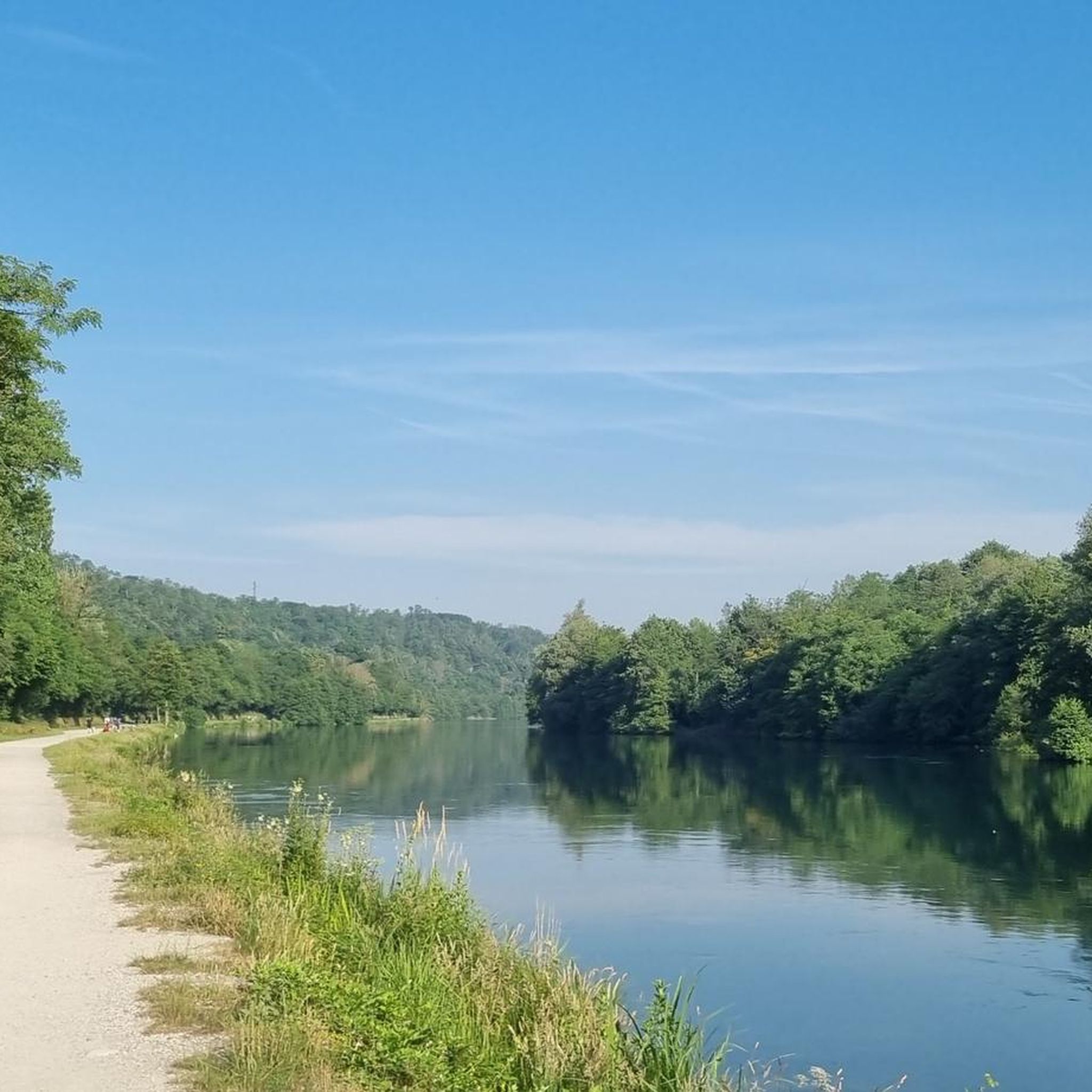
Touring cycling routes around Bottanuco are characterized by the Adda River, which forms a central natural feature, transitioning from pre-Alpine terrain to the flat expanses of the Po Valley. The landscape includes lush greenery and offers access to a network of well-maintained paths. This area provides a blend of natural scenery with historical and industrial landmarks, such as hydroelectric power plants and ancient water wheels. The terrain is generally level along the river, with some routes featuring moderate elevation changes.
…Last updated: July 7, 2026
1
riders
20.5km
01:26
150m
150m
Cycle an easy 12.7-mile (20.5 km) loop along the Adda River, exploring the UNESCO Crespi d'Adda and historical sites near Bottanuco.
4.5
(195)
1,035
riders
Moderate bike ride. Good fitness required. Mostly paved surfaces. Suitable for all skill levels.

Sign up for free
5.0
(3)
71
riders
61.5km
04:11
690m
690m
Hard bike ride. Very good fitness required. Mostly paved surfaces. Suitable for all skill levels.
4.9
(15)
63
riders
22.8km
01:36
160m
160m
Moderate bike ride. Good fitness required. Mostly paved surfaces. Suitable for all skill levels.
5.0
(7)
67
riders
Easy bike ride. Great for any fitness level. Mostly paved surfaces. Suitable for all skill levels.
Get access to more routes and recommendations from other explorers.
Sign up for free
Already have an account?
Our route recommendations are based on thousands of hikes, rides, and runs completed by other people on komoot.
Start today with a free account
Your next adventure awaits.
Login or Signup

Tips from the Community

The Angelo Bertini Hydroelectric Power Plant is a gem of industrial archaeology located in Porto d'Adda (a hamlet of Cornate d'Adda, Monza and Brianza). Inaugurated on September 28, 1898, by the Edison group, it holds an extraordinary historical record: at the time of its construction, it was the most powerful hydroelectric power plant in Europe and the second in the world, surpassed only by that of Niagara Falls. Its original purpose was fundamental for the modernization of Milan, as it had to supply the energy necessary for the electrification of Milan's tram network, allowing for the definitive replacement of horse-drawn trams.
0
0

Easy cycle path suitable for everyone!
3
0
The Naviglio della Martesana, definitively completed in 1496 under the leadership of Ludovico il Moro, flows from Trezzo sull’Adda to Milan for a total length of 38 km. The route runs alongside the ancient Roman road (the current SS 11 padana superiore) which crossed the Adda with two branches: at Vaprio and Cassano. The irrigation of the lands located above the spring belt was for a long time the predominant use of the canal, so much so that initially navigation was limited to two days a week; concurrently with the improvement of the agricultural structure thanks to irrigation, a notable flourishing of stately homes occurred in the Baroque era, aimed at enjoying the convenience of travel on water and controlling the owned lands.
0
0
The Naviglio della Martesana, definitively completed in 1496 under the guidance of Ludovico il Moro, flows from Trezzo sull’Adda to Milan for a total length of 38 km. The route runs alongside the ancient Roman road (the current SS 11 padana superiore) which crossed the Adda with two branches: at Vaprio and Cassano. Irrigation of the land located above the spring belt was for a long time the predominant use of the canal, so much so that initially navigation was limited to two days a week; concurrently with the improvement of the agricultural structure thanks to irrigation, a notable flourishing of stately villas occurred in the Baroque era, intended to enjoy the convenience of travel on water and to control owned lands.
1
0
The Naviglio della Martesana, initially known as Naviglio Piccolo, is one of the Milanese canals that connects Milan with the course of the Adda river through the municipalities of Martesana. Commissioned in the 15th century by Francesco Sforza, it was used for irrigating the countryside but also represented the ambitious project of connecting Milan with Lake Como and thus with the Alps and Ticino. The Naviglio della Martesana is a place rich in history and beauty, a heritage for everyone that, however, today is still little known and protected. Along the Naviglio runs a rather busy cycle path, which allows you to admire the landscape and cultural beauties, such as the rich flora, fauna, or the numerous historic villas, including the Renaissance Villa Melzi d’Eril in Vaprio d’Adda.
1
0

The Naviglio Martesana cycle path is a 30-35 km cycle and pedestrian route that connects Milan (Cassina de' Pomm/via Melchiorre Gioia area) to Trezzo sull'Adda, running alongside the homonymous canal. It is a predominantly asphalted, flat, easy route suitable for everyone, passing through parks, rural areas, and historic noble villas from the 17th-18th centuries.
0
0
The Naviglio Martesana cycle path is a cycle-pedestrian route of about 30-35 km that connects Milan (Cassina de' Pomm/via Melchiorre Gioia area) to Trezzo sull'Adda, running alongside the canal of the same name. It is a predominantly asphalted, flat, easy route suitable for everyone, which crosses parks, rural areas, and historic noble villas from the 17th-18th centuries.
2
0

In Groppello d'Adda, along the Martesana Canal, there is a large waterwheel called "el rudun." It is not a mill, but a noria that was used to raise water for irrigation. It was built in 1618 at the behest of Cardinal Federico Borromeo. It was used to irrigate the vegetable gardens and gardens of the Archbishop's Villa. Tradition attributes the design to Leonardo da Vinci. The water also fed kitchens, washhouses, and livestock watering troughs. The original wheel was dismantled in the late 19th century. The current one is a 1989 reconstruction, restored several times. It has a diameter of 11 meters and eight large blades. Today, it is a historical and educational symbol that tells the story of the area's past.
2
0
Frequently Asked Questions
How many touring cycling routes are available around Bottanuco?
Bottanuco offers a wide selection of touring cycling routes, with over 320 trails available. These routes cater to various skill levels, including over 120 easy, 120 moderate, and 60 difficult options.
What is the terrain like for touring cycling in Bottanuco?
The terrain around Bottanuco is diverse, primarily defined by the Adda River. You'll find substantially level sections along the river, ideal for casual rides, as well as more adventurous paths that can be stony and steep, especially as the landscape transitions towards pre-Alpine areas. The region also includes flat expanses of the Po Valley.
Are there any easy, family-friendly cycling routes in Bottanuco?
Yes, Bottanuco has many easy routes suitable for families. The Adda River and Paderno Canal Loop is an easy 20.5 km trail that follows the Adda River, offering pleasant views. Another great option is the Adda River Cycle Path – Ruse Spring Put Delicate Oasis loop from Capriate San Gervasio, which is an easy 12.8 km route.
What are some notable landmarks or attractions I can see along the cycling routes?
The cycling routes around Bottanuco are rich with historical and natural attractions. You can encounter impressive industrial architecture like the Taccani Hydroelectric Power Plant and Trezzo Castle Tower, or the Carlo Esterle Hydroelectric Power Plant. Don't miss the unique Rudun Water Wheel of Groppello d'Adda, possibly designed by Leonardo da Vinci. For natural beauty, you might pass by Lake Sartirana or the Aberone Oasis.
Are there any circular touring cycling routes in the area?
Many routes in Bottanuco are designed as loops, allowing you to start and finish in the same location. Examples include the Adda River and Paderno Canal Loop, the Groppello Water Wheel – Martesana Canal Cycle Path loop from Capriate San Gervasio, and the Cascina Assunta – Trezzo sull'Adda Bridge loop from Bottanuco.
When is the best time of year to go touring cycling in Bottanuco?
The months of June and August are particularly popular for touring cycling in Bottanuco due to favorable weather conditions. However, the region offers enjoyable cycling experiences throughout the warmer seasons, from spring to early autumn.
Can I bring my dog on the cycling routes around Bottanuco?
While specific regulations for dogs on every cycling path can vary, many natural areas and paths along the Adda River are generally dog-friendly, especially if your dog is well-behaved and kept on a leash. Always check local signage for any restrictions in specific parks or nature reserves.
Are there options for more challenging touring cycling routes?
Yes, for experienced riders seeking a challenge, Bottanuco offers routes with more significant elevation changes and varied terrain. While many routes along the river are flat, some paths can be stony and steep, particularly those venturing into the pre-Alpine areas. There are 69 routes classified as 'difficult' in the area.
How do other cyclists rate the touring routes in Bottanuco?
The touring cycling routes in Bottanuco are highly regarded by the komoot community, holding an average rating of 4.3 stars from over 1,100 reviews. More than 13,000 touring cyclists have used komoot to explore the area, often praising the scenic riverside paths and the blend of natural beauty with historical sites.
Is it possible to access the cycling routes using public transport?
Access to Bottanuco and its cycling routes via public transport is possible, though it may require some planning. The region is working on improving sustainable mobility, including a planned pedestrian and cycle bridge to enhance connectivity. For specific routes, check local bus services for connections to starting points, and note that bike transport on buses may be limited.
Are there any long-distance cycling routes connected to Bottanuco?
Yes, Bottanuco is strategically located along the Adda River, which forms part of the much longer Adda Cycle Route. This route spans approximately 130 kilometers (81 miles), offering a diverse experience from pre-Alpine terrain to the flat Po Valley. Additionally, the Naviglio Martesana Cycle Path, known for its historical richness, connects Milan with the Adda River and is accessible from areas near Bottanuco.
Where can I find cafes or restaurants along the cycling routes?
Many cycling routes in the Bottanuco area pass through or near towns and villages where you can find cafes, pubs, and restaurants. For example, routes that incorporate towns like Trezzo sull'Adda or those along the Naviglio Martesana are likely to have refreshment stops. Planning your route with komoot allows you to see points of interest, including eateries, along the way.
What is the Adda River Cycle Path like near Bottanuco?
Near Bottanuco, the Adda River Cycle Path offers picturesque riverside scenery. It features well-paved sections that are largely level, making it suitable for various skill levels. The path provides opportunities to enjoy lush greenery and spot local wildlife, and it connects to significant historical and industrial landmarks like hydroelectric power plants and the Rudun Water Wheel.
Most popular routes around Bottanuco
Most popular attractions around Bottanuco

Get inspired with the komoot mobile app


Explore more
Browse the best Cycling routes in other regions.
