Attractions and Places To See around Altilia - Top 18
Attractions and places to see around Altilia are found in a small town nestled in the mountains of Calabria, Italy. This region offers a blend of historical sites, cultural experiences, and natural beauty, situated high in the Cosenza province. The area is characterized by its mountainous landscape, providing panoramic views of the Savuto valley. Altilia's rich architectural heritage includes historical buildings and ancient structures.
Best attractions and places to see around Altilia
- The most popular attractions is Angevin Castle of…
Last updated: October 4, 2026
Rifugio Monte Reventino
Highlight • Mountain Hut
Translated by Google •
Tip by

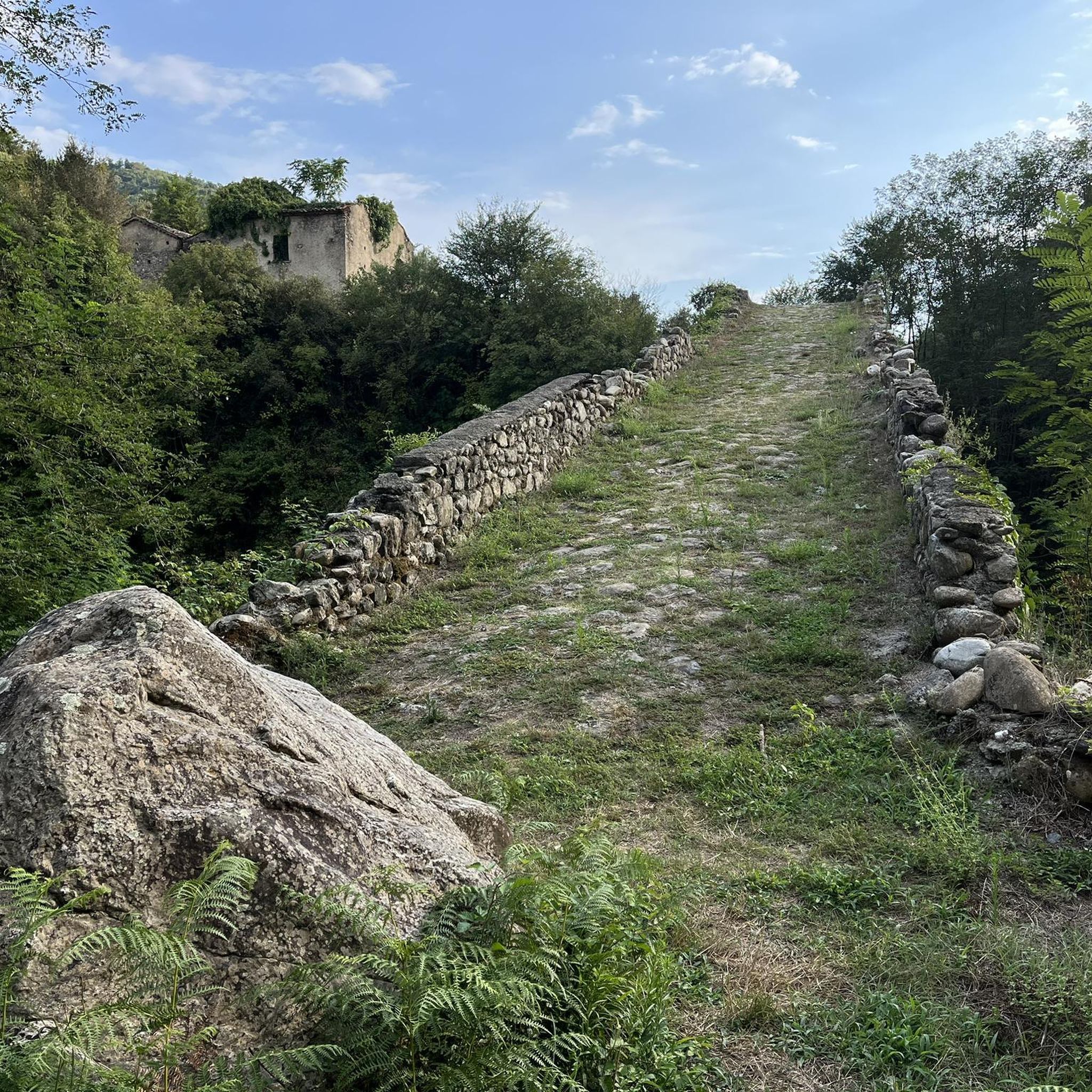
Tavolaria Bridge
Highlight • Bridge
Translated by Google •
Tip by

Sign up now to discover places like this
Get recommendations on the best single tracks, peaks, & plenty of other exciting outdoor places.
Sanctuary of Saint Francis of Paola in Paterno
Highlight • Religious Site
Translated by Google •
Tip by

Monte Mancuso
Highlight • Summit
Translated by Google •
Tip by

Gravel road along the Savuto River
Highlight (Segment) • Trail
Translated by Google •
Tip by
Sign up for free to discover even more attractions around Altilia.
Already have an account?
Tips from the Community

Upon returning from a trip to Assisi, Francis developed the firm intention of becoming a hermit, his only home a cave. His life plan was to pursue a path of spiritual asceticism, consisting of prayer, fasting, and penance. Over time, the area where the Sanctuary of Paola now stands began to attract numerous pilgrims, seeking physical and spiritual healing through his intercession. Francis's ascetic rigor also attracted young men who wanted to live like him, and thus the Order of Minims began to take shape. The reputation for sanctity of Francis and his hermits was spreading like wildfire, so much so that many urban centers requested a convent run by Minims in their cities. Francis, while maintaining his commitment to the eremitic life, traveled from Paola to Paterno in the guise of Founder. He was about 56 years old when, accompanied by Paolo Rendace—who would become a key figure in the Order's history—Francis arrived in the small community of Serre Cosentine. He was at the height of his spiritual maturity and with great determination he dedicated himself personally to the construction of the Church.
0
0

Immersed in nature and the silence of the woods
0
0

Almost flat gravel dirt road, very fast and fun.
1
0

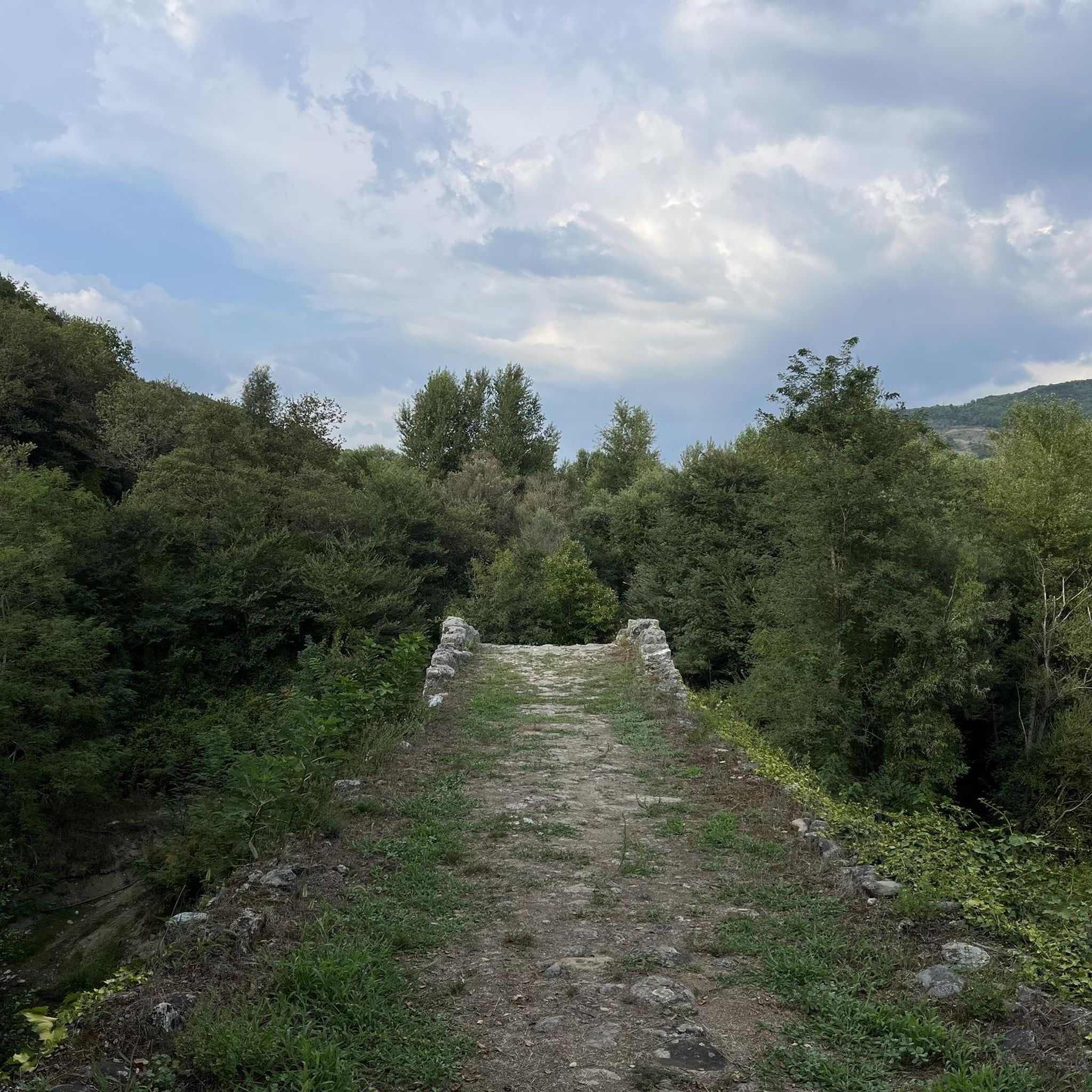
The "Tavolaria" bridge about 1500 meters from Cannavina was built in the Spanish period in 1592 with a single arch in sun-baked bricks while the shoulders were built entirely with local stone and lime; the left shoulder rests on a very characteristic rock spur. It connected, via mule tracks, the lands to the left of the river with those exposed to the east, and was important for the trade of agricultural and sheep-farming products which were brought to the markets of Rogliano. But, in addition to its rough and primitive architectural beauty, it fascinates us with its history and the legend linked to this area from which it takes its name: Tavolaria. King Oenotrio, finding himself traveling up the Savuto valley, encountered much resistance from his enemies in the area. To defeat them, he worked with cunning by asking for a truce and inviting them to a lavish dinner and, after getting them drunk, he killed them all. The Cannavina locality takes its name from the Cannavino stream, a tributary of the Savuto river, and is one of the refreshment places of the Rogliano people characterized by a waterfall which at the base forms a basin of water, the so-called "vullu" in the local dialect. Cannavino/a could mean "guzzling wine" precisely because of the coolness and beauty of the place which invites the typical conviviality of the people of the valley.
0
0

A wild and fantastic stretch of dirt road that runs along the Savuto River, right next to the busy highway. It turns into a muddy trail during the winter and rainy months, so come prepared.
1
0
Monte Mancuso, in the heart of Calabria, rises majestically between the Savuto valley and the Sant'Eufemia plain, reaching 1,327 meters above sea level. This mountainous region is a natural oasis with peaks, including Monte Castelluzzo and Monte del Greco, and a dense forest of beech, chestnut and silver fir trees. It is an ideal place for walkers, cyclists and photographers, with numerous hamlets set on picturesque hillsides. A hidden gem, just 20 km from the lively Feaci Kite Surf coast.
1
0

The Reventino massif is located at 1417m and is part of the Calabrian Apennines. To the north is the Savuto Valley.
2
1
Small, slightly shabby refuge from which you can enjoy a beautiful view and enjoy a well-deserved rest in silence.
0
0
Frequently Asked Questions
What historical sites can I explore in Altilia?
Altilia offers a rich history to explore. You can visit the ancient Angevin Castle of Savuto, which dominates the Savuto valley and hosts various events. Other significant historical sites include the Church of Santa Maria Assunta, dating back to the 1400s, and the historic Convent of Santa Maria delle Grazie, built around the 16th century. Don't miss the Marsico Palace, now the municipal seat, and the charming Old Town with its medieval layout.
Are there any natural attractions or scenic spots near Altilia?
Yes, Altilia is surrounded by natural beauty. The Monte Mancuso summit offers panoramic views of the Savuto valley and the Sant'Eufemia plain. You can also explore Parco Bombarda, a natural oasis near Monte Mancuso with paths for outdoor exploration. The Savuto Valley itself, with its river, provides a picturesque green landscape.
What family-friendly activities are available around Altilia?
For families, the Angevin Castle of Savuto is a great option, offering a glimpse into history in a well-maintained setting. Parco Bombarda is also family-friendly, with numerous paths suitable for walking and exploring nature. Additionally, the Sanctuary of Saint Francis of Paola in Paterno is considered a family-friendly historical and religious site.
Where can I experience the local art and craftsmanship in Altilia?
Altilia is renowned for its stonemasons, whose artistry is evident throughout the town. You can admire their work on the façades of local churches and palaces, such as the Marsico Palace. In the hamlet of Maione, look for the ancient portals of the Pagliuso, De Caro, and Amantea houses, which showcase the historical architecture and skill of these local artisans.
What outdoor activities, like cycling or mountain biking, can I do near Altilia?
The Altilia region is ideal for outdoor enthusiasts. For mountain biking, you can find challenging routes like the 'Monte Mancuso da Parco Bombarda – giro ad anello' or 'Martirano Lombardo – giro ad anello lungo il fiume Savuto'. Cyclists can enjoy tours such as the 'Castello di Savuto from Cleto – loop tour'. Explore more options on the MTB Trails around Altilia and Cycling around Altilia guide pages.
Are there hiking opportunities in the Altilia region?
While specific hiking routes are not detailed in the provided data, the mountainous landscape around Altilia, including Monte Mancuso and Parco Bombarda, is described as ideal for walkers. The region's dense forests of beech, chestnut, and silver fir trees offer a natural oasis for exploration on foot.
What is the significance of the Roman Bridge near Altilia?
The Roman Bridge over the Savuto River, also known as the Bridge of St. Angelo or Hannibal, is a national historical monument dating back to the 2nd century BC. It is one of the oldest bridges in Italy and served as a crucial crossing point on the ancient Via Popilia, highlighting Altilia's historical importance as a strategic location.
Can I visit any religious sites in Altilia?
Yes, Altilia has several significant religious sites. The Church of Santa Maria Assunta, with its Baroque appearance and 18th-century stucco decorations, is a notable parish church. The former Convent of Santa Maria delle Grazie, situated on a cliff overlooking the Savuto valley, also has a fully restored adjoining church. Additionally, the Sanctuary of Saint Francis of Paola in Paterno is a key religious destination in the broader area.
What are some lesser-known historical places to visit in Altilia?
Beyond the main attractions, you can discover the Federici Palace, another significant historical building. A unique find is a small cave vault behind the Church of Santa Maria delle Grazie, containing ancient frescoes depicting religious subjects, offering a glimpse into the town's religious history and traditions.
Where can I find panoramic views of the Savuto valley?
Altilia itself is perched on a rocky spur, offering natural viewpoints of the picturesque Savuto valley. For a more elevated perspective, Monte Mancuso, rising to 1,327 meters above sea level, provides majestic panoramic views of the valley and surrounding mountains.
What is the history behind the Angevin Castle of Savuto?
The Angevin Castle of Savuto is a historical jewel that rises majestically over the village of Cleto, dominating the Savuto valley. Recently restored, it stands as a living testament to the various cultures and historical periods that have shaped the area. It now serves as a significant tourist attraction, hosting events and offering a journey through Calabrian history.
Are there any unique bridges to see in the area?
Absolutely. Besides the ancient Roman Bridge over the Savuto River, you can also visit the Tavolaria Bridge. Built in 1592, this bridge features a single arch of sun-baked bricks and local stone, resting on a characteristic rock spur. It's known for its architectural beauty and the local lore surrounding its history.
Most popular routes around Altilia

Get inspired with the komoot mobile app


Explore more
Still not found the Highlight you’re looking for? See guides of the top attractions in other regions:
