The best running trails around Tábua
5.0
(1)
206
runners
31
runs
Jogging around Tábua offers a diverse landscape characterized by rolling hills, river valleys, and extensive rural areas. The region features a mix of forested paths and open countryside, providing varied terrain for runners. Elevation changes are common, with routes traversing gentle slopes and more challenging ascents. The natural environment around Tábua is ideal for exploring on foot.
Best jogging routes around Tábua
- The most popular jogging route is Senhora do Monte Alto – Cabeço do Monte Redondo loop from Arganil…
Last updated: July 8, 2026
84
runners
37.8km
05:14
1,540m
1,530m
Hard run. Very good fitness required. Mostly accessible paths. Some sure footedness required.
10
runners
13.3km
01:44
370m
370m
Hard run. Very good fitness required. Mostly paved surfaces. Suitable for all skill levels.

Sign up for free
5.0
(1)
5
runners
12.1km
01:24
240m
240m
Moderate run. Good fitness required. Mostly paved surfaces. Suitable for all skill levels.
5
runners
10.1km
01:08
150m
150m
Moderate run. Good fitness required. Mostly paved surfaces. Suitable for all skill levels.
4
runners
11.9km
01:16
160m
170m
Moderate run. Good fitness required. Mostly paved surfaces. Suitable for all skill levels.
Get access to more routes and recommendations from other explorers.
Sign up for free
Already have an account?
Our route recommendations are based on thousands of hikes, rides, and runs completed by other people on komoot.
Start today with a free account
Your next adventure awaits.
Login or Signup
Tips from the Community

Bridge built over the Cavalos River, with a deck approximately 50 m long and 3 m wide. It probably forms part of the same road link as the Roman road of Pedra da Sé, serving as a connection between the Roman civitas of Bobadela and that of Viseu. It has only one arch with a perfect semicircular span, and the pavement that forms part of the deck is the result of intervention after the time of construction. It has been classified as a Property of Public Interest (IIP) since 1990, by Decree No. 163 of July 17, 1990.
1
0

Small but very pleasant river beach (without sand) on the course of the Rio de Cavalos.
2
0

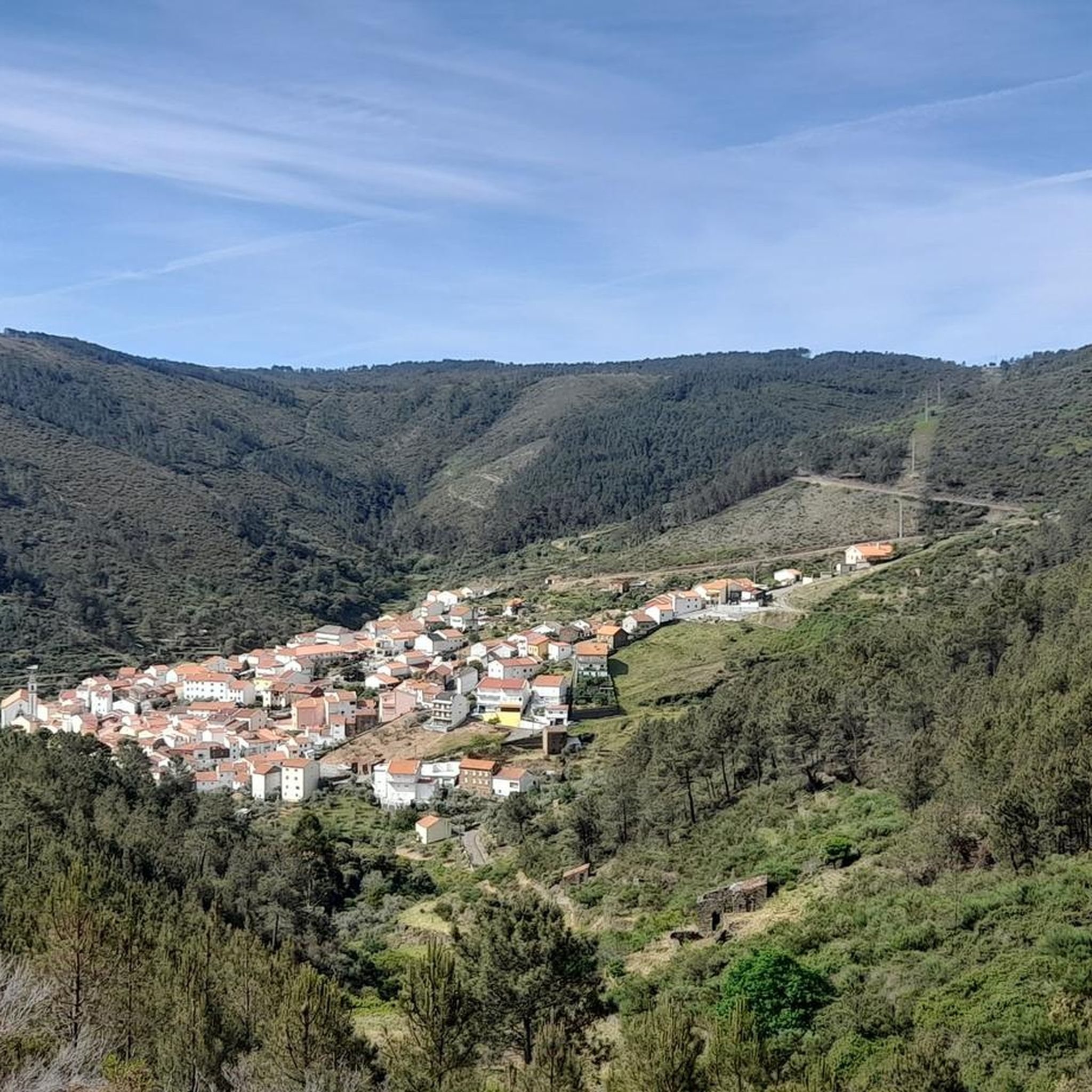
Nestled along the banks of the Alva River, Côja is immersed in a green environment, surrounded by mountains and forests. The village is characterized by traditional architecture, a charming Roman bridge and a peaceful atmosphere.
1
0
The Roman Bridge of Sumes, with its round arch, is a stone masonry structure measuring approximately 6.4 metres. It stands over the Cavalos River, in a natural setting, punctuated by enormous granite rocks and crisscrossed by dirt paths. This is where the fantastic Trilho dos Gaios begins (or ends), winding along the Cavalos River between several waterfalls and lush vegetation.
2
0

The Roman Bridge of Sumes stands over the River des Chevaliers, shrouded in mystery. Although its foundations appear to be Roman, the exact date of its construction remains uncertain. An inscription reading "80 AD" found on a nearby wall suggests its origin, but some historians believe it refers to an ancient spring. In the surrounding area, traces of medieval paving can still be seen. Regardless of the bridge's uncertain age, it is classified as a Property of Public Interest, having witnessed centuries of history.
3
0
In summer, the river beach of Vale de Gaios becomes a little paradise for those looking to cool off. Its crystal-clear water, formed by the Cavalos River, a tributary of the Mondego, invites you to take a refreshing dip and spend long moments in the sun. On hot days, there is no better place to enjoy nature and recharge your batteries!
6
0
The colourful walkways of the Trilho dos Gaios start at the river beach of Vale de Gaios and lead you to the ancient Roman Bridge of Sumes. Along the way, you will pass by the winding banks of the Cavalos River, a wild tributary of the Mondego, which hides among the lush vegetation and moss-covered rocks, as if it were something out of a fairy tale. In some parts, it disappears completely under gigantic blocks of granite, with only the gentle murmur of the water revealing its presence.
4
0
Frequently Asked Questions
How many running routes are available around Tábua?
There are over 30 running routes around Tábua, offering a wide range of options for different fitness levels. The komoot community has explored these trails over 200 times, highlighting the area's popularity for outdoor activities.
Are there any easy running routes suitable for beginners in Tábua?
Yes, Tábua offers a few easier running options. While many routes feature elevation changes, there are some with more gentle terrain. For example, the region has 2 routes classified as easy, and 24 as moderate, providing good choices for those starting out or looking for a less strenuous run.
What kind of terrain can I expect on jogging trails in Tábua?
The jogging trails around Tábua feature a diverse landscape of rolling hills, river valleys, and extensive rural areas. You'll encounter a mix of forested paths and open countryside, with elevation changes ranging from gentle slopes to more challenging ascents. This variety ensures an engaging experience for runners.
Are there any challenging running routes for experienced runners?
Absolutely. Tábua is known for its more demanding trails. For instance, the Senhora do Monte Alto – Cabeço do Monte Redondo loop from Arganil is a difficult 23.7-mile (38.1 km) route with significant elevation gain, taking over 5 hours to complete. Another challenging option is the Roman Bridge of Sumes – Vale de Gaios River Beach loop from Candosa, an 8.3-mile (13.3 km) difficult path with scenic river sections.
What interesting sights or landmarks can I see along the running routes in Tábua?
Many running routes in Tábua pass by historical sites and natural attractions. You might encounter the ancient Lapa da Orca Dolmen, the picturesque Roman Bridge of Sumes, or even the stunning Fraga da Pena Waterfall. These add a cultural and scenic dimension to your run.
Are there any circular running routes in the Tábua area?
Yes, many of the running routes around Tábua are circular, offering convenient starting and ending points. For example, the Sepulturas de Midões loop from Midões is a 7.5-mile (12.1 km) circular trail that explores historical sites and varied rural landscapes.
What do other runners say about the trails in Tábua?
The running trails in Tábua are highly regarded by the komoot community, boasting an average rating of 5.0 stars from reviews. Runners often praise the diverse terrain, the natural beauty of the river valleys and forested paths, and the opportunity to explore both challenging ascents and more gentle slopes.
Are there any running routes that offer good viewpoints?
Yes, given the rolling hills and varied topography of Tábua, many routes offer scenic vistas. While specific viewpoints are not always explicitly named for every running route, the region's natural landscape often provides elevated sections with panoramic views, such as those found near the Miradouro do Penedo Cabana.
Can I find running routes near Tábua that are suitable for families?
While specific 'family-friendly' designations aren't always available, routes with moderate difficulty and shorter distances are generally suitable for families. Look for the 24 moderate routes available, such as the Running loop from Secarias, which is 10 km and has less elevation gain, making it a good option for a family outing.
What is the best time of year for running in Tábua?
Tábua's climate makes it suitable for running for much of the year. Spring and autumn generally offer the most pleasant temperatures for outdoor activities. Summers can be warm, so early morning or late evening runs are advisable. Winters are typically mild, but checking local weather conditions for rain is always recommended.
Are there any running routes that follow river paths or have water features?
Yes, Tábua's landscape is characterized by river valleys, providing opportunities for scenic runs alongside water. The Roman Bridge of Sumes – Vale de Gaios River Beach loop from Candosa, for example, includes beautiful sections along a river. You might also encounter the impressive Fraga da Pena Waterfall on some trails.
Most popular attractions around Tábua

Get inspired with the komoot mobile app


Explore more
Browse the best Running Trails & Routes in other regions.
