The best road cycling routes around Silmont
4.9
(21)
1,519
riders
267
rides
Road cycling around Silmont, a rural commune in the Meuse department of France, offers routes through agricultural landscapes and quiet country roads. The area features gentle elevation changes, with some routes exploring the periphery of nearby forests and river valleys. While Silmont itself is a quiet settlement, the surrounding region provides access to varied terrain suitable for road cycling.
Best road cycling routes around Silmont
- The most popular road cycling route is Bakery – The Old Mill on the Ornain…
Last updated: November 2, 2026
47
riders
53.8km
02:23
470m
470m
Moderate road ride. Good fitness required. Mostly well-paved surfaces and easy to ride.
24
riders
31.9km
01:29
310m
310m
Moderate road ride. Good fitness required. Mostly well-paved surfaces and easy to ride.

24
riders
28.3km
01:10
110m
110m
Easy road ride. Mostly well-paved surfaces and easy to ride.
20
riders
51.1km
02:15
440m
440m
Moderate road ride. Good fitness required. Mostly well-paved surfaces and easy to ride.
16
riders
61.5km
02:37
430m
430m
Moderate road ride. Good fitness required. Mostly well-paved surfaces and easy to ride.
Get access to more routes and recommendations from other explorers.
Already have an account?
Our route recommendations are based on thousands of hikes, rides, and runs completed by other people on komoot.
Start today with a free account
Your next adventure awaits.




Tips from the Community

Very uneven surface but always more pleasant than car traffic on the main road.
0
0

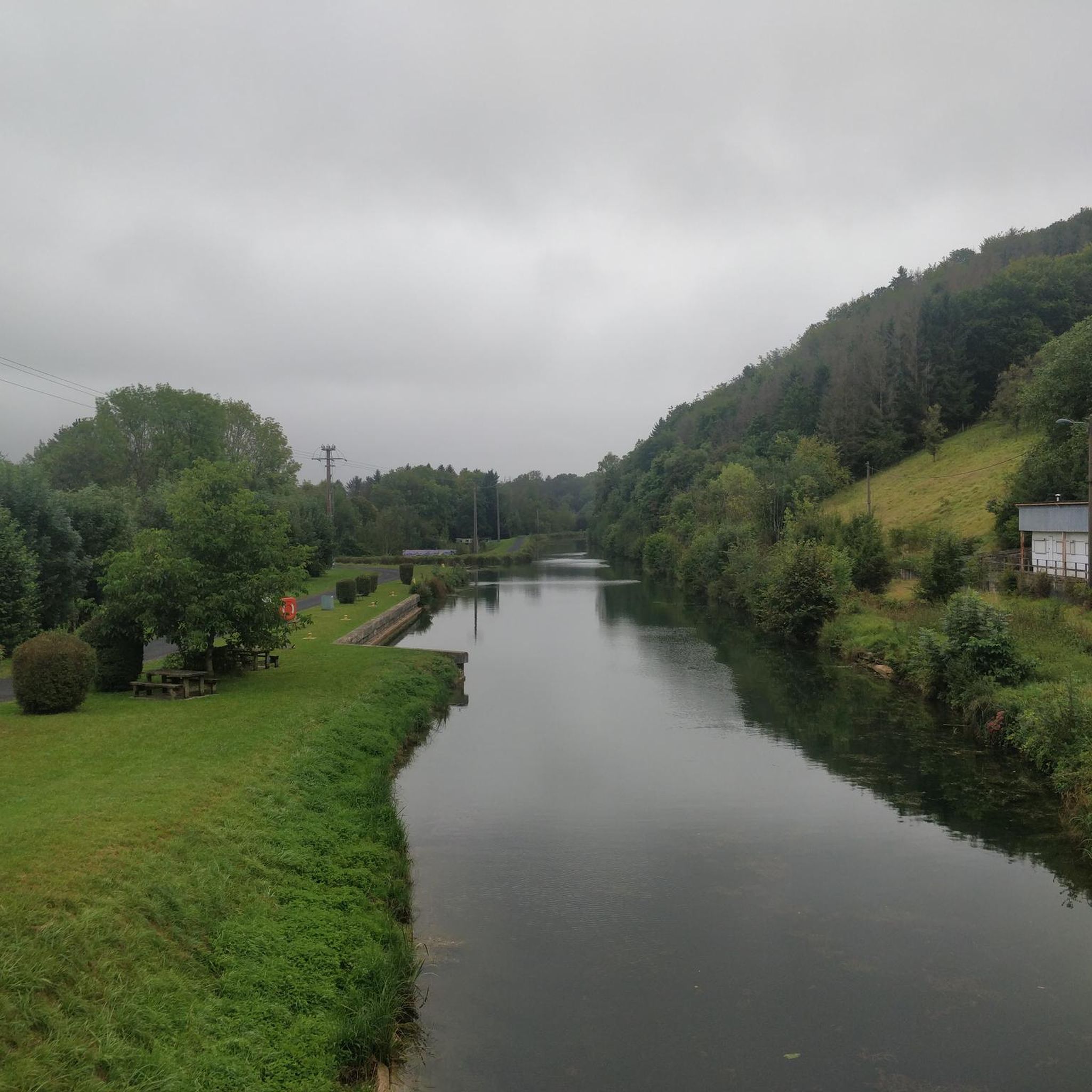
Great and relaxed cycle path along the canal. Great to ride with great places to rest and relax.
1
0
A beautiful church and definitely worth a visit.
1
1

This ancient collegiate church in Gothic style, with some characteristic Renaissance elements, was built between 1315 and 1630. It houses two important works by the Lorraine sculptor Ligier Richier: Christ on the Cross between the Two Thieves and "Le Transi de René de Chalon," depicting the Prince of Orange as a skeleton. It was classified as a historic monument in 1889.
2
0
The church of Saint-Jean, in Bar-le-Duc, is a building in the neo-Byzantine style with references to the neo-Romanesque style. It was built in two phases, between the 19th and 20th centuries. From the mid-19th century, the parish of Notre-Dame had an “annex” in the Brasseries district. The idea of transforming it into a church came about in 1869. The following year, the project was entrusted to the architect Charles Demoget. The result, a neo-Gothic building, was controversial, and Demoget was removed from the task, leaving his place to Ernest Birglin, who designed a new building in the neo-Byzantine style. But it was only in 1875, after the creation of a fourth parish under the name of Saint-Jean, that the construction of the church began. The first phase of the work lasted until 1880, but only the apse, choir, and transept were erected. In 1933, the architect Royer opened the second phase of work, with the construction of the nave which lasted until 1939. However, the facade remained partially unfinished.
2
0

Visible from afar, the tower points the way to the upper old town. From here you have a good view of the city that now lies at our feet.
0
0

Beautiful section of this greenway, which leads to Strasbourg.
4
0

When Saint Stephen (Saint-ETIENNE) expressed his vision of the open heaven "But he, filled with the Holy Spirit, looked up into heaven and saw the glory of God and Jesus standing at the right hand of God" (Acts chapter 7 verse 55), people were outraged people care so much about it that they drove him out of town and stoned him. The memorial of Saint Stephen or Stephen, one of the seven first deacons of the early Jerusalem community, is on Boxing Day.
8
0
Frequently Asked Questions
How many road cycling routes are available around Silmont?
There are over 280 road cycling routes around Silmont, offering a wide range of options for different skill levels and preferences. The komoot community has rated these routes highly, with an average score of 4.4 stars.
What are the typical difficulty levels for road cycling routes in the Silmont area?
The routes around Silmont cater to various abilities. You'll find approximately 26 easy routes, 224 moderate routes, and 30 challenging routes, ensuring options for beginners to experienced cyclists.
Are there any long-distance road cycling routes near Silmont?
Yes, for those seeking longer rides, routes like the Pargny-sur-Saulx Town Hall – Marbeaumont Castle loop from Tannois cover nearly 95 km (59 miles) with significant elevation gain, offering a substantial challenge.
What kind of terrain can I expect on road cycling routes around Silmont?
Road cycling around Silmont primarily features quiet country roads winding through agricultural landscapes. You'll encounter gentle elevation changes, with some routes exploring the periphery of nearby forests and river valleys, providing varied scenery.
Are there circular road cycling routes available in the Silmont region?
Yes, many routes around Silmont are designed as loops. For example, the Marbeaumont Castle – Lisle Castle loop from Tannois is a moderate 61.7 km (38.4 miles) path that brings you back to your starting point.
What can I see along the road cycling routes near Silmont?
While Silmont itself is a quiet commune, the surrounding region offers historical points of interest. Routes may pass by landmarks such as Marbeaumont Castle or the Saint-Jean Church of Bar-le-Duc. The nearby town of Bar-le-Duc also features a Renaissance Quarter.
What do other road cyclists enjoy most about road cycling in Silmont?
The area is highly rated by the komoot community, with an average score of 4.4 stars from over 20 reviews. Cyclists often praise the quiet country roads, the peaceful agricultural landscapes, and the variety of routes available for different skill levels.
Are there any easy road cycling routes suitable for beginners or families?
Yes, there are easy routes available. The The Old Mill on the Ornain – Bakery loop from Guerpont is a 28.3 km (17.6 miles) trail through rural landscapes, often completed in about 1 hour 10 minutes, making it a good option for a more relaxed ride.
Where can I find amenities like cafes or restaurants near the road cycling routes?
Silmont is a quiet rural commune, so direct amenities within the village are limited. For cafes, restaurants, and other services, it's best to plan your routes to pass through or near larger towns like Bar-le-Duc, which is approximately 8 km away and offers more options.
Is public transport available to access the road cycling routes around Silmont?
Information on direct public transport links to Silmont for accessing cycling routes is scarce. It is generally recommended to arrive by car, especially if you are bringing your own bike, and use nearby towns as a starting point for your rides.
Are there specific viewpoints or natural features to look out for while cycling?
While Silmont itself doesn't have prominent natural features, the surrounding Meuse department offers natural beauty. Routes may provide views of the Ornain river valley, agricultural fields, and the edges of local forests. For more significant natural sites, you might consider extending your trip to areas like the Forêt de la Reine or Lac du Der-Chantecocq, which are further afield.
What is the best time of year for road cycling around Silmont?
The best time for road cycling in this region of France is typically from spring to early autumn (April to October). During these months, the weather is generally mild and pleasant, making for comfortable riding conditions through the rural landscapes.
Most popular attractions around Silmont

Get inspired with the komoot mobile app


Explore more
Browse the best Road cycling routes in other regions.
