The best MTB trails around Coll De Nargó
4.3
(13)
209
riders
30
rides
Mountain bike trails around Coll De Nargó are set within the diverse and challenging terrain of the Catalan Pre-Pyrenees. The region features mountainous landscapes with significant elevation gains, including passes like Coll de Bòixols. Riders encounter varied surfaces such as rock, roots, mud, and loose stones across its trails. Natural features like the Riu Sallent-la tolla-riu Valldarques and the Gorgs of Coll de Nargó are also present.
Best mountain bike trails around Coll De Nargó
- The most popular mountain bike…
Last updated: June 28, 2026
14
riders
68.5km
07:25
2,140m
2,140m
Hard mountain bike ride. Very good fitness required. Advanced riding skills necessary.
5
riders
41.6km
04:08
1,210m
1,210m
Hard mountain bike ride. Very good fitness required. Advanced riding skills necessary.

Sign up for free
4.0
(1)
32
riders
39.7km
04:10
1,160m
1,160m
Hard mountain bike ride. Very good fitness required. Advanced riding skills necessary.
5.0
(2)
12
riders
40.7km
03:32
1,070m
1,070m
Hard mountain bike ride. Very good fitness required. Suitable for all skill levels.
12
riders
43.4km
04:09
1,320m
1,330m
Hard mountain bike ride. Very good fitness required. Suitable for all skill levels.
Get access to more routes and recommendations from other explorers.
Sign up for free
Already have an account?
Our route recommendations are based on thousands of hikes, rides, and runs completed by other people on komoot.
Start today with a free account
Your next adventure awaits.
Login or Signup

Tips from the Community

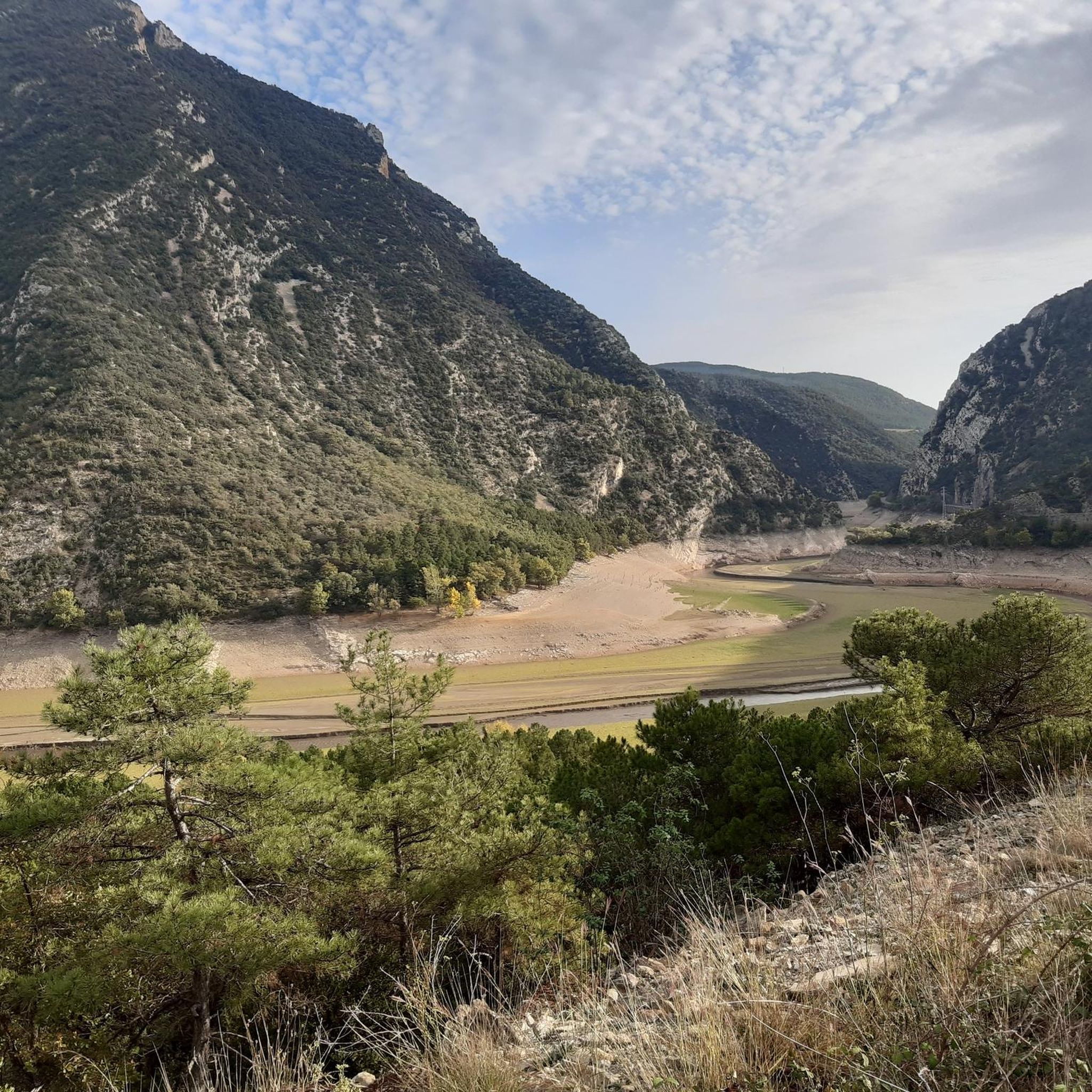
On the border between the municipalities of Peramola and Oliana, you will find the summit and viewpoint of Coscollet, one of the highest and most spectacular points in the Serra d’Aubenç, with extensive views over the Segre River, the Oliana Reservoir and a good part of Alt Urgell. The access road passes through demanding paths and tracks, often rocky and exposed, reserved for experienced cyclists with good legs, or e-bikes with autonomy. Arriving at the summit, at almost 1,610 meters above sea level, rewards the effort with one of the wildest and most solitary panoramas of the Catalan Pre-Pyrenees. The wind often blows strongly, and there is no service or shade, so you need to bring water, protection and everything you might need to stay there for a while. It is one of those places that is not easy, but that leaves its mark.
1
0

We went on a Sunday, and there weren't many people. It's recommended to pack flip-flops in your backpack to wear in the water, as there are a lot of rocks. The water is warm, very pleasant for a swim. You can leave your car in the village and start the route from there.
1
0


There is an 18km climb and almost no shadows.
1
0

The great climb ends at Planell Ras. The path changes slope and goes down towards the Boumort Refuge, a key point on the itinerary. You have to cross the Canadian pass and continue straight ahead along the main track towards Coll de Llívia. The path on the left is a shortcut but it has a non-cyclable section. One kilometer from the refuge, the mountain path that goes up to the summit of Cap de Boumort starts on the left. The first ramp is hard, then it enters a valley that leads to the meadows where there is a gate that opens the way to this beautiful pre-Pyrenees peak.
0
0

It is located on top of a hill. The environment that surrounds the church and also the town, is beautiful. The church is documented from the second half of the 10th century.
0
0
In the middle of a beautiful natural setting, at the foot of the Sierra de Sant Joan, we find this beautiful church, in Romanesque style and from the 12th century. Located in the municipality of Coll de Nargó, in the region of La Noguera.
0
0
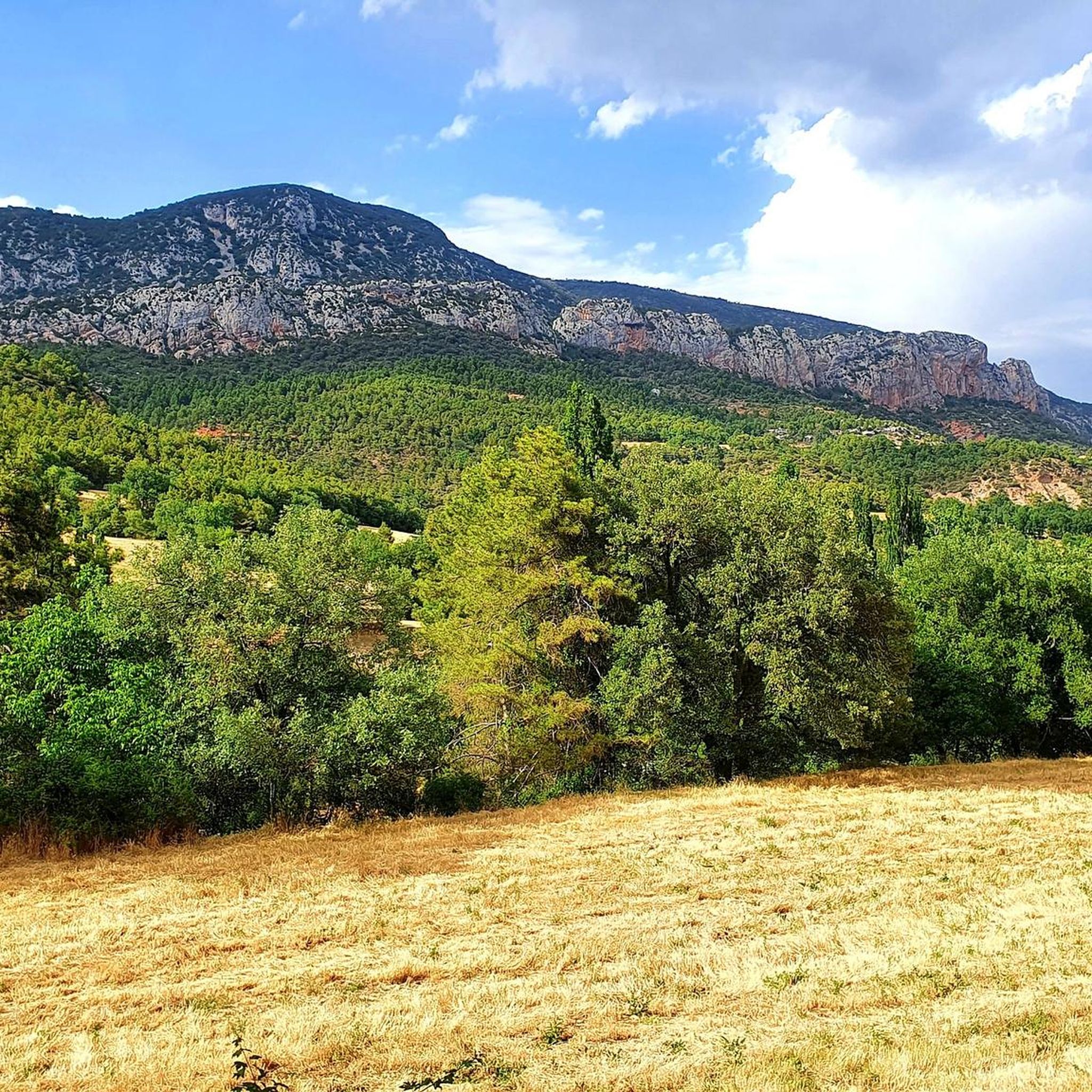
Ideal place for cyclists. We can enjoy an incredible landscape and views throughout the climb to the pass. Located at a height of 1,321 metres, in the Catalan pre-Pyrenees, it joins the counties of Pallars Jussà and Alt Urgell.
0
0
Frequently Asked Questions
How many mountain bike trails are available around Coll de Nargó?
There are over 25 mountain bike routes available around Coll de Nargó. These trails cater to various skill levels, with a majority being difficult, and several moderate options.
What kind of terrain can I expect on mountain bike trails in Coll de Nargó?
The terrain in Coll de Nargó is diverse and challenging, characteristic of the Catalan Pre-Pyrenees. You can expect mountainous landscapes with significant elevation gains, varied surfaces including rock, roots, mud, and loose stones. Routes often feature fast and flowing sections, as well as tight and technical parts.
What is the best time of year for mountain biking in Coll de Nargó?
The most popular months for mountain biking in Coll de Nargó are June and August, offering generally favorable weather conditions for exploring the trails. However, the region's diverse ecosystems mean it can be enjoyed across many seasons, with considerations for snow at higher elevations in winter.
Are there any natural features or landmarks to see while mountain biking in Coll de Nargó?
Yes, the area is rich in natural beauty and historical sites. You might encounter the Aguja del Corb and Ruins of Ermita de Sant Salvador, or enjoy views of the Rocas de Sant Honorat. The region also features natural water bodies like the Riu Sallent-la tolla-riu Valldarques and the Gorgs (pools) of Coll de Nargó.
Can I find waterfalls along the mountain bike routes in Coll de Nargó?
Yes, the Waterfalls of Organyà are a notable natural feature in the vicinity of Coll de Nargó, offering a refreshing stop or scenic detour.
Are there any good viewpoints on the mountain bike trails?
Absolutely. The mountainous terrain of Coll de Nargó offers numerous panoramic viewpoints. Some routes climb to passes like Collado de Bòixols, providing expansive views. Specific highlights include the Top of the Coscollet viewpoint and the View of Rocas de Sant Honorat.
Are there any long-distance mountain bike routes for experienced riders?
For experienced riders seeking a challenge, routes like Puente de las Masias loop from Organyà cover over 40 km with significant elevation. Another option is the Collada de la Creu de Ferri – Coll de Paller loop from Organyà, which is also over 40 km and features substantial climbing.
Are there any circular mountain bike routes in Coll de Nargó?
Yes, many routes in the area are circular, allowing you to start and end in the same location. Examples include the Sierra de Boumort — Ruta circular desde Organyà and the Coll de Nargó - Collado de Bòixols - Montanissell - Coll de Nargó — Ruta circular.
Are there family-friendly mountain bike trails in Coll de Nargó?
The mountain bike trails around Coll de Nargó are predominantly rated as moderate to difficult, often involving significant elevation gains and technical sections. While there are no routes specifically classified as 'easy' in the immediate area, families with older, experienced riders might find some of the moderate trails suitable, depending on their skill level and fitness.
Can I bring my dog on the mountain bike trails in Coll de Nargó?
While many outdoor areas in the Catalan Pre-Pyrenees are dog-friendly, it's always best to check local regulations for specific trails or protected areas. Ensure your dog is well-behaved, kept on a leash where required, and that you carry out all waste to preserve the natural environment.
What facilities are available near the mountain bike trails in Coll de Nargó?
Coll de Nargó, as a small town, offers basic amenities. You can find local cafes and restaurants for refreshments and meals. For accommodation, there are guesthouses or rural lodgings in and around the town. It's advisable to check availability, especially during peak seasons.
Is there parking available for mountain bikers in Coll de Nargó?
Yes, parking is generally available in Coll de Nargó, particularly in the town center or designated areas. For specific trailheads, it's often possible to find roadside parking or small lots, but these can vary. Always ensure you park responsibly and do not obstruct local access.
What do other mountain bikers say about the trails in Coll de Nargó?
The mountain bike trails around Coll de Nargó are highly rated by the komoot community, with an average score of 4.4 stars from over 10 reviews. Riders often praise the challenging terrain, the stunning Pre-Pyrenean landscapes, and the variety of routes that cater to different levels of experienced mountain bikers.
Most popular routes around Coll De Nargó
Most popular attractions around Coll De Nargó

Get inspired with the komoot mobile app


Explore more
Browse the best MTB trails in other regions.
