Top 20 Castles around Haiterbach
Best castles around Haiterbach are found in the surrounding Northern Black Forest region, offering historical significance and panoramic views. The area's history dates back to at least 1099, indicating a fortified past. These sites provide insights into the medieval landscape, often situated in scenic locations. The region features a mix of well-preserved ruins and historical structures.
Best castles around Haiterbach
- The most popular castles is Hohennagold Castle Ruins, a castle that offers a panoramic position with views over the…
Last updated: August 16, 2026
Hohennagold Castle Ruins
Highlight • Castle
Translated by Google •
Tip by

Altensteig Castle and historic old town
Highlight • Castle
Translated by Google •
Tip by

Sign up now to discover places like this
Get recommendations on the best single tracks, peaks, & plenty of other exciting outdoor places.
Sign up for free
Rüdenberg Ruins
Highlight • Castle
Translated by Google •
Tip by

Mandelberg Castle Ruins
Highlight • Castle
Translated by Google •
Tip by

Berneck Castle
Highlight • Castle
Translated by Google •
Tip by
Sign up for free to discover even more castles around Haiterbach.
Sign up for free
Already have an account?
Start today with a free account
Your next adventure awaits.
Login or Signup
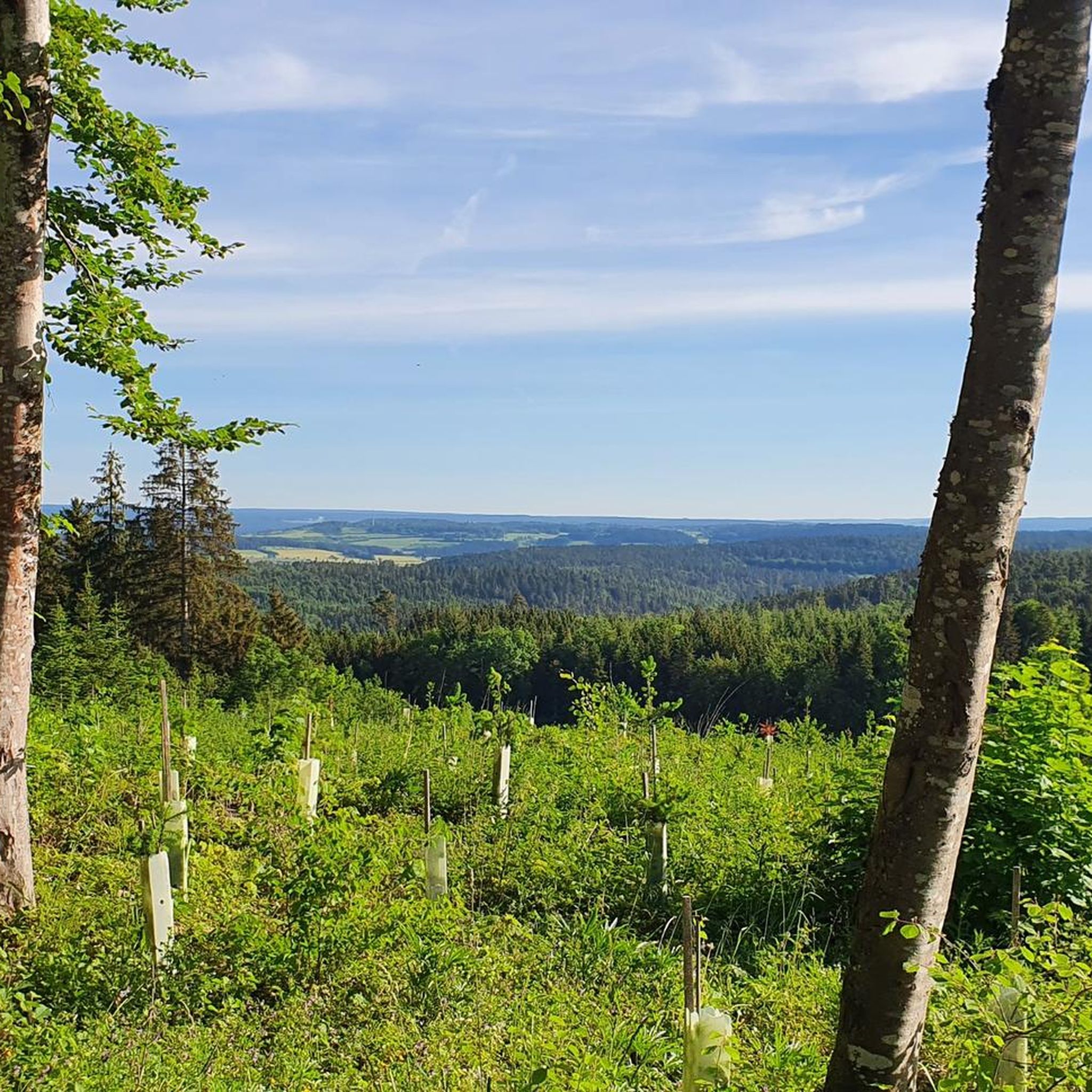
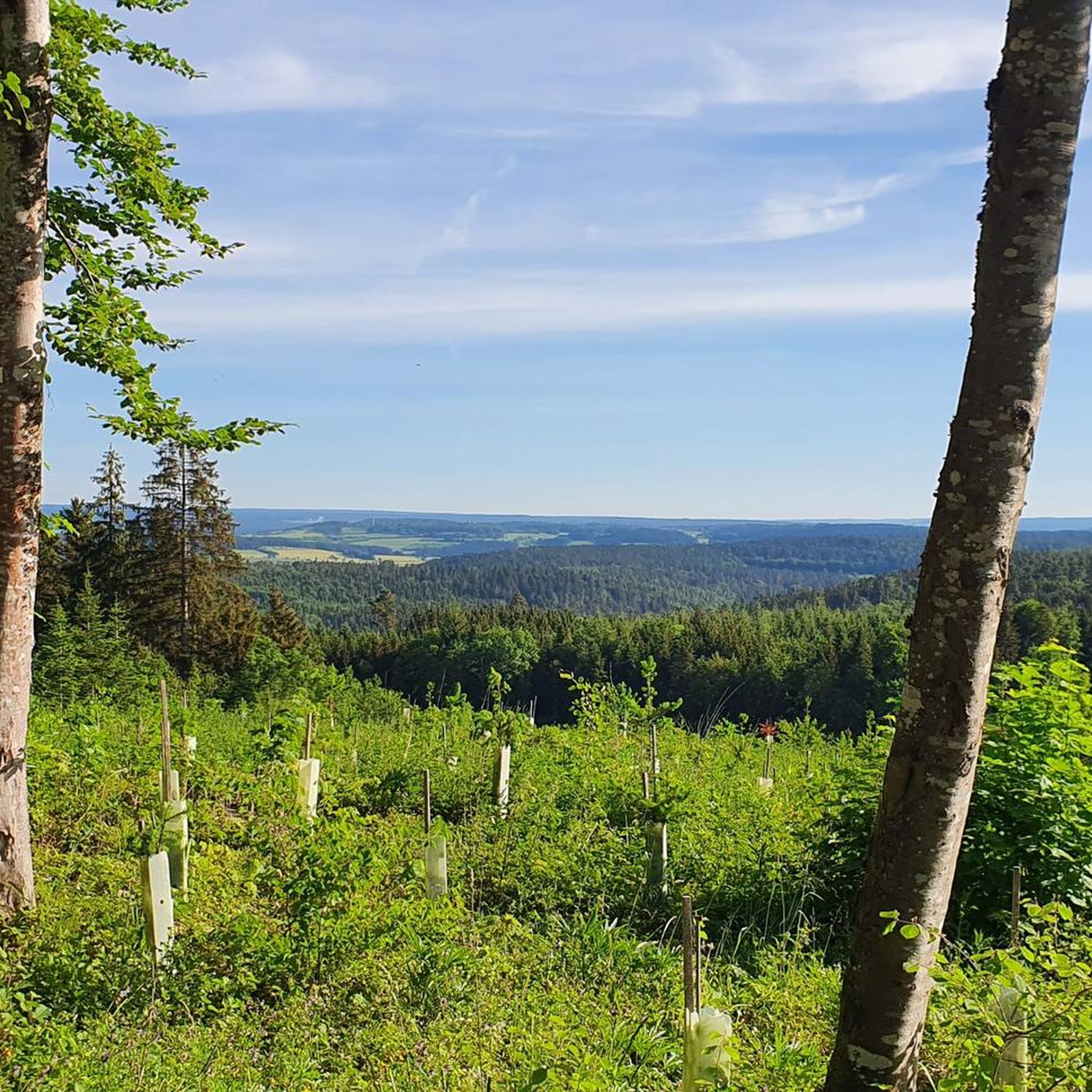
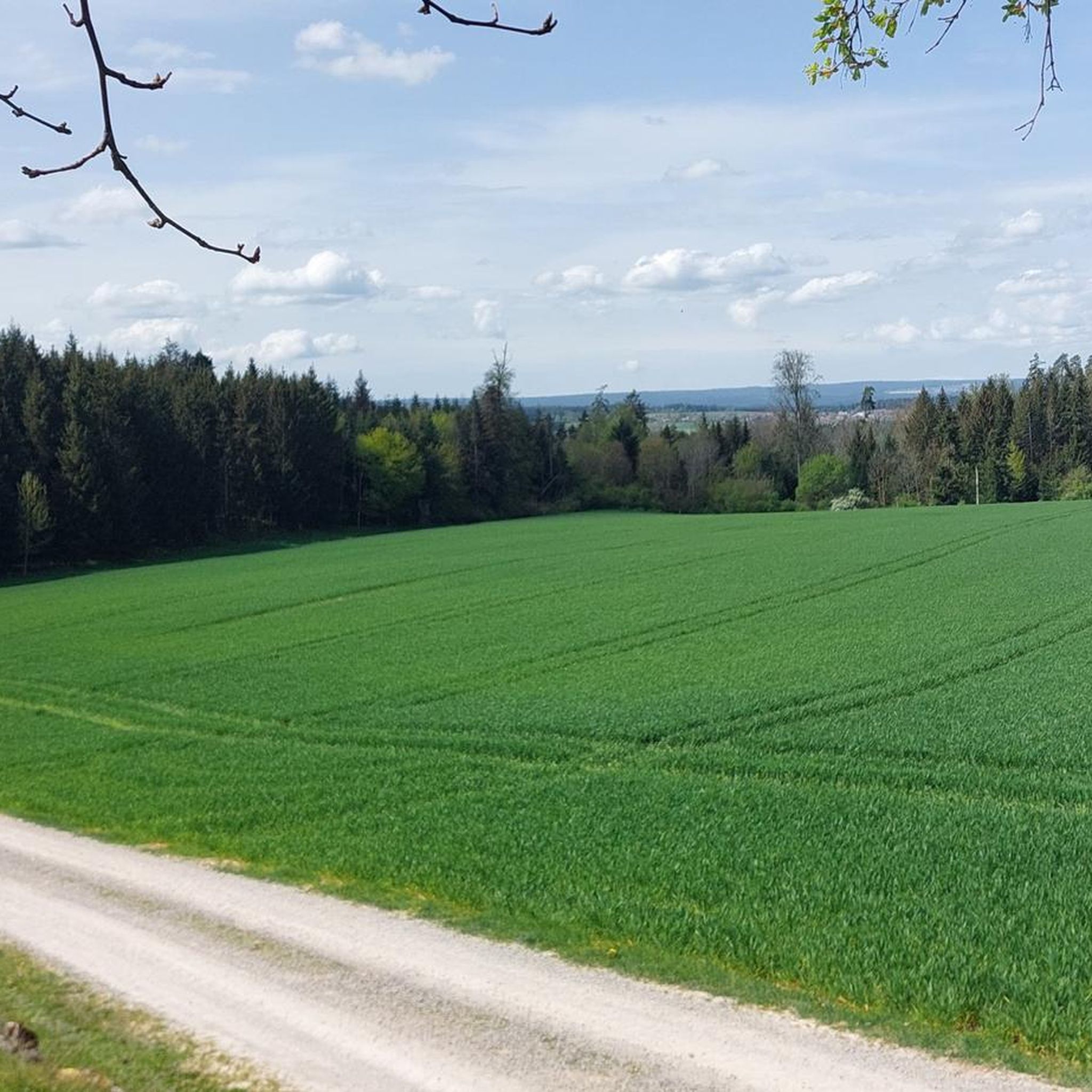

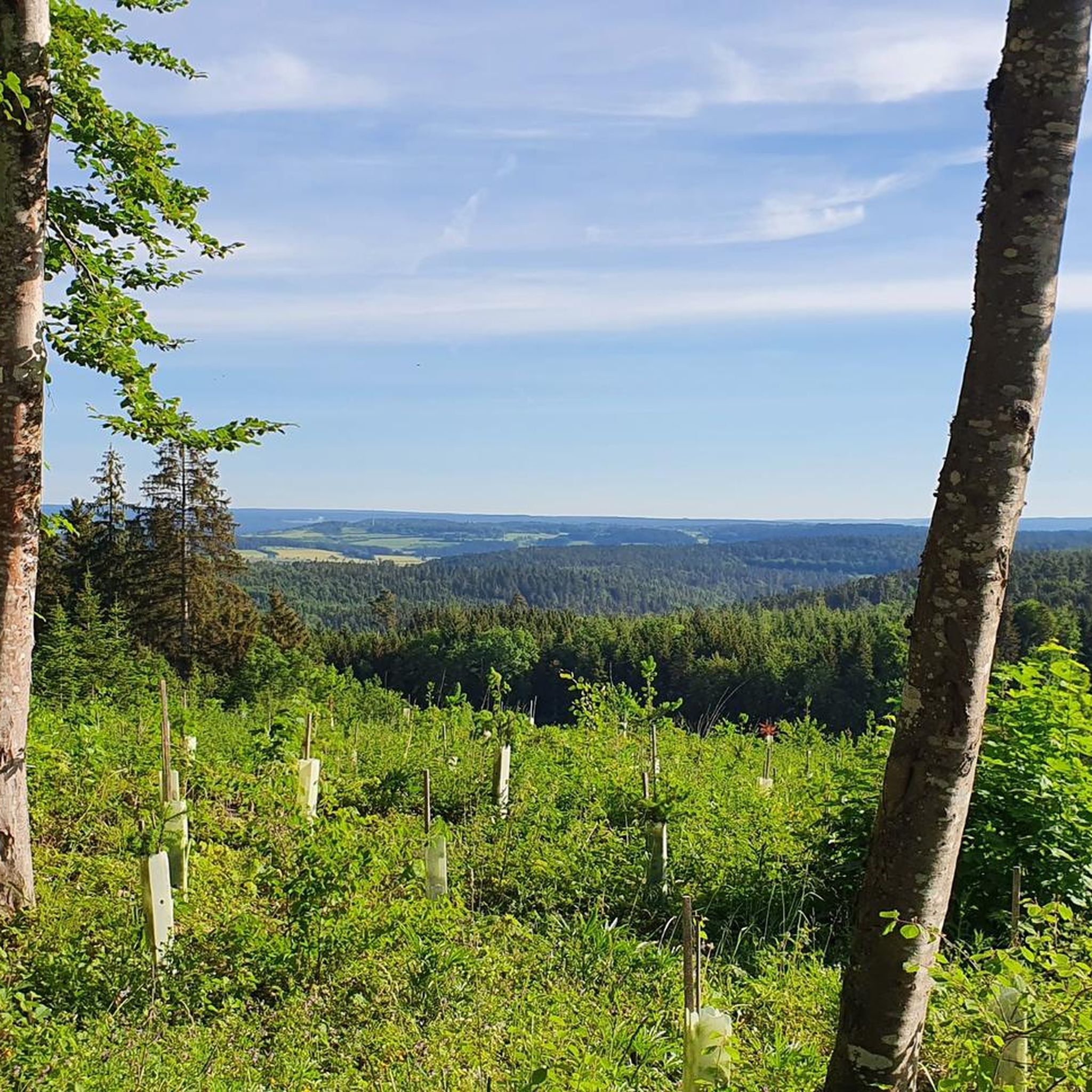
Tips from the Community

High above the old town sits Altensteig Castle, whose impressive residential tower is considered the only castle in the Black Forest never destroyed to this day. The "Old Castle" in its present basic form was built as a defensive structure from around 1230. The flank towers "Himmel" (Heaven) and "Hölle" (Hell) and the late Romanesque shield wall bear witness to this. The bailiffs of the Counts Palatine of Tübingen and a collateral line of the Hohenbergs resided here. After the sale of the castle and dominion to the Margraves of Baden at the end of the 14th century, the ensemble became the seat of the Baden bailiffs, who inscribed their names on a window arch in the knights' hall. In 1604, Altensteig came to Württemberg from Baden through an exchange of territory. And the new rulers commissioned the "New Castle" around 1610.
2
0

The Mandelberg Castle, also called Mantelburg, is located on a wooded ridge in the middle of a deep forest, above the Waldachtal valley. The present-day path leads into the former moat of the castle and offers visitors the opportunity to circle the complex almost completely. Burg Mandelberg lies on a rock that was completely separated from its surroundings by a moat. The outer bailey was located in the moat, among other places. It included a small cave, which can still be visited today, as well as some buildings, of which foundations and meter-high walls are still recognizable. Via a zwinger with two defensive towers, which are still recognizable as stumps, one reaches the inner bailey. The inner bailey presents a similar picture to the outer bailey. The steeply sloping terrain once housed a palas, a well, a mighty curtain wall, and the keep. Further buildings may have existed due to the size of the open spaces. Today, all three mentioned buildings are still present, although they differ greatly in their state of preservation. The palas was built onto the southern outer wall and can be found up to a height of two meters or more. Due to the sloping terrain, it appears very stepped. The partially used bossed ashlar stones, which indicate a Staufen origin, are clearly recognizable. Besides a door frame with a washed-out threshold, some small windows can still be found. The palas probably had one or two stories. In the middle of the courtyard lies the old well. A grate adorns its top. Behind the well to the northwest, north of the keep, one encounters the old and thick curtain wall, which secured the castle towards the moat, and the remains of another small wall that might once have belonged to a building. The crowning glory of the castle is the rebuilt and restored keep, which with its proud height towers a few meters above the surrounding forest. It is still accessible today via its original entrance. A spiral staircase, consisting of a steel construction, leads there. In place of the former landing, then fastened and secured by still existing beam supports, a steel/concrete construction brings the visitor into the interior of the tower. Slightly above the entrance, further beam supports bear witness to a surrounding walkway. Source: https://burgenarchiv.de/burg_mandelberg_in_baden-wuerttemberg#kurzinfo
0
0
The Mandelberg Castle ruin, also called Mantelberg Castle ruin, is the ruin of a hilltop castle 570 m above sea level in the Bösingen district of the municipality of Pfalzgrafenweiler in the district of Freudenstadt in Baden-Württemberg, above the Waldach valley. The keep, used as a viewing tower, and parts of the foundation walls are still present. Archaeological excavations showed that a predecessor structure was built in the 11th century. The castle is first mentioned in documents in 1287. In 1385, Count Wolf von Eberstein bought the structure from Hans Müller von Mandelberg for 1000 guilders. As early as 1387, the owner was Margrave Rudolf of Baden. The castle itself burned down completely during the Peasants' Wars in 1525 and was not rebuilt. In 1970, the municipality of Pfalzgrafenweiler bought the building remains. The 35-meter-high keep was renovated and made accessible in 1975. Archaeological evidence could be provided for the destruction of the castle in 1525 mentioned in sources. No traces of the castle's use after 1525 could be found. The archaeological investigations revealed that the castle was built and expanded in three phases. The first structure, consisting of wooden or half-timbered buildings, was likely built in the late 11th century and used until the mid-13th century. Towards the end of its period of use, the much larger second castle was built. The complex had a almond-shaped floor plan with dimensions of 45 by 32.5 meters. In the west of the site stands the almost square keep, which is still preserved today. The wall from this tower to the north corner of the complex, presumably a shield wall, was added later, as was the wall adjoining the keep to the south. These walls supported a rampart walk. The inner buildings at the time could no longer be determined, as further expansion took place in the mid-15th century. A cistern was already built in the 14th century; during the expansion in the 15th century, a new palace was built in the south corner, and possibly a utility building in the north corner. The barbican on the east side was also likely built in the 15th century. This was later partially renewed. It is assumed that the castle was completely surrounded by a barbican by around 1500 at the latest. Source: https://de.wikipedia.org/wiki/Ruine_Mandelberg
0
0


The Mantelberg Castle was first mentioned in documents in 1287. At that time, the owners were the Müller von Mantelberg family, who, like some other families from the area, bore a golden fish on a black field as their coat of arms. In 1385, Reaf Wolf von Eberstein acquired the castle, and in 1389, Margrave Rudolf von Baden. Afterwards, it was a Baden fief in the possession of various notable nobles. The approximately 33-meter-high keep survived the destruction by the rebellious peasants in 1525. In 1973/74, it was structurally secured and made accessible by the municipality of Bösingen with subsidies from the district of Freudenstadt, the state of Baden-Württemberg, and the Überschwäbische Elektrizitätswerke.
0
0

Beautiful and very large medieval castle ruins – clearly visible from afar as a landmark above the town of Nagold. Accessible via various hiking trails through the forest surrounding the Schlossberg. Great views of the Heckengäu, the Black Forest, and, in good weather, even the Swabian Alb. Served on weekends in the summer. Regular events are also held.
7
0

Beautifully situated in the forest
0
0

A little hard to find, and unfortunately a little neglected. Very manageable. But still OK as part of the attraction on the Four Castles Trail.
2
0
Frequently Asked Questions
What are some of the most historically significant castles in the region?
The region around Haiterbach, particularly the Northern Black Forest, is rich in historical castle ruins. Notable sites include Hohennagold Castle Ruins, known for its panoramic position, and Berneck Castle, a medieval hilltop castle with a distinctive shield wall. These sites offer insights into the area's fortified past.
Are there family-friendly castles to visit near Haiterbach?
Yes, several castle ruins are suitable for families. Hohennagold Castle Ruins and Wildberg Castle Ruins are both categorized as family-friendly. Wildberg Castle Ruins, for example, has a beautifully designed courtyard with benches, inviting visitors to relax.
What kind of views can I expect from the castles around Haiterbach?
Many of the castle ruins offer excellent panoramic views. From Hohennagold Castle Ruins, you can enjoy superb views over the Nagold Valley and the city, with the Swabian Alb visible on clear days. Wildberg Castle Ruins also provides views of the Nagoldschleife.
Can I find refreshments or facilities at the castle ruins?
At Hohennagold Castle Ruins, the pavilion is hosted by local clubs on weekends and public holidays from May to October, offering cold drinks, coffee, and cake. For other sites, it's advisable to check local information or bring your own provisions, as dedicated facilities might not always be available directly at the ruins.
What are the best times of year to visit the castles near Haiterbach?
The period from May to October is generally ideal for visiting, especially if you plan to enjoy refreshments at sites like Hohennagold Castle Ruins. Spring and autumn offer pleasant temperatures for exploring the ruins and surrounding hiking trails, while summer provides longer daylight hours. Winter visits are possible but may involve colder weather and potentially limited access or services.
Are there hiking opportunities around the castles?
Yes, the region offers various hiking opportunities. You can find numerous trails around Haiterbach, including routes like the 'St. Mary's Church – Mandelberg Castle Springs loop' or the 'View of Beihingen – Forest Musical Instruments loop'. For more hiking options, explore the Hiking around Haiterbach guide.
How long should I plan for a visit to these castles?
The time needed varies by castle. For sites like Hohennagold Castle Ruins or Wildberg Castle Ruins, you might spend 1-2 hours exploring the ruins and enjoying the views. If you combine a visit with a hike or a meal, plan for a half-day outing. Wasserschloss Glatt, being a more preserved water castle, might warrant a longer visit if it includes museum access.
Is public transport available to reach the castles?
While Haiterbach itself has public transport connections, direct public transport to all individual castle ruins can be limited. Many ruins are best accessed by car, followed by a short walk. It's recommended to check local bus schedules or regional transport options for specific castle locations, as some may require a combination of transport and walking.
Are the castles accessible for visitors with mobility concerns?
Many castle ruins, by their nature, involve uneven terrain, stairs, and sometimes steep paths, which can pose challenges for visitors with mobility concerns. While some areas might be accessible, full accessibility is not guaranteed. For example, Berneck Castle's courtyard is not open to the public, and the ruins themselves are on a rock spur. It's best to research specific sites for detailed accessibility information.
Can I bring my dog to the castle ruins?
Generally, dogs are welcome on leads at most outdoor castle ruins in the region, especially on public paths and viewing areas. However, specific rules may apply to certain areas or if there are events. Always ensure your dog is under control and clean up after them. There are many dog-friendly hiking trails in the area that can be combined with castle visits.
Are there any lesser-known or 'hidden gem' castle ruins worth exploring?
Beyond the more popular sites, the Rüdenberg Ruins offer a glimpse into a small tower castle hidden on a forest spur. Only the stump of the tower remains, but it provides a quiet, historical detour. Similarly, Eutingen Castle Ruins, though not much remains, holds historical significance as a former spur castle.
What are the typical weather conditions for visiting castles in the Haiterbach region?
The Haiterbach region experiences a temperate climate. Summers are generally warm and pleasant, ideal for outdoor exploration. Spring and autumn offer milder temperatures and beautiful scenery, though rain showers are possible. Winters are cold, with potential for snow and ice, which can affect accessibility and comfort at exposed ruins. Always check the local forecast before your visit.
Where can I find parking when visiting the castles?
Most major castle ruins, such as Hohennagold Castle Ruins, have designated parking areas nearby, often within a short walking distance. For smaller or more remote ruins like Rüdenberg Ruins, parking might be less formal, requiring you to find suitable spots along forest roads or at trailheads. Always observe local parking regulations.
Most popular routes around Haiterbach
Most popular attractions around Haiterbach

Get inspired with the komoot mobile app


Explore more
Looking for the best castles somewhere else? Discover other guides around Haiterbach:
