Top 20 Caves in Girona
Caves in Girona, a province in Catalonia, Spain, offer a diverse range of subterranean formations. The region features ancient prehistoric shelters, historical mining sites, and sea caves along the Costa Brava. These locations provide opportunities for archaeological discovery and exploration of natural geological features. Girona's landscape includes both inland rock formations and coastal caves shaped by water erosion.
Best caves in Girona
- The most popular caves is Cave of Hell, a sea cave formed by erosion. Its name comes from the reddish color the water takes on with the first rays of the dawn sun.
- Another must-see spot is Norfeu Tower, a viewpoint that includes a cave accessible to visitors. This location offers views and a cave experience for adventurers.
- Visitors also love Oratory of Mare de Déu de les Olletes, a small oratory dug into the rock. It houses a Baroque alabaster image of the Virgin Mary and has historical origins from the 17th century.
- Girona is known for prehistoric caves, sea caves, and historical rock shelters. The region offers a variety of caves to see and explore, from archaeological sites to natural coastal formations.
- The caves in Girona are appreciated by the komoot community, with more than 60 upvotes and 38 photos shared across 32 highlights.
Last updated: August 21, 2026
Norfeu Tower
Highlight • Viewpoint
Whether you choose the easy way or the more difficult one, it is worth it either way. Arrive, sit down and just switch off
Translated by Google •
Tip by

Cave of Hell
Highlight • Cave
Translated by Google •
Tip by

Sign up now to discover places like this
Get recommendations on the best single tracks, peaks, & plenty of other exciting outdoor places.
Sign up for free
Oratory of Mare de Déu de les Olletes
Highlight • Religious Site
Next to it and rising above the road are the remains of the building where the objects needed for the worship of the chapel were kept.
Its origin can be traced back to the beginning of the 17th century, when, according to traditional references, an image of the Virgin Mary was found in a small depression in the ground, that is, in a "pot", which has given its name to the oratory
This hole is a few steps away, on a support of the cliff, which has been retouched in order to be able to put a fence. When the image from this corner was moved to the chapel, one of the Virgin Mary of Núria was placed in its place. pot-shaped cavities found around
Translated by Google •
Tip by

Rocapastora Cliff
Highlight • Climb
Translated by Google •
Tip by

Garrell's Tomb
Highlight • Cave
this is the cave that is part of the enclosure created by this character over the years.
A few hundred meters further on you can see another construction, the orchard.
Translated by Google •
Tip by

Baumes de Caixurma
Highlight • Cave
Located south of Castellfollit de la Roca, within the municipality of Montagut and Oix.
These are blocks of bluish-gray shale marl. According to the cartography of the Geological Institute of Catalonia, they are Eocene materials from the Lutetian.
The entrances to the baumes, with an approximate length of 400m, are hidden by the dense vegetation
Translated by Google •
Tip by

Sant Segimon Sanctuary
Highlight • Religious Site
Legend has it that this sanctuary was inhabited by the King of Burgundy, Sigismund (hence its Catalan name "Segimon"), who acted as a hermit.
Translated by Google •
Tip by
Niño Jesús Mine
Highlight • Structure
The mine is made up of a set of galleries that drill the northern side of the Bacs mountain at different levels, with 23 open galleries located.
The mine was closed in 1918, after only 26 years of operation, due to the low profitability of the iron ores and the cost of transport to the foundries.
The charger is the first item you will find, on the right hand side of the path, following some stairs with a wooden railing. It is the most characteristic and significant of the mining complex and is located at the confluence between the Mavalls stream and the Deveses stream.
Following the path again, you will reach the main mines that are at the foot of the route. Nowadays the galleries have become an important resting and breeding habitat for bats, animals often despised for their appearance and associated mythology, but of great natural importance for their predatory ability on insects and as bioindicators of the quality environmental and the impact of climate change on an ecosystem.
It is advised not to enter the galleries, for safety reasons and to preserve the tranquility of the fauna that lives there.
Translated by Google •
Tip by

Basalt Quarry and Waterfall of Castellfollit de la Roca
Highlight • Natural Monument
Tip by

Catau de l'Ós Cave
Highlight • Cave
The other cave is a short duct only 8 meters long and with a roof that descends until it becomes impenetrable.
Translated by Google •
Tip by
Sign up for free to discover even more caves in Girona.
Sign up for free
Already have an account?
Start today with a free account
Your next adventure awaits.
Login or Signup
Popular around Girona

Triathlon 360 – my journey around the world
Catalunya Trail — Bikepacking in the Pyrenees
Grand Tour of Catalonia Gravel – your bikepacking adventure
On the road to the sun — bikepacking to southeast Spain
Themed greenways of Girona – paths with history
Ports and Roads — Catalonia on Wheels
Pirinexus – Pyrenees and Costa Brava bikepacking
European D̶I̶V̶I̶D̶E̶ Connect Trail Project – a journey across Europe
Catalonia by bike — Itineraries between culture and nature
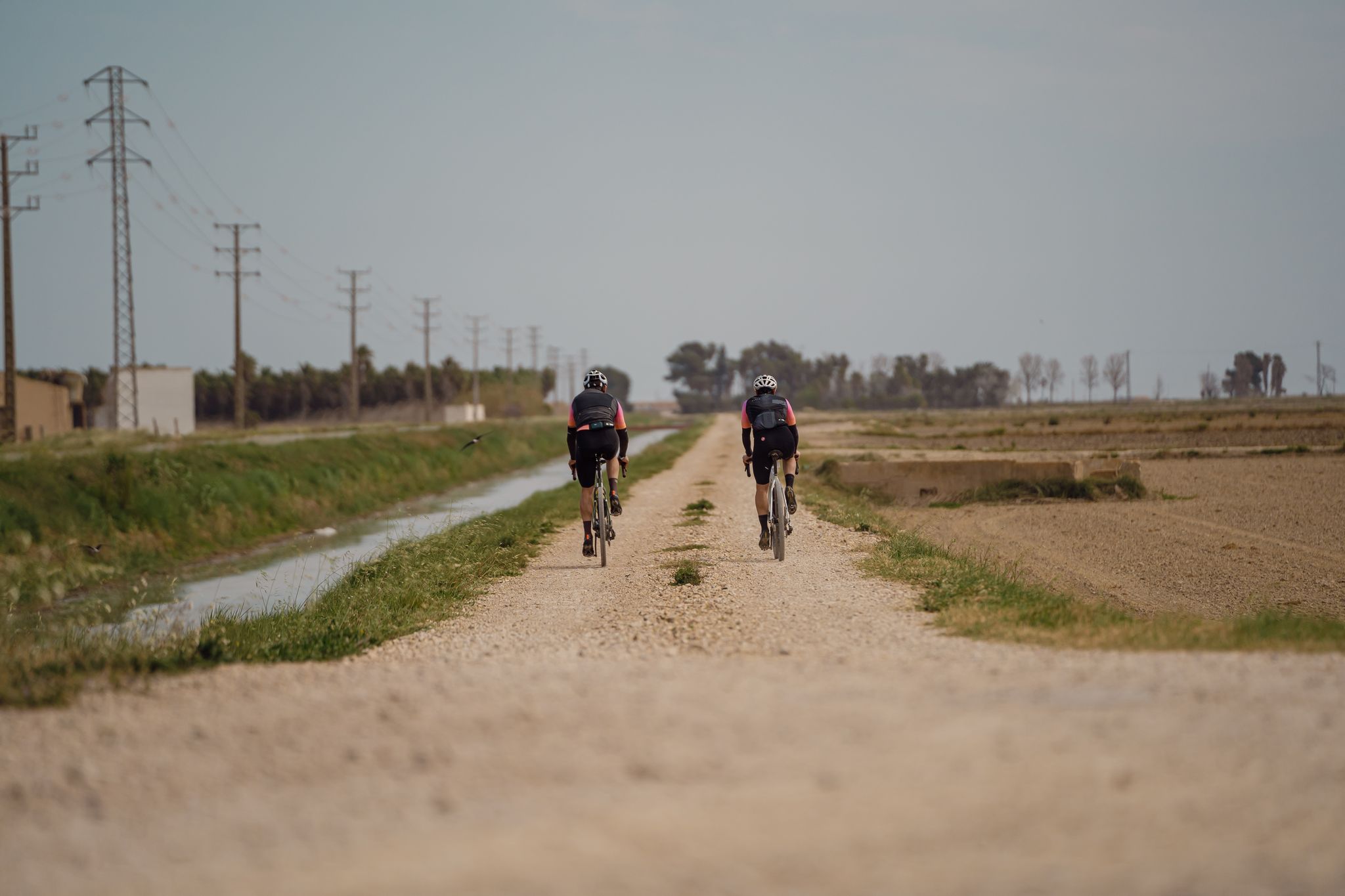
Discover Catalonia on a gravel bike
Other adventures in Girona


Tips from the Community

The Norfeu Tower is a historic watchtower built in the 16th century to defend against pirate attacks. It stands atop a rocky cliff overlooking the Mediterranean Sea and offers stunning views of the Roses coastline.
3
0

The Torre de Norfeu is a building in the municipality of Roses (Alt Empordà) protected as a cultural asset of local interest. Located within the small peninsula that forms the Cap de Norfeu, on top of the highest hill of all those that make up the orography of the area, with a great command over the sea. These are the remains of a watchtower located in these contours. Circular in plan, with a slightly sloping profile and a large diameter, the tower is built with stone of various sizes and some ashlars, without being worked, arranged in irregular rows and bound with lime mortar. It currently has an approximate height of about six meters and maintains the hemispherical vault that covered the ground floor. The interior walls still maintain remains of the hydraulic lime layer that coated them and the bottom was built with a fairly well-preserved tile pavement, since the floor was intended to be a rainwater collection cistern. In the center of the vault, the register through which the water was extracted and the first floor was reached is still preserved.[1] Currently, access to the interior of the tower is through a slightly raised chasm, which gives access to the space of the cistern. Large fragments of built walls and scattered rubble, from the demolition of the upper part, are scattered around the construction. Source: https://ca.m.wikipedia.org/wiki/Torre_de_Norfeu
2
0

In these Baumas and cavities, a certain number of protected cave-dwelling invertebrates and Bats live. It is advisable not to ENTER some of these Baumas and ensure that our passage through the area causes the least possible impact.🙋
1
0

Just behind the church you find this very nice waterfall and an old factory. However, the most interesting thing may the formation in the volcanic rock and tunnel/cave going under the church. See if you can find it.
1
1

These are two small caves separated by 6 meters. The largest has a slightly ascending gallery and is largely covered by clastic products. In the first few meters it has a width of about 5 meters which gradually decreases until the final section where it remains closed. A few meters from the mouth, on the left, there is a small side channel which soon becomes impenetrable. In total it has a route of 28 meters. The other cave is a short duct only 8 meters long and with a roof that descends until it becomes impenetrable.
1
0
It is an artificial cave 15 meters long built with a hammer and escarpment. Personally it is what I liked the most with all those drawings engraved on the stone. At the entrance to the cave there is a commemorative plaque where it says the following: En aquest lloc va començar tot. «Here are buried my fantasies and my illusions». I really liked it because after visiting the place and watching the documentary, it became clear to me that Garrell invested many hours here, with a lot of enthusiasm and passion.
0
0
In 1892, Arístides de Artiñano from Barcelona registered two iron ore mines with the names "Niño Jesús" and "Victoria Esperanza", after having carried out some promising prospecting. It was already known that iron had been mined in this area of Les Gavarres in the s. XVIII, and the growing Catalan industrial economy of the s. XIX needed this raw material to develop, along with coal. The mine is made up of a set of galleries that drill the northern side of the Bacs mountain at different levels, with 23 open galleries located. The mine was closed in 1918, after only 26 years of operation, due to the low profitability of the iron ores and the cost of transport to the foundries. The charger is the first item you will find, on the right hand side of the path, following some stairs with a wooden railing. It is the most characteristic and significant of the mining complex and is located at the confluence between the Mavalls stream and the Deveses stream. Following the path again, you will reach the main mines that are at the foot of the route. Nowadays the galleries have become an important resting and breeding habitat for bats, animals often despised for their appearance and associated mythology, but of great natural importance for their predatory ability on insects and as bioindicators of the quality environmental and the impact of climate change on an ecosystem. It is advised not to enter the galleries, for safety reasons and to preserve the tranquility of the fauna that lives there.
1
1

The origin of the sanctuary of Sant Segimon dates back to the 13th century when a chapel was built using the cave. Legend has it that this sanctuary was inhabited by the King of Burgundy, Sigismund (hence its Catalan name "Segimon"), who acted as a hermit.
0
0
Frequently Asked Questions
What types of caves can I explore in Girona?
Girona offers a diverse range of subterranean formations, including ancient prehistoric shelters, historical mining sites, and stunning sea caves along the Costa Brava. You can find archaeological sites, natural coastal formations, and even caves with religious significance.
Are there any prehistoric caves in Girona?
Yes, the Serinyà Prehistoric Cave Park is one of the most significant archaeological sites in Western Europe. It showcases human habitation from pre-Neanderthals to modern humans, with several shelters and caves like Arbreda, Mollet, and Reclau Viver. It offers guided tours and workshops to delve into prehistoric life.
Which sea caves are worth visiting along the Costa Brava?
The Costa Brava boasts several remarkable sea caves. The Cave of Hell (Cova de s'Infern) in Cap de Creus Natural Park is known for its natural swimming pool and the reddish hue the water takes on at sunrise or sunset. For a longer adventure, Cova d'en Gispert, near Begur, is the longest sea cave on the Costa Brava, ideal for kayaking. The Cova de la Sal, near L'Escala, is popular for snorkeling and has a small pebble cove.
Are there any caves with historical or religious significance?
Absolutely. The Oratory of Mare de Déu de les Olletes is a small oratory dug into the rock, housing a Baroque alabaster image of the Virgin Mary with origins from the 17th century. The Sant Segimon Sanctuary is a 13th-century chapel built using a cave. Additionally, the Bandoleros' Mine is a crevice historically believed to be a hiding place for bandits.
What kind of activities can I do in or around Girona's caves?
Activities vary by cave. You can explore archaeological sites with guided tours at Serinyà, swim and snorkel in sea caves like the Cave of Hell or Cova de la Sal, or enjoy kayaking and boating adventures in caves such as Cova d'en Gispert and La Foradada. Many caves are also integrated into hiking routes.
Are there family-friendly caves in Girona?
The Serinyà Prehistoric Cave Park offers guided tours and workshops that can be engaging for families interested in history and archaeology. Sea caves with easy access or small beaches, like Cova de la Sal, can also be suitable for families looking for a unique swimming or snorkeling experience.
What is the best way to access the sea caves?
Access methods vary. Some sea caves, like the Cave of Hell, can be reached by walking a short distance from a lighthouse or by swimming, diving, or small boat. Others, such as Cova d'en Gispert, are best accessed by kayak or boat, often departing from nearby coves like Aiguablava.
Are there hiking opportunities near Girona's caves?
Yes, many caves are part of or near hiking trails. For instance, the Baumes de Caixurma is a challenging forest cave system. You can find various hiking routes in the region, from easy walks like the easy hikes in Girona to more challenging hiking trails that might pass by cave formations.
What is the difficulty level for exploring caves in Girona?
The difficulty varies significantly. Some caves, like parts of the Serinyà Prehistoric Cave Park, are easily accessible with guided tours. Others, such as the Baumes de Caixurma or Catau de l'Ós Cave, are categorized as challenging due to their labyrinthine nature or narrow passages. Sea caves might require swimming, kayaking, or boating skills.
What unique natural features can I find in Girona's caves?
Girona's caves offer distinct natural wonders. The Cave of Hell is famous for its natural swimming pool and the dramatic reddish reflections in its water. Cova d'en Gispert is notable for its impressive length (almost 150 meters) and distinct chambers, with remarkable acoustics. La Foradada is a unique natural tunnel carved into the mountain, traversable by small boats.
Are there any caves related to historical mining in Girona?
Yes, the Niño Jesús Mine, registered in 1892, indicates historical iron ore mining activity in the area. These sites offer a glimpse into the region's industrial past.
What do visitors enjoy most about Girona's caves?
Visitors appreciate the diverse experiences, from the archaeological insights at prehistoric sites to the stunning natural beauty of the sea caves. The unique geological formations, the opportunity for swimming and kayaking in crystal-clear waters, and the historical context of many cave sites are frequently highlighted. The dramatic views, especially from locations like Norfeu Tower which includes a cave, are also highly valued.
Most popular routes in Girona
Most popular attractions in Girona

Get inspired with the komoot mobile app


Didn’t find what you were looking for?
Discover more caves in Girona region by region:
Explore more
Extend your search for the best caves by checking out these guides of the top ones in Girona:
