Top 20 Natural Monuments around Llagostera
Best natural monuments around Llagostera are found within a landscape characterized by two significant natural massifs: the Gavarres Massif and the Cadiretes Massif. These areas offer a blend of biodiversity, historical sites, and varied terrain. Llagostera serves as a gateway to these protected natural spaces, providing access to Mediterranean forests, rugged coastlines, and ancient geological formations. The region's natural monuments include a variety of features, from panoramic viewpoints to historical megalithic structures.
Best natural monuments around Llagostera
- The most popular…
Last updated: July 1, 2026
Trons Cove
Highlight • Beach
Translated by Google •
Tip by

Es Codolar Cove
Highlight • Beach
Translated by Google •
Tip by
Sign up now to discover places like this
Get recommendations on the best single tracks, peaks, & plenty of other exciting outdoor places.
Sign up for free
Puig de Cadiretes summit
Highlight • Summit
Translated by Google •
Tip by

Dolmen of the Cova d'en Daina
Highlight • Historical Site
Translated by Google •
Tip by

Cap Roig Cove
Highlight • Beach
Translated by Google •
Tip by

Sign up for free to discover even more natural monuments around Llagostera.
Sign up for free
Already have an account?
Start today with a free account
Your next adventure awaits.
Login or Signup
Other adventures around Llagostera

Tips from the Community

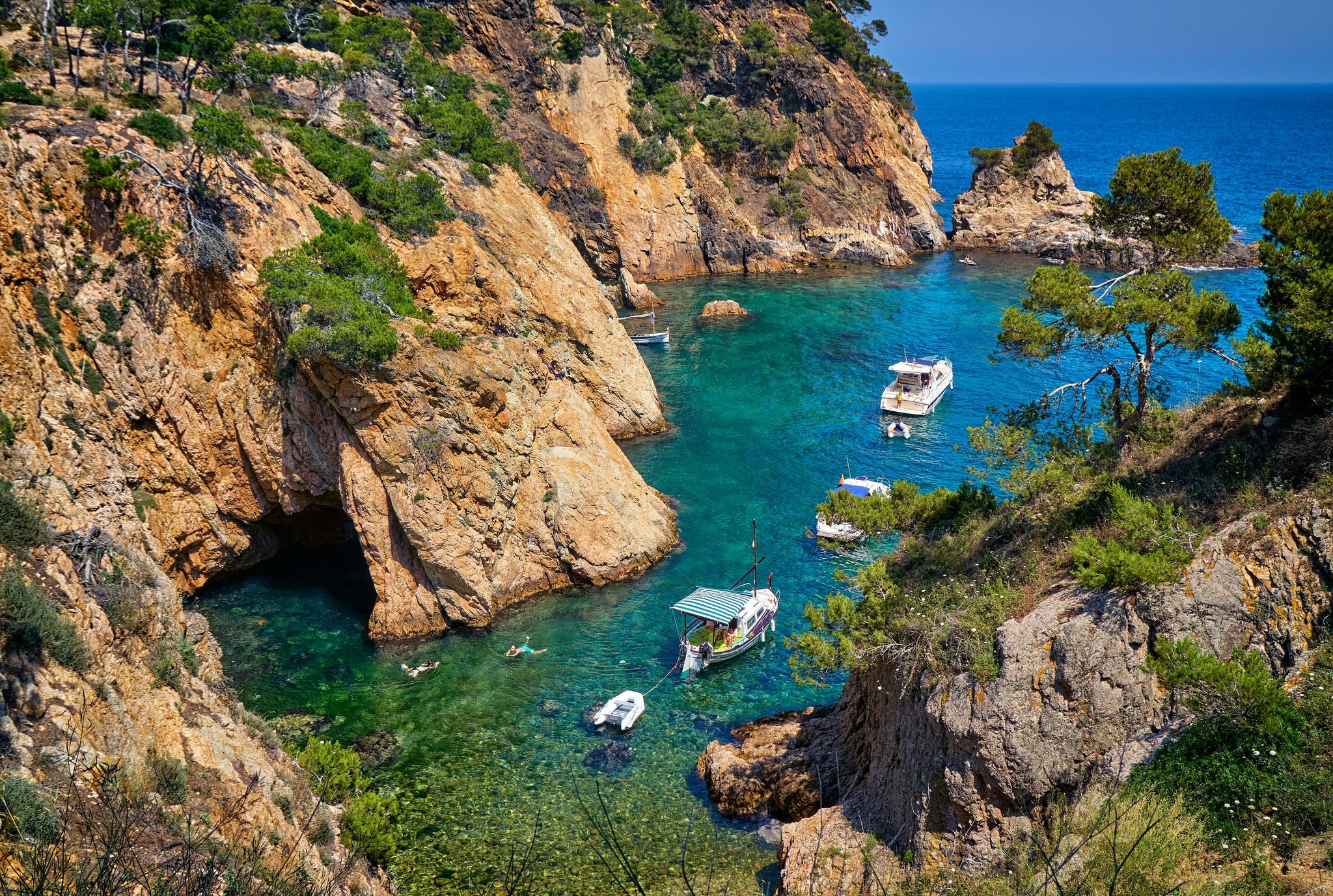
Cala Cap Roig is a beautiful natural area that takes its name from the reddish rock formation that divides the beach in two.
7
0

Great not technical hike from Tossa de Mar, largely on a GR92 route. Peak offers great views.
0
0

The dolmen has the shape of a rectangular burial chamber, composed of large vertical stone slabs (orthostats) that support a horizontal upper slab (cover). It is surrounded by a tumulus, an accumulation of earth and stones that originally covered the entire structure, giving it the appearance of a small hill. It is approximately 7.5 metres long, with an inner chamber of 2 metres. Its entrance faces southeast, probably for astronomical or ritual reasons. It was used as a collective tomb, where the ancient inhabitants deposited the remains of the deceased along with offerings, tools, pottery and other funerary objects.
3
0
It was first documented in the 19th century, when the first archaeological investigations in the area began. The objects found in the dolmen, such as pottery and flint tools, have helped to understand the funerary and social customs of its builders. Legends related to witches and magic rituals circulate around the dolmen, common in the popular stories of the area. Like many dolmens, its orientation could be related to the position of the sun during the solstices, which reinforces its symbolic and spiritual importance.
3
0
It is one of the best preserved megalithic monuments in the region. This dolmen, built during the late Neolithic or Chalcolithic period (around 2,700-2,200 BC), is an impressive testimony to the funerary and spiritual practices of the prehistoric communities that inhabited this area.
4
0

There are also dolmens in Spain!
0
0

I was there in mid-April and it was a great experience. Despite the large number of people, you could still enjoy everything in peace. It's probably different in the high season.
0
0

Beautiful, picturesque beach. The water is very clear and ideal for snorkeling. It is slippery because of the stones in the water, but that didn't bother me. You have peace and quiet here and can spend a wonderful day.
7
0
Frequently Asked Questions
What natural features can I explore around Llagostera?
Llagostera is surrounded by the Gavarres Massif and the Cadiretes Massif. These areas offer diverse landscapes, from extensive Mediterranean forests of cork and holm oak to rugged terrain with unique granite formations. You can find panoramic viewpoints, picturesque coves, and ancient geological features.
Are there any historical or cultural sites among the natural monuments?
Yes, the region is rich in history. For example, the Dolmen of the Cova d'en Daina is one of the best-preserved megalithic monuments, dating back to the late Neolithic or Chalcolithic period. The Cadiretes Massif also features ancient megalithic monuments like the paradolmen of García and the menhir d'en Llach, along with remains of an Iberian town on its summit.
What are the best viewpoints to experience the natural beauty?
The Puig de Cadiretes summit is a significant viewpoint, offering spectacular 360-degree panoramic views of the entire Massís de l'Ardenya, the Mediterranean Sea, the plain of Girona, the Gavarres Massif, and even the Pyrenees on clear days. There's a fire tower and a viewing platform rock at the summit.
Are there family-friendly natural monuments or activities?
Yes, several natural monuments are suitable for families. The climb to Puig de Cadiretes summit has low physical difficulty, making it accessible for various fitness levels. Additionally, Trons Cove and Es Codolar Cove are beaches where families can enjoy clear waters for snorkeling. Mar Menuda Beach even has a protected, shallow area called Sa Banyera de ses Dones, ideal for children.
What outdoor activities can I do near these natural monuments?
The massifs around Llagostera are perfect for outdoor activities. You can find numerous hiking and cycling paths. For specific routes, explore the Running Trails around Llagostera, MTB Trails around Llagostera, and Cycling around Llagostera guides. The Carrilet Route, a greenway, also passes through Llagostera, offering scenic cycling.
Are there any accessible natural monuments for visitors with reduced mobility?
Yes, Mar Menuda Beach is equipped with access ramps and amphibious chairs for people with reduced mobility, making it a good option for an accessible natural experience.
What kind of wildlife can I expect to see in the Gavarres Massif?
The Gavarres Massif is a nature-rich area with diverse fauna. You might encounter various birds, amphibians, wild boars, and badgers within its extensive Mediterranean forests.
What do visitors enjoy most about the natural monuments around Llagostera?
Visitors frequently praise the stunning panoramic views, especially from the Puig de Cadiretes summit. The clear waters of coves like Trons Cove are popular for snorkeling, and the tranquility of the natural areas, combined with historical sites like the Dolmen of the Cova d'en Daina, offers a rich and varied experience.
Can I bring my dog to the trails and natural areas?
The natural massifs around Llagostera, including the Gavarres and Cadiretes, generally welcome dogs on their extensive networks of paths and trails. However, it's always recommended to keep dogs on a leash and follow local regulations, especially in protected areas or near wildlife.
What is the best time of year to visit the natural monuments?
The region enjoys a Mediterranean climate, making spring (April-June) and autumn (September-October) ideal for visiting. During these seasons, the weather is pleasant for hiking and cycling, and the natural landscapes are vibrant. Summer can be hot, especially for strenuous activities, but is perfect for enjoying the coastal coves and beaches.
Are there any easy hiking trails suitable for beginners?
Yes, the Cadiretes Massif offers paths with low physical difficulty, making them suitable for beginners. The Gavarres Massif also has a network of well-signposted paths, many of which are gentle and perfect for leisurely walks. For specific easy routes, you can check the Running Trails around Llagostera guide, which includes moderate options like the 'Puig Ventós and Santa Susanna de Caulès Trail'.
What kind of geology can be found in the natural monuments?
The Cadiretes Massif is known for its unique granite shapes sculpted by erosion, such as 'Pedra-Sobre-Altra'. The Gavarres Massif, on the other hand, consists of ancient granite, slate, and schist, contributing to its smooth, undulating forms.
Most popular routes around Llagostera
Most popular attractions around Llagostera

Get inspired with the komoot mobile app


Explore more
Extend your search for the best caves by checking out these guides of the top ones around Llagostera:
