The best traffic-free bike rides around Tuningen
4.5
(25)
136
riders
21
rides
Gravel biking around Tuningen offers diverse terrain across the Baar plateau, at the eastern edge of the Black Forest. The region features a blend of rolling hills, dense forests, and river valleys, providing varied landscapes for no traffic gravel bike trails. Its geographical location near the source of the Danube and Brigach rivers allows for routes along river paths and through the Black Forest foothills. This area provides a mix of compacted and unpaved sections, suitable for different levels of…
Last updated: May 15, 2026
8
riders
64.2km
03:43
720m
720m
Hard gravel ride. Very good fitness required. Mostly paved surfaces. Suitable for all skill levels.
3.0
(1)
5
riders
Moderate gravel ride. Good fitness required. Mostly paved surfaces. Suitable for all skill levels.

Sign up for free
4.3
(3)
3
riders
36.2km
02:51
660m
660m
Hard gravel ride. Very good fitness required. You may need to push your bike for some segments of this route.
5.0
(1)
7
riders
Hard gravel ride. Very good fitness required. Mostly paved surfaces. Suitable for all skill levels.
5.0
(1)
2
riders
11.1km
00:51
190m
190m
Moderate gravel ride. Good fitness required. Mostly paved surfaces. Suitable for all skill levels.
Get access to more routes and recommendations from other explorers.
Sign up for free
Already have an account?
Our route recommendations are based on thousands of hikes, rides, and runs completed by other people on komoot.
Start today with a free account
Your next adventure awaits.
Login or Signup
Popular around Tuningen

Tips from the Community

The Schlichemtalsperre (also known as Schömberger Stausee, mostly just called Stausee locally) east of Schömberg in Baden-Württemberg dams the Schlichem, a tributary of the Neckar coming from the Swabian Jura. The 90.6 ha Schömberger Stausee mit Palmbühl nature reserve surrounds the Schlichemtalsperre. The approximately 1.35 km long and initially narrow reservoir, which widens to about 175 m towards the end and has an area of 10.4 ha at 643.8 m above sea level (NHN), begins at the hamlet of Untere Säge and extends to the old town center of Schömberg. It has a catchment area of about 33.5 km², to which the Schlichem, already over 11 km long at its mouth, contributes almost 90%. The watercourses Hölzlegraben from the forest to the right of the lake and Scheubühlgraben and Räßentälebach from the left, which are up to 1.2 km long, flow into it from the sides. From the Vorsee forebay near the Untere Säge, a fish ladder leads to the reservoir. There is also the only bridge over the lake that can be walked and driven on. The Schlichem Viaduct can only be used by the railway. The Schlichemtalsperre was built between 1940 and 1944. The Portlandzementwerk Rudolf Rohrbach KG (today Holcim (Süddeutschland) GmbH) in neighboring Dotternhausen, which was the builder of the dam, initially used it for cooling water and electricity generation. An outdoor swimming pool built in 1935 was flooded. After the Second World War, the facility was taken over by the state of Württemberg-Hohenzollern in 1948. The reservoir was renovated from 1975 to 1983. The dam structure is an earth dam, and the hydropower plant within it has a capacity of 60 kW. There is a forebay called Vorsee, which was built from 1975 to 1977. Source: https://de.wikipedia.org/wiki/Schlichemtalsperre
1
0
The Schlichemtalsperre (also Schömberger Stausee, usually just called Stausee locally) east of Schömberg in Baden-Württemberg dams the Schlichem, a tributary of the Neckar coming from the Swabian Jura. The 90.6-hectare Schömberger Stausee mit Palmbühl landscape protection area surrounds the Schlichemtalsperre. The approximately 1.35 km long and initially narrow reservoir, which widens to about 175 m towards the end, with an area of 10.4 hectares at 643.8 m above sea level, begins at the hamlet of Untere Säge and extends to the old town center of Schömberg. It has a catchment area of approximately 33.5 km², to which the Schlichem, which is already over 11 km long at the inflow, contributes almost 90%. The Hölzlegraben from the forest to the right of the lake and the Scheubühlgraben and Räßentälebach from the left flow into it. From the Vorsee forebay near the Untere Säge, a fish ladder leads to the reservoir. There is also the only bridge over the lake that can be walked and driven on. The Schlichem Viaduct can only be used by the railway. The Schlichemtalsperre was built between 1940 and 1944. The Portlandzementwerk Rudolf Rohrbach KG (today Holcim (Süddeutschland) GmbH) based in neighboring Dotternhausen, which was the client for the dam, initially used it for cooling water and electricity generation. An outdoor swimming pool built in 1935 was flooded. After the Second World War, the facility was taken over by the state of Württemberg-Hohenzollern in 1948. The reservoir was renovated from 1975 to 1983. The dam is an earth dam, and the hydropower plant within it has a capacity of 60 kW. There is a forebay, the Vorsee, which was built from 1975 to 1977. Source: https://de.wikipedia.org/wiki/Schlichemtalsperre
3
0

Schömberger Reservoir
1
0

Great cycle path that continues for a long time
0
0

Great, wide view over the country
0
0

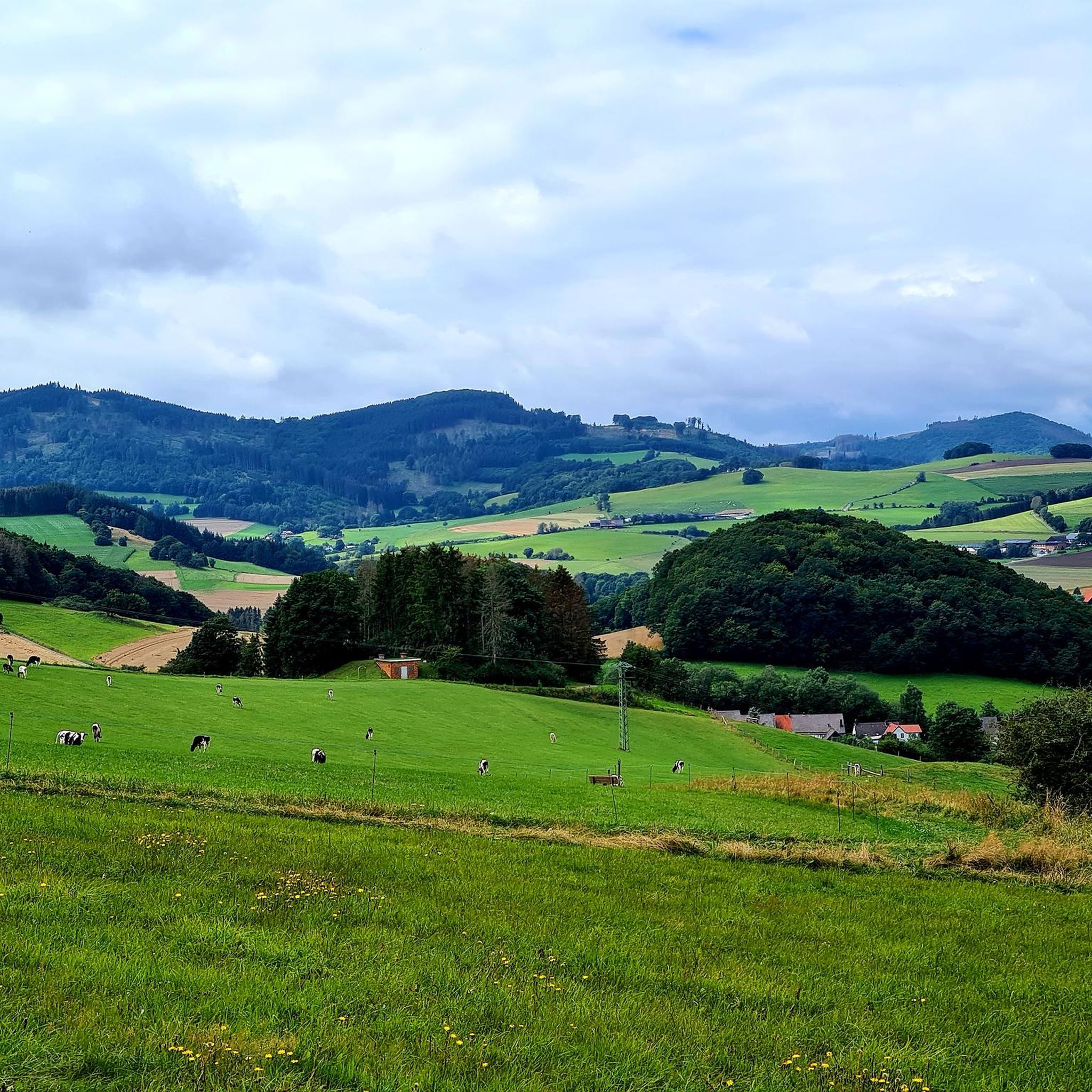
A phenomenal view of the Baar. The views on this tour are generally impressive.
0
0
Here, a secluded holiday apartment is located. From the outside, it's a real feast for the eyes.
0
0

The building was built by Fritz Kiehn, the former owner of the EFKA-Werke Trossingen
0
0
Frequently Asked Questions
How many no-traffic gravel bike trails are available around Tuningen?
There are over 20 dedicated no-traffic gravel bike trails around Tuningen, offering a variety of experiences from easy rides to more challenging routes. These trails allow you to explore the diverse landscapes of the Baar plateau and the Black Forest foothills without vehicle interference.
What kind of terrain can I expect on Tuningen's no-traffic gravel bike trails?
The terrain is quite varied, reflecting Tuningen's location on the Baar plateau and at the edge of the Black Forest. You'll find expansive views across rolling hills, dense forests with fine gravel roads, and paths along picturesque river valleys like the Danube and Brigach. Some routes may include challenging ascents, while others offer gentler, well-arranged paths.
Are there any family-friendly no-traffic gravel bike routes in Tuningen?
Yes, there are options suitable for families. While many routes offer moderate challenges, some sections along the river paths, such as those near the Brigach, are generally flatter and feature mixed surfaces, including compacted and unpaved sections, making them pleasant for a family outing. Look for routes described as 'easy' for the most family-friendly experiences.
What are some notable natural features or landmarks I can see along these trails?
You can discover several natural highlights and landmarks. For instance, you might encounter the Source of the Danube or the Danube source itself. The Sunthauser See is also a beautiful spot that can be part of a route. The region also features the Schwenninger Moor, a unique natural monument.
Are there any circular no-traffic gravel routes available?
Many of the gravel bike trails around Tuningen are designed as loops, allowing you to start and end your ride in the same location without retracing your steps. An example of a moderate circular route is the Ursental Valley loop from Spaichingen, which offers a scenic journey through the valley.
What is the best time of year to enjoy no-traffic gravel biking in Tuningen?
Spring and autumn generally offer the most pleasant conditions for gravel biking in Tuningen, with mild temperatures and vibrant scenery. Summer can also be great, though some river sections might have lower water levels. Winter cycling is possible, but be prepared for colder temperatures and potentially muddy or icy conditions on unpaved sections.
Are there any challenging no-traffic gravel bike routes for experienced riders?
Absolutely. For experienced gravel bikers seeking a challenge, routes that venture into the Black Forest foothills or include significant elevation gain, such as those around the Dreifaltigkeitsberg, will be rewarding. The Car tunnel – Ursental Valley loop from Spaichingen is classified as difficult and offers a substantial ride.
What do other gravel bikers enjoy most about the no-traffic trails in Tuningen?
The komoot community highly rates the gravel biking experience in Tuningen, with an average score of 4.5 stars. Reviewers often praise the quiet, car-free nature of the trails, the diverse and scenic landscapes, and the well-maintained gravel paths that allow for an immersive outdoor experience away from traffic.
Can I find routes that combine natural beauty with historical sites?
Yes, the region offers a blend of natural beauty and historical interest. While cycling, you might pass by historical sites such as the Rothenstein Castle Ruins or the Wildenstein Castle Ruins. The Karlsbrunnen – Sebastian Chapel Balgheim loop from Spaichingen is an example of a route that includes points of interest.
Are there any routes that offer panoramic views?
Many routes, particularly those on the Baar plateau and around the Black Forest foothills, provide stunning panoramic views of the surrounding countryside. The Klippeneck Plateau – View from Klippeneck loop from Spaichingen is specifically designed to showcase impressive vistas from the Klippeneck Plateau.
How can I find less crowded gravel trails around Tuningen?
Focusing on routes that are slightly longer or have a higher difficulty rating can often lead to less crowded experiences. Exploring trails during off-peak hours (weekdays) or outside of major holiday seasons will also help you find more solitude on the paths. The 'no traffic' aspect of these trails already ensures a quieter ride compared to road cycling.
Most popular attractions around Tuningen

Get inspired with the komoot mobile app


Explore more
Browse the best Gravel rides in other regions.
