Attractions and Places To See around Bagnoli Del Trigno - Top 20
Best attractions and places to see around Bagnoli Del Trigno include a range of historical sites and natural features in the Molise region. This historic hill town is known for its dramatic setting and medieval architecture, perched on rocky outcrops overlooking the Trigno River valley. The town itself is built on different heights, often referred to as "Terra di sotto" and "Terra di sopra". Visitors can explore landmarks, natural landscapes, and cultural sites within and around the settlement.
Best attractions…
Last updated: October 11, 2026
Civitanova del Sannio
Highlight • Settlement
Translated by Google •
Tip by

Bagnoli del Trigno
Highlight • Settlement
Translated by Google •
Tip by

Sign up now to discover places like this
Get recommendations on the best single tracks, peaks, & plenty of other exciting outdoor places.
Frosolone – The Village of Knives
Highlight • Settlement
Translated by Google •
Tip by

Hermitage of Sant'Egidio
Highlight • Religious Site
Translated by Google •
Tip by
Sant'Angelo Limosano Historic Village
Highlight • Settlement
Translated by Google •
Tip by

Sign up for free to discover even more attractions around Bagnoli Del Trigno.
Already have an account?
Start today with a free account
Your next adventure awaits.

Tips from the Community

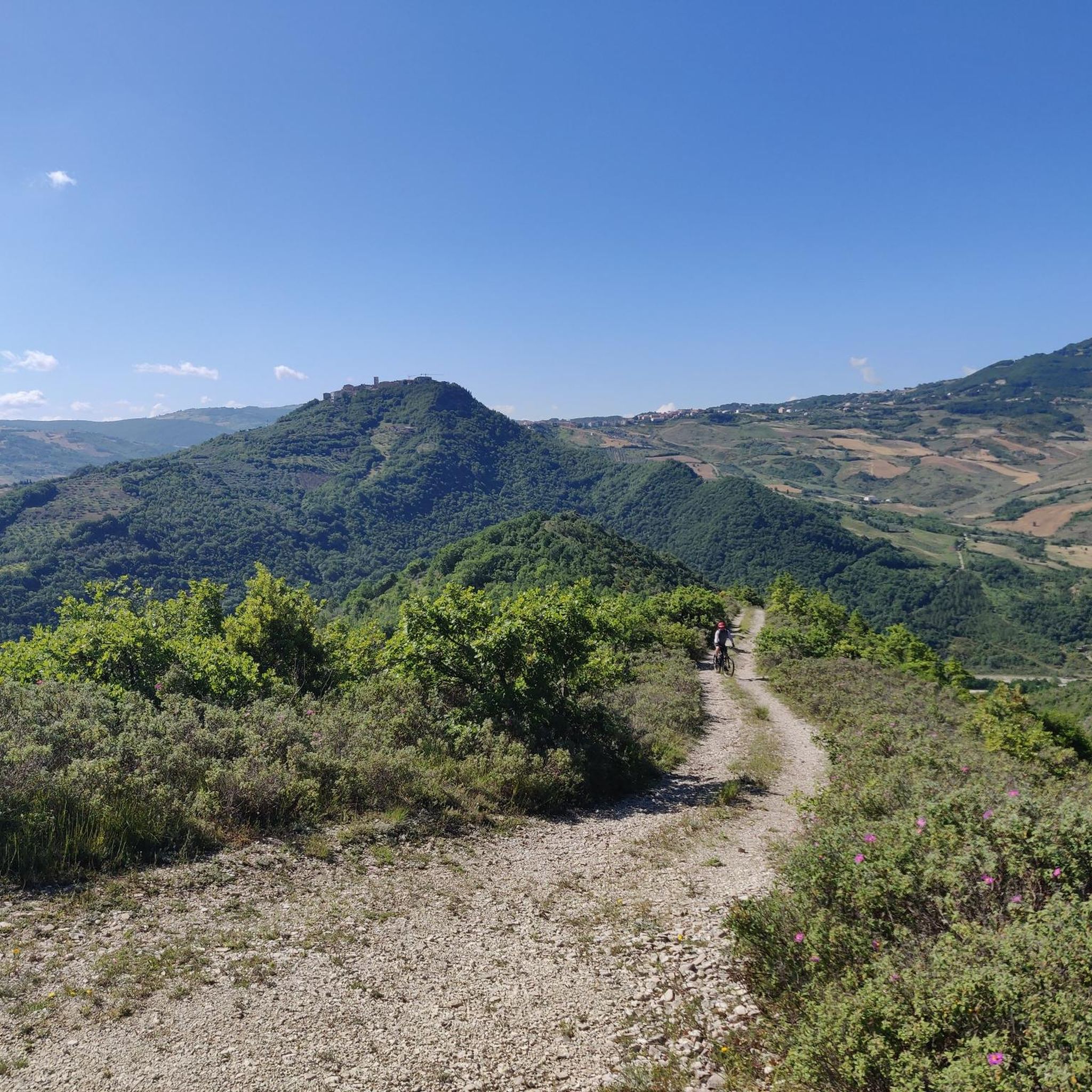
Civitanova del Sannio is located in the heart of Molise. The town is nestled in the mountains, surrounded by beech forests and with the Trigno river nearby. In August, sausage and cavatelli festivals are held, a typical pasta of this area.
2
1

Frosolone (Frescëlonë in Molise, Frusëlónë in Frosolonese dialect) is an Italian municipality of 2,797 inhabitants in the province of Isernia in Molise. The hypotheses which derive the name Frosolone from the Frosone, which some identify as the bird present in the municipal banner, must be considered Paretymologies, as well as that which associates it with an unidentified Samnite settlement cited by Livy, Fresilia and that according to which Frosolone it would have been founded by Benedictine monks coming from Frosinone, who would therefore have called the new settlement with the name of their place of origin. Before the Roman age the area was inhabited by Samnite populations, as evidenced by the presence of polygonal megalithic wall enclosures, visible on the mountain above the town, in the Civitelle area. These remains belong to what is defined as a high-altitude settlement: a fortified settlement of not very large dimensions, probably intended to be inhabited only in certain periods of the year, with generically defensive functions. As with many other centers in Molise, the medieval phase of the town ended drastically with the earthquake of 1456: according to what Antonino Pierozzi reports in his Chronicon, Frosolone was totally razed to the ground and there were 317 victims[16]; this information was then taken up by various authors, including Giovanni Antonio Summonte, who recalls how the town "largely fell, with the death of 318 people". There are regular testimonies of Frosolone starting from the Spanish period; in this era it went through an intense phase of development: together with Agnone and Trivento it hosted one of the three bishop's residences of the diocese. There is also a war fortification, which concerns very few centers in Molise, with the construction of an armed ravel in the area where today stands the so-called loggia dei pezzenti, the space known as Largo XX Settembre. In the early years of the 19th century, Frosolone was one of the most populous inhabited centers in the Molise countryside: in the same period in which it was close to 4,000 inhabitants, Agnone had around 7,500, Boiano around 3,500, Campobasso around 5,500, Isernia around 6,900. The 1805 earthquake imposed a major setback in the country's development; this second catastrophe seems to have had an equally disastrous outcome as that of 1456: sources of the time define it as "almost entirely adequate for the ground", and report a figure (how reliable it is not known) of a thousand deaths and 46 injuries out of a population of 4,000 souls. Source: Wikipedia
0
0
The Hermitage, at the foot of the Morgia Quadra of Frosolone (IS), is a true pearl. To welcome visitors, the ancient church of Sant'Egidio which, in the Middle Ages, was a chapel, dependent on the nearby convent of Sant'Onofrio. Protected by the Antonians, according to tradition, it has become famous for the numerous miraculous healings of which the monks were protagonists. At the beginning of 1300, after the Church of Rome excommunicated the congregation, the chapel was destroyed together with the convent of Sant'Onofrio. In the following years, it was rebuilt, probably by hermits and livestock sellers, who went to Sant'Egidio for the end-of-summer fair. In 1704, thanks to Michele Vago and Antonio Zaccagnino, a real church was built in place of the chapel. Falling to pieces with the earthquake of 1805, the small complex was rebuilt and subsequently restored several times. The last renovation took place in the 1980s. The church of Sant'Egidio represents a place of worship very dear to the people of Frosolone, above all because it houses the statue of the Crowned Virgin which, according to tradition, has appeared near the church several times. Furthermore, inside the sacred walls, an ancient and precious manuscript is preserved which lists some miracles performed by Sant'Egidio. Going beyond the church, what is most striking is, certainly, the surrounding landscape. In these sections, it is possible to see some horses in the wild or, more simply, calm herds of cows and flocks of sheep that, at sunset, go to water, after an abundant meal of fodder. The same one that makes Frosolone milk and cheeses so good as to satisfy the palates of the most severe gourmets. Source: www.moliseeccellenze.it There is also a fountain for hikers!
1
0

The name Civitanuova, which means precisely "new city", was attributed to it to distinguish it from Civitavetula, i.e. the old city, which today is the village of Duronia a few km away from here.
1
0
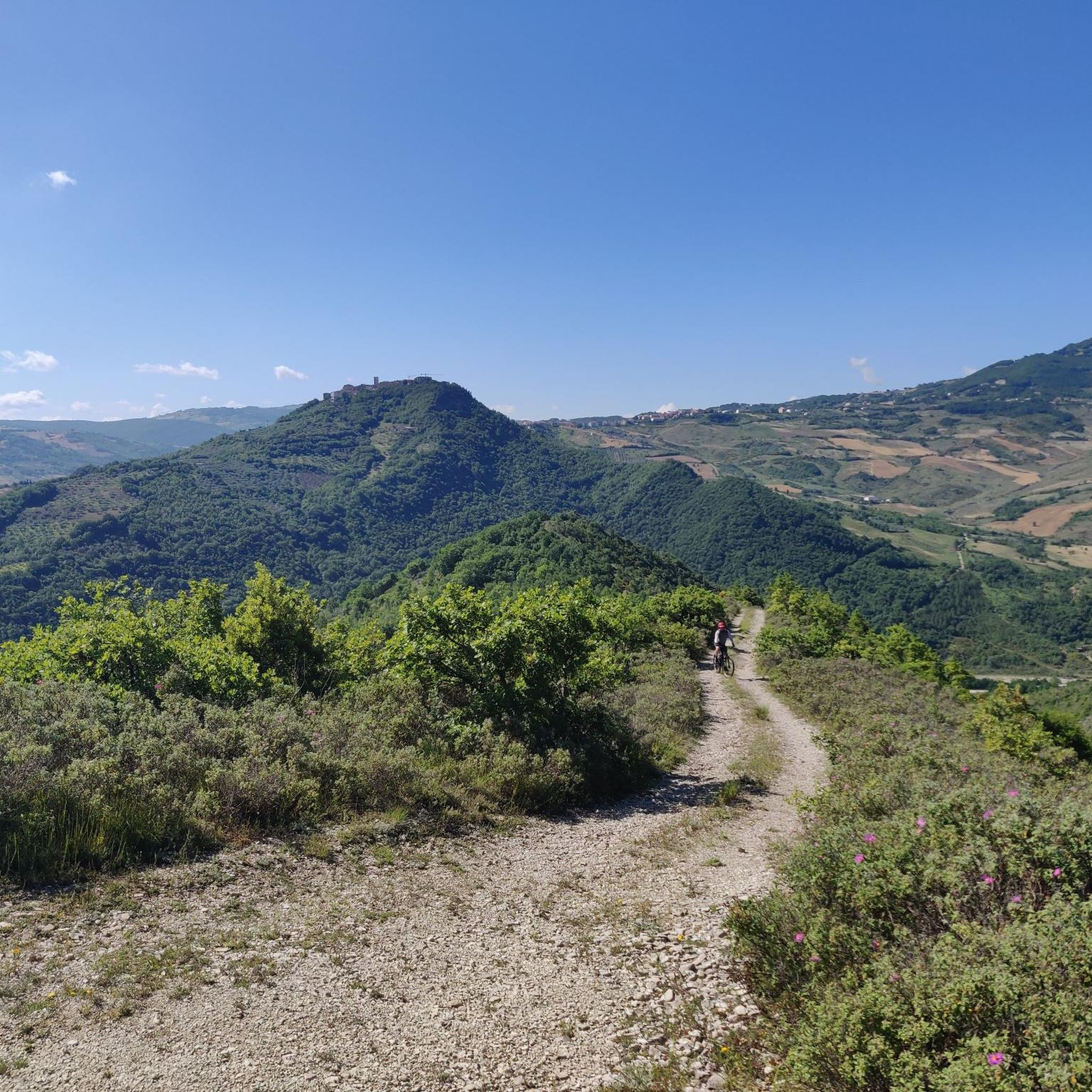
Country located on a hill and built on different heights. The city is in fact divided into an "Above" and a "Below".
1
0

Civitanova del Sannio - Locanda degli Illustri for the credentials of the Via del Tratturo
0
0

Small village in the province of Campobasso, it boasts medieval ramparts and a medieval church (XIII) with a chapel dedicated to Pietro da Morrone (later Pope Celestino V)
1
0

The town is located at 900 m a.s.l. and, from some points of the place, you can see the Tremiti islands and the tops of the Maiella. On the hill there is a castle, albeit in advanced ruins. There is no certain information about the birth of Sant’Angelo Limosano for sure, however, it is known that in the past it was the fortress of the nearby town of Limosano. The last feudal lords were the de Attellis who ruled the territory from 1650 until the abolition of feudalism. The conditions of the town improved when, in the seventeenth century, the baron moved from the top of the castle to the inhabited center and when Cardinal Vincenzo Maria Orsini took important initiatives during his numerous pastoral visits. Sant’Angelo Limosano claims the Sant Angiolese citizenship of Pope San Pier Celestino (Celestino V), who has not yet been recognized as the dispute with Isernia is still underway. It is also the birthplace of the self-taught inventor Alessio Marone to whom the Corso that winds under the great Vittorio Emanuele III ramp, the main access road to the town, is named. Il Marone is remembered for the invention of the electromagnetic-chemical telegraph and the Maltese cross tubular bridges. The parish church of Santa Maria Assunta in Cielo, restored over the past centuries, is a harmonious building to visit. Another place to admire is the ancient church of San Pier Celestino which in 1695 was transformed by Cardinal Orsini into a granary because it had not been restored according to his orders. Going along via del Municipio, you arrive at Rua and Contrada di San Pietro. Places linked to the name of Pope Angelico are the "hill" and the "Fonte di San Pietro" from which water begins to flow after the winter, a few days before the feast of the Saint, on 19 May. Worth visiting is the sanctuary of the Madonna delle Stelle, built two kilometers from the town, to the west, following the discovery of a statue of the Madonna on January 3, 1926.
0
0
Frequently Asked Questions
What historical landmarks can I explore in Bagnoli del Trigno?
Bagnoli del Trigno is rich in history. You can visit the dramatic Lombard Castle of San Felice, which offers breathtaking views of the Trigno valley. Don't miss the unique Church of San Silvestro, partly built into the cliff face, or the charming Historic Center with its narrow alleys and medieval arches. The "Roman House" also hosts Molise's largest permanent nativity scene.
Are there any unique natural features to see around Bagnoli del Trigno?
Yes, Bagnoli del Trigno is known for its dramatic setting. The village is perched on two prominent rocky outcrops, offering stunning views of the scenic Trigno Valley. The blend of nature and architecture is particularly striking from elevated points like the castle.
What cultural sites and points of interest are there in Bagnoli del Trigno?
Beyond its main landmarks, Bagnoli del Trigno features the Church of Santa Maria Assunta and the Church of St. Catherine of Alexandria, which is central to the vibrant patronal festival in August. You can also find a small museum adjacent to the nativity scene in the "Roman House," offering insights into local history and customs.
What kind of outdoor activities can I do near Bagnoli del Trigno?
The area around Bagnoli del Trigno is excellent for outdoor enthusiasts. You can find various routes for mountain biking, road cycling, and touring. For example, there are moderate MTB trails like the Morgia di Pietravalle Loop, and road cycling options such as the Civitanova del Sannio e Bagnoli del Trigno loop tour. You can explore more options on the MTB Trails around Bagnoli Del Trigno, Road Cycling Routes around Bagnoli Del Trigno, and Cycling around Bagnoli Del Trigno guide pages.
Are there any family-friendly attractions or activities in the area?
While specific family-friendly activities are not detailed, the historic centers of towns like Civitanova del Sannio and Sant'Angelo Limosano Historic Village offer engaging exploration for families. The permanent nativity scene in Bagnoli del Trigno's "Roman House" can also be a delightful visit for all ages. The natural beauty of the Trigno Valley provides opportunities for gentle walks and enjoying the scenery.
What is the best time of year to visit Bagnoli del Trigno?
The Molise region, including Bagnoli del Trigno, is particularly vibrant during the warmer months. August is a great time to visit, as the village hosts its patronal festival associated with the Church of St. Catherine of Alexandria, and the major medieval festival "I frammenti d'antico" on August 18th, featuring parades and re-enactments. The pleasant weather also makes it ideal for exploring the outdoor attractions and trails.
What local culinary delights should I try in Bagnoli del Trigno?
The Molise region is renowned for its gastronomy. Be sure to sample local specialties such as truffles, mountain cheeses, and cured meats. Traditional dishes often feature polenta, lamb, and handmade pasta. Keep an eye out for local festivals like the Sagra dei Pezzetti in Piazza Olmo, or the sausage and cavatelli festivals held in August in nearby Civitanova del Sannio.
Are there any notable nearby villages or settlements worth visiting?
Absolutely. Besides Bagnoli del Trigno itself, you can explore Civitanova del Sannio, nestled in the mountains with beech forests and the Trigno river. Another must-see is Sant'Angelo Limosano Historic Village, boasting medieval ramparts and a 13th-century church, offering views that can extend to the Tremiti islands. Frosolone – The Village of Knives is also nearby, known for its historical significance and craft.
What is special about the San Nicola Staircase and Trivento Cathedral?
The San Nicola Staircase and Trivento Cathedral is a remarkable site. The staircase itself features 365 steps, one for each day of the year, leading up to the historic center and the impressive Cathedral. The Cathedral, built on a pre-existing basilica, houses precious artistic treasures, including a crypt that marks the transition from a pagan temple to early Christianity. From the top, you get a 360° panoramic view of the surrounding mountains and villages.
What do visitors enjoy most about the attractions around Bagnoli del Trigno?
Visitors particularly appreciate the historical settlements, religious buildings, and panoramic viewpoints. The dramatic setting of Bagnoli del Trigno on rocky outcrops, its medieval architecture, and the stunning views of the Trigno River valley are frequently highlighted. The komoot community has upvoted the attractions 12 times and shared 8 photos, indicating a strong appreciation for the area's unique charm and scenic beauty.
Are there any hidden gems or lesser-known spots to discover?
Beyond the main attractions, consider exploring the Church of St. Michael the Archangel, located just outside the main town, which offers a peaceful retreat amidst the green Molise countryside. The small museum next to the nativity scene in the "Roman House" also provides a deeper dive into local life and traditions that might be easily overlooked.
Most popular attractions around Bagnoli Del Trigno

Get inspired with the komoot mobile app


Explore more
Still not found the Highlight you’re looking for? See guides of the top attractions in other regions:
