Attractions and Places To See around Caragnani/Calangianus - Top 20
Best attractions and places to see around Caragnani/Calangianus are found in northeastern Sardinia, within the historical region of Gallura. This area is known for its cork production and offers a blend of historical sites, cultural experiences, and natural beauty. The landscape features the eastern side of Monte Limbara, providing forests and panoramic views. Visitors can explore ancient archaeological sites and various religious buildings.
Best attractions and places to see around Caragnani/Calangianus
- The most popular attractions is Monte Limbara, a…
Last updated: July 20, 2026
Monte Limbara
Highlight • Summit
Translated by Google •
Tip by

Church of Our Lady of the Snow
Highlight • Religious Site
Translated by Google •
Tip by

Sign up now to discover places like this
Get recommendations on the best single tracks, peaks, & plenty of other exciting outdoor places.
Sign up for free
Tempio Pausania (Sardinia)
Highlight • Settlement
Source: de.wikipedia.org/wiki/Tempio_Pausania
Translated by Google •
Tip by

St. Peter's Cathedral
Highlight • Religious Site
Translated by Google •
Tip by
Church of Santa Croce
Highlight • Religious Site
Translated by Google •
Tip by

Sign up for free to discover even more attractions around Caragnani/Calangianus.
Sign up for free
Already have an account?
Start today with a free account
Your next adventure awaits.
Login or Signup

Tips from the Community


This church, dedicated to the Holy Cross (Latin: "Santa Croce"), derives its patronage from the cross on which Jesus Christ died. The veneration of the Holy Cross largely originates from Saint Helena, the mother of Emperor Constantine the Great (who, after his victory at the Milvian Bridge in front of Rome, recognized Christianity as a religion and ended the long period of persecution with the Edict of Toleration of Milan in 312). She made a pilgrimage to the Holy Land (Israel/Palestine) in the early fourth century and brought numerous relics back to Europe, including the "True Cross," on which Jesus Christ was crucified. Therefore, Helena is often depicted with a cross as an attribute. The Church celebrates the Feast of the Discovery, public presentation, and veneration of the Holy Cross—called the "Exaltation of the Holy Cross"—on September 14th.
0
0
The patronage of "Our Lady of the Snows" – which, in my experience, is not all that common – indicates that this church was dedicated to the Blessed Virgin Mary, but not, as is usually the case, associated with one of her classic feast days (such as the Name of Mary, the Nativity, the Assumption, or as Queen of the Rosary). Rather, the search for the origin of "Our Lady of the Snows" leads us far back in church history to the fourth or fifth century, and geographically speaking, away from Sardinia to the Italian capital. On August 5, 363, at the site where the magnificent church of Santa Maria Maggiore stands today, the so-called "Miracle of the Snows" occurred. That is, on that day, in the middle of summer, snow lay on the ground in the morning because Our Lady wanted a church dedicated to her to be built on that spot. She communicated this wish in a nighttime vision to a wealthy couple – who financed the construction – and to the Bishop of Rome, Pope Liberius. The Roman church has the rank of a patriarchal basilica (papal basilica), and is the origin of all churches and chapels bearing this patronage. In the liturgical calendar of the Catholic Church, the date of August 5, the day of the church's consecration (in the year 432 by Pope Sixtus III), is a "non-obligatory memorial."
0
0

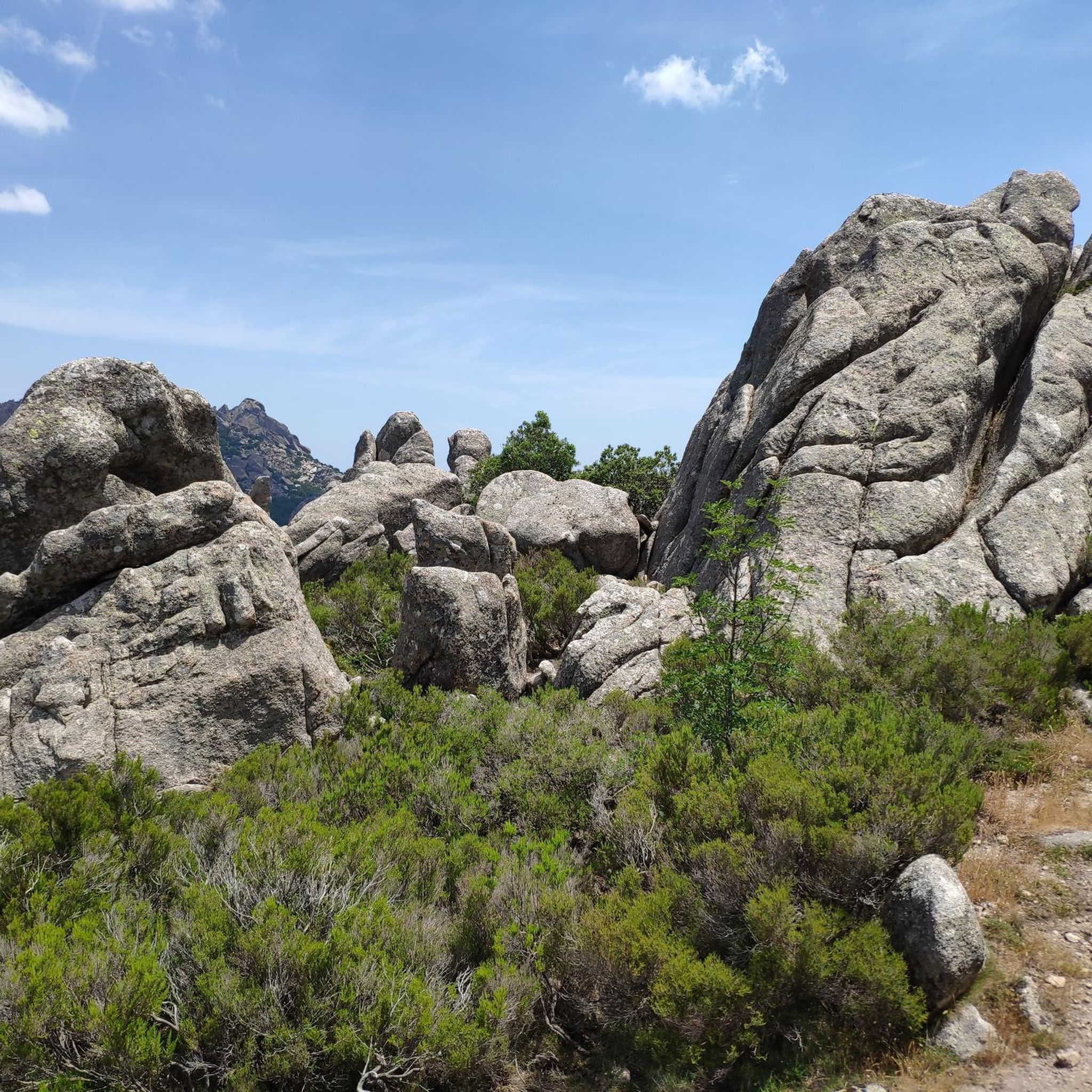
The small church, located at 1000 meters above sea level, is surrounded by beautiful natural scenery. Rebuilt in 1994 on the remains of the 1900 building, it reflects the architecture of the ancient Gallura churches, with exposed granite. The feast of the Madonna della Neve is celebrated on August 5th.
1
0

A walk through the pretty and quiet Tempio Pausania is highly recommended.
1
0
The church dedicated to San Pietro Apostolo, cathedral of the diocese of Tempio-Ampurias, stands in the heart of the historic center. Built starting from 1200, the medieval granite building underwent various changes over the centuries, from the construction of the bell tower in the 16th century to the expansion works completed in 1827. The inauguration and consecration took place on June 2, 1839 by the bishop Monsignor Capece, who commissioned many of the marble furnishings of San Pietro. The church presents itself 2 St. Peter's Basilica in baroque style. It consists of a single nave with four chapels on each side. The very simple façade, slightly enlivened by the splayed portal and the two round-arched windows of the upper part, is deprived of its function by the much more complex side on the right side. with pediment openings, oculi decorated with mosaics and the articulation of the surface by pairs of strongly raised pilasters. The interior, in the nave, covered by a grooved barrel vault, has four chapels on each side and a semicircular apse where the wooden "choir" is located, the individual columns are deeper, forming almost a transept, to which the large raised and apsidal area of the presbytery is attached. The last restoration works date back to 2007: thanks to them, the vault has regained its ancient colors, with bright green tones that highlight the nineteenth-century marble furnishings in baroque-Genoese style, including the main altar, the pulpit, the baptismal font and some statues. The cathedral is equipped with a beautiful organ by Paolo Ciresa, dating from 1980, consisting of 25 registers and 1726 pipes. Source: https://comuneditempiopausania.it/cattedrale-san-pietro/
0
0
The Church of Santa Croce stands next to the cathedral. The bell tower of the cathedral itself, built between the end of the 15th and the beginning of the following century, forms a single body with Santa Croce. From the cathedral, you can access it through a small door to the left of the presbytery. It is very ancient, perhaps older than the cathedral itself, and certainly contemporary with the Church of the Rosary. This is evidenced by the rock left after the recent restoration, which bears the carved Greek letter Y (gamma), representing the number 3, the three persons of the Holy Trinity. This rock was the altar stone, reminiscent of Christ Rock Corner Head, on which the church was founded. It was built in the Romanesque style and renovated in the 16th century with a terracotta barrel vault. On the façade, you can admire a marble plaque from 1830 depicting the Confraternity of Santa Croce, which was housed in this church. It was an important, economically independent church. The brothers wore a white, hooded cloak that they pulled over their faces. They were affiliated to the Archconfraternity of the Gonfalone, founded in Rome, and as such enjoyed privileges granted to them by Pope Gregory, including religious week, religious theater, processions, popular festivals in city centers and rural churches, as well as aid to the poor, the sick, prisoners, and the settlement of disputes between rival families. The members of the confraternity played a very important role in the civic and religious community of Tempi. The confraternity's distinctive feature was to revive a symbolism and a cultural and religious activity that already belonged to the Templars and, like the Templar Order, was suppressed by the authority of the Church. In fact, on December 21, 1813, Bishop Monsignor Paradiso suppressed the Confraternity of the SS. Crucified for the excessive autonomy it displayed with regard to the provisions of the Church. From this point on, the church slowly declined, was practically abandoned, and gradually degraded to an oratory, a religious building with an ancillary function to the cathedral. In this church, the largest of the churches, the nobles of Tempio met with the clergy on April 29, 1679, to decide on the construction of the Capuchin Poor Clares Convent. Source: https://comuneditetempiopausania.it/chiesa-di-santa-croce/
2
0

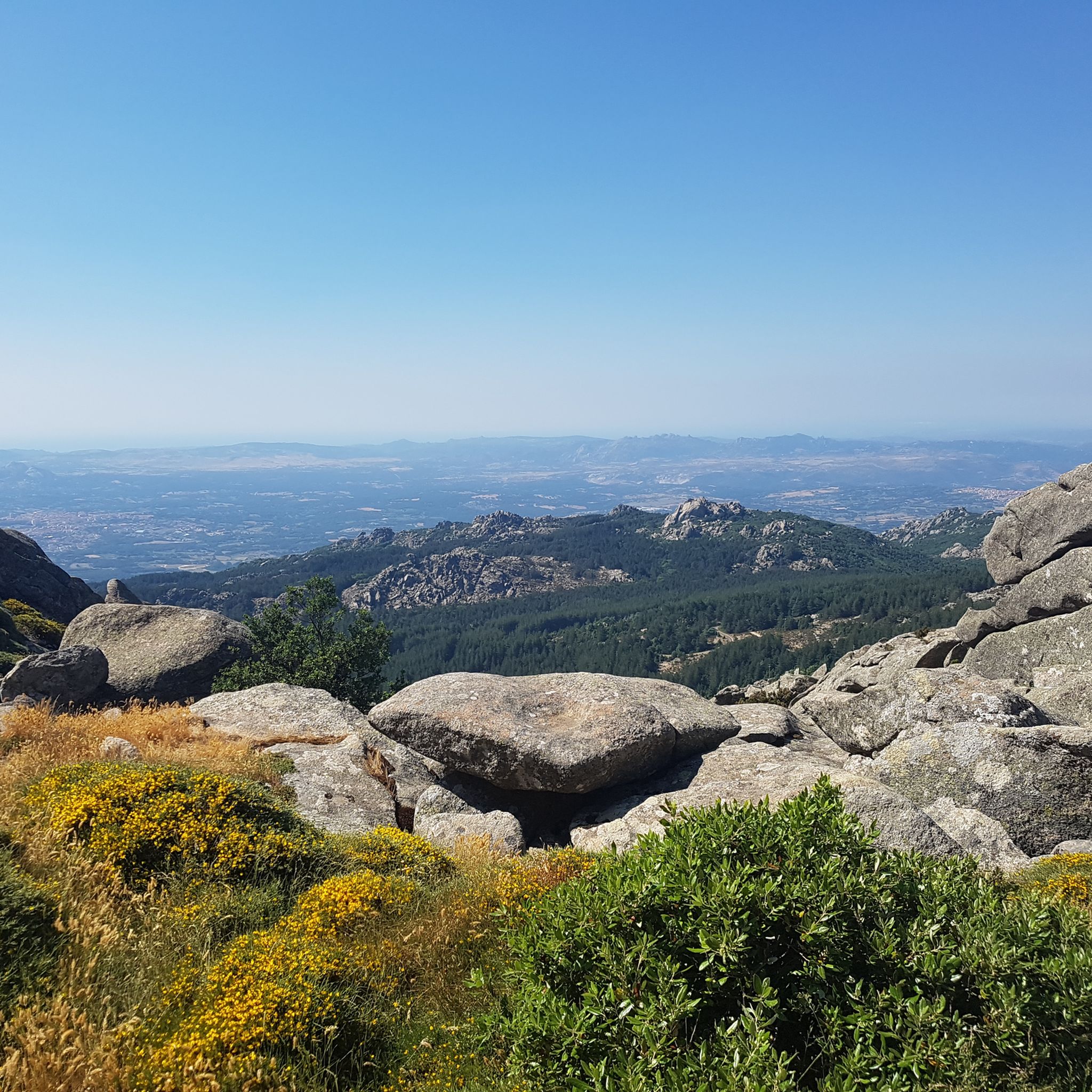
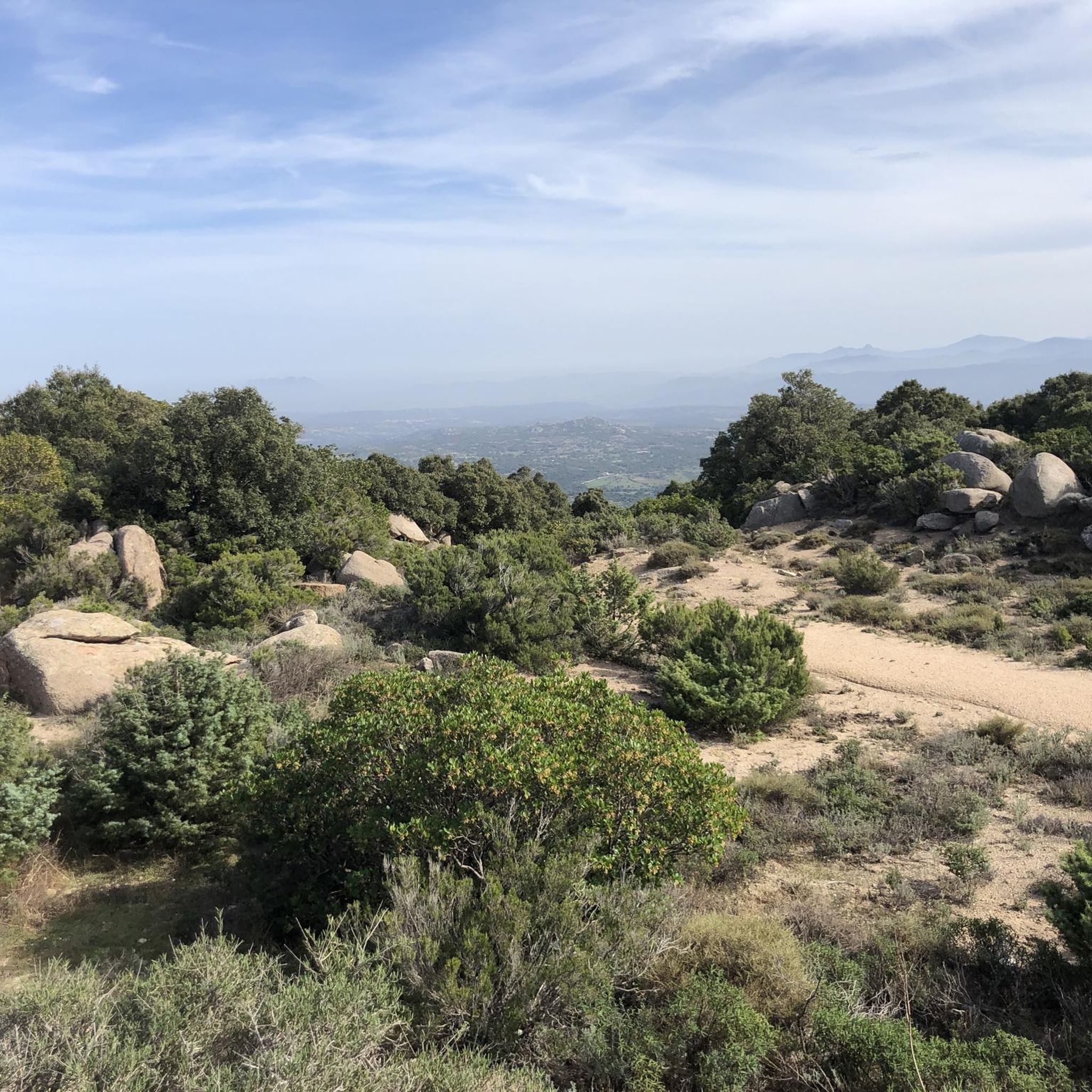
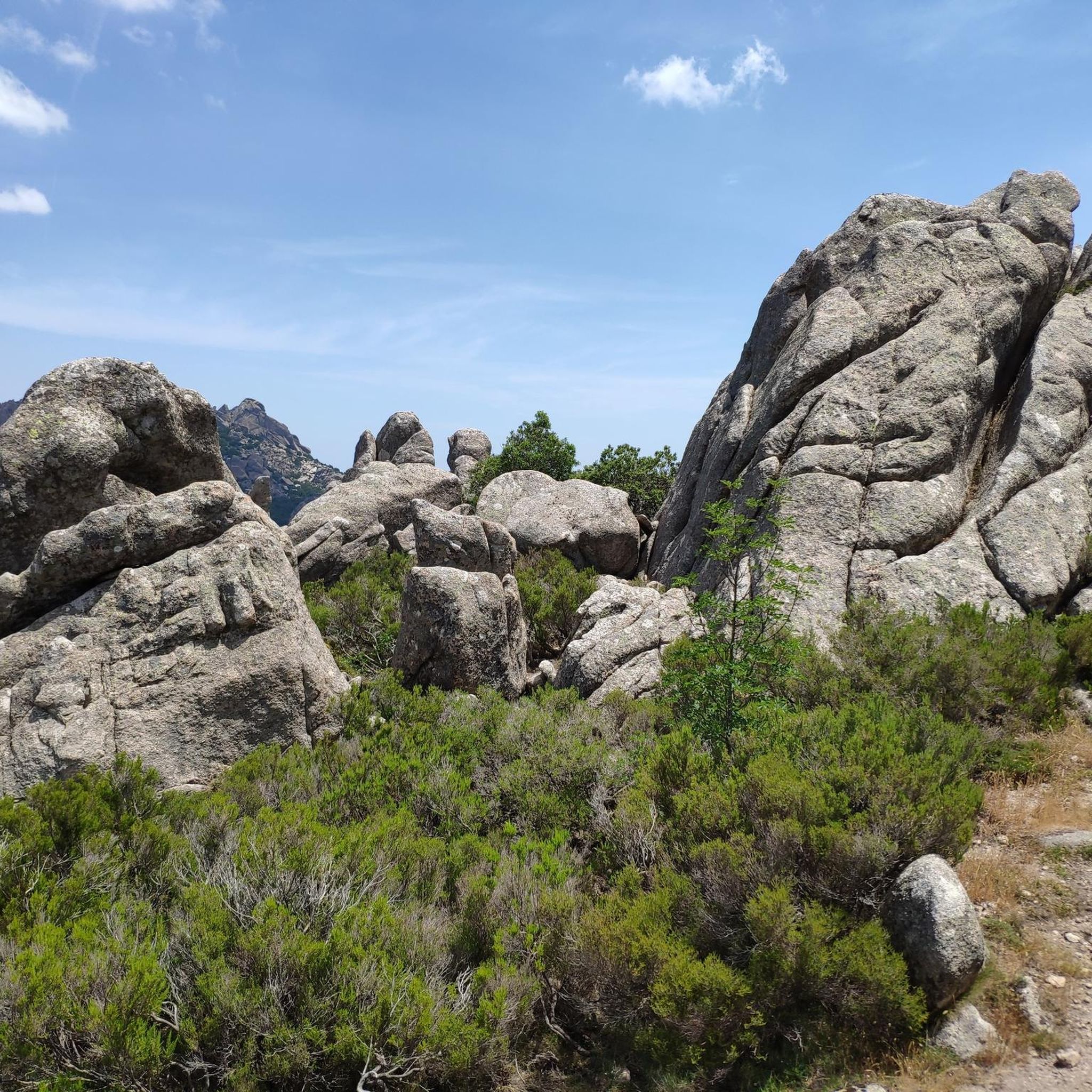
This impressive mountain range is the highest in the region and offers an unmistakable panorama with its two striking granite peaks, Punta sa Berritta and Punta Balistreri. The rugged peaks contrast with the densely forested slopes, which form a green band around the bare peaks with chestnuts, pedunculate oaks, pines, firs and firs. As soon as you reach the summit and look as far as Corsica and the island of Asinara under clear skies, you will understand why so many hikers rave about this place. Your starting point could be the hiking car park below the summit, where the small Madonna della Neve chapel rises from granite rocks. From here you have six different trekking routes available. But maybe you would like to start the adventure in the town of Vallicciola and set off on a hike into the mountain range. Such a circular tour takes between two and a half and four hours, depending on the route. You should be alert on the way, because wild boars roam this area. It is advisable to avoid the forest and take to the road, especially at dusk. Would you like to take a break? Then find a place near the church where you can enjoy the peace and quiet and the view. And when you finally drive along the winding road that takes you into the mountains, you will find that the journey is an adventure in itself. The best time to tour the Monte Limbara mountain range is between May and October. But even in winter, the snow-covered peak offers a charming sight. You need to be sure-footed on your hike, because nature shows its wild side here. But that is precisely what makes this region so charming. So, lace up your hiking boots and set off on a journey of discovery!
2
1
Frequently Asked Questions
What natural features and viewpoints can I explore around Caragnani/Calangianus?
The region offers stunning natural beauty, particularly around Monte Limbara, the highest mountain range in northern Sardinia. Its two granite peaks, Punta sa Berritta and Punta Balistreri, provide unmistakable panoramic views. You can also explore the lush Rio Santu Paulu Valley within Parco del Limbara, which features pathways for walking and cycling, or visit the Sigara Spring for walks and vistas at the edge of the village. The Parco di Stazzana is another natural area adorned with centuries-old holm oaks.
Are there any significant historical or cultural sites to visit in Caragnani/Calangianus?
Yes, Caragnani/Calangianus is rich in history and culture. You can visit the Tempio Pausania (Sardinia), known for its historical center with medieval streets and granite buildings. Within Calangianus itself, explore the St. Peter's Cathedral, a Roman Catholic church in Tempio Pausania, or the Parish Church of Santa Giusta, a prominent example of Gallurese architecture. Don't miss the Museo del Sughero (Cork Museum), housed in an 18th-century Capuchin monastery, which showcases the town's cork production tradition.
What archaeological sites can I discover near Caragnani/Calangianus?
The area boasts several fascinating archaeological sites. Among them are the Tombe dei Giganti (Giants' Graves) of Pascareddha, monumental tombs from the Mid to Late Bronze Age, located in the cork woods of Badu Mela. You can also find the Sacred Spring of Li Paladini and Nuraghe Agnu, a Nuragic-era edifice flanked by a dolmen, both dating back to the second millennium BC. Several other Nuragic megalithic structures are present in the region.
What outdoor activities, like hiking or cycling, can I do near these attractions?
The region around Caragnani/Calangianus is excellent for outdoor activities. For hiking, Monte Limbara offers six different trekking routes, with options ranging from two and a half to four hours. For cycling, there are numerous routes for mountain biking, gravel biking, and road cycling. You can find detailed routes and guides for MTB Trails, Gravel Biking, and Road Cycling around the area.
Are there any family-friendly attractions or activities in the area?
Yes, several attractions are suitable for families. The Church of Our Lady of the Snow, located at 1000 meters above sea level, offers a spiritual place with magnificent views that can be enjoyed by all. Exploring the historical center of Tempio Pausania (Sardinia) with its unique granite buildings can also be an engaging experience for families. Additionally, the natural parks like Parco del Limbara and Parco di Stazzana provide opportunities for easy walks and enjoying nature together.
What is the best time of year to visit Caragnani/Calangianus for outdoor activities?
The best time to tour the Monte Limbara mountain range for hiking is generally between May and October. During these months, the weather is typically favorable for exploring the trails. Even in winter, the snow-covered peak offers a charming sight, though some paths might be more challenging. For other attractions, spring and autumn offer pleasant temperatures for sightseeing.
What can I expect when visiting the Museo del Sughero (Cork Museum)?
The Museo del Sughero in Calangianus is dedicated to the town's symbolic cork production tradition. Housed in a restored 18th-century Capuchin monastery, it showcases ancient machinery and objects made of cork. Visitors can learn about the craftsmanship and industrial processing of this natural material, offering a unique insight into the local economy and heritage.
Where can I find challenging climbs or difficult trails near Caragnani/Calangianus?
For those seeking a challenge, the Rocky Ascent to Monte Limbara Summit offers a demanding and steep path to the top of Monte Limbara. Sturdy shoes and plenty of water are essential for this trail. The area around Monte Limbara also features several difficult MTB and road cycling routes, such as the 'Trail on snakes – Former NATO base loop' for MTB or the 'Limbara Pass – Scenic Descent Near Nuoro loop' for road cycling, which can be found in the MTB Trails and Road Cycling Routes guides.
What makes Tempio Pausania a notable place to visit?
Tempio Pausania (Sardinia) is a significant settlement known for its distinctive historical center. Its medieval streets and buildings are constructed from granite, giving it the nickname 'city of stone.' Beyond its architecture, the area is renowned for its vineyards producing fine wines like Vermentino and Moscato, and for its thermal and oligomineral springs with healing properties.
What do visitors enjoy most about the attractions around Caragnani/Calangianus?
Visitors particularly appreciate the breathtaking panoramic views from places like Monte Limbara and the spiritual tranquility found at the Church of Our Lady of the Snow. The unique granite architecture of the historic centers, such as in Tempio Pausania, also leaves a lasting impression. The komoot community has shared over 30 photos and given more than 100 upvotes, highlighting the visual appeal and enjoyable experiences in the region.
Are there any other notable churches or religious buildings besides the main ones?
Beyond the Parish Church of Santa Giusta and the Church of Our Lady of the Snow, Calangianus has several other historical religious sites. These include the Chiesa di Sant'Anna, dating back to 1665, the Chiesa di Santa Maria degli Angeli built in 1705, and the Chiesa di Santa Croce from 1646. The Santuario di San Sebastiano Martire, an 18th-century sanctuary, is also nestled amidst the cork oak trees in its namesake park.
Most popular routes around Caragnani/Calangianus
Most popular attractions around Caragnani/Calangianus

Get inspired with the komoot mobile app


Explore more
Still not found the Highlight you’re looking for? See guides of the top attractions in other regions:
