The best walks and hikes around Pozzuolo Martesana
4.4
(604)
4,942
hikers
277
hikes
Hiking around Pozzuolo Martesana offers a diverse landscape characterized by historic waterways and natural reserves. The region features the Naviglio Martesana, a historic canal with a dedicated path ideal for walking, and the Oasi della Martesana, a naturalistic area known for its rich birdlife and wetland habitats. Trails often traverse flat terrain, providing accessible options for various skill levels. This area combines natural beauty with historical elements, making it suitable for exploring the Lombardy countryside.
Best hiking trails around Pozzuolo…
Last updated: July 15, 2026
5.0
(3)
24
hikers
25.3km
06:31
120m
110m
Hard hike. Very good fitness required. Easily-accessible paths. Suitable for all skill levels.
4.5
(4)
55
hikers
9.78km
02:28
10m
10m
Moderate hike. Good fitness required. Easily-accessible paths. Suitable for all skill levels.

Sign up for free
5.0
(6)
62
hikers
9.65km
02:26
20m
20m
Moderate hike. Good fitness required. Easily-accessible paths. Suitable for all skill levels.
33
hikers
6.95km
01:45
10m
10m
Easy hike. Great for any fitness level. Easily-accessible paths. Suitable for all skill levels.
5.0
(1)
48
hikers
5.82km
01:28
10m
10m
Easy hike. Great for any fitness level. Easily-accessible paths. Suitable for all skill levels.
Get access to more routes and recommendations from other explorers.
Sign up for free
Already have an account?
Our route recommendations are based on thousands of hikes, rides, and runs completed by other people on komoot.
Start today with a free account
Your next adventure awaits.
Login or Signup
Tips from the Community

In Gorgonzola, the most famous historic bridges crossing the Naviglio Martesana are the monumental Ponte di Milano (in pink granite with a lower walkway for towing barges) and the iconic wooden pedestrian Ponte di Legno. These bridges are landmarks on the flat route of the Martesana cycle path, very popular for trips and walks.
0
0
The geometric layout and architectural hierarchy of the town reflect the organization of the factory itself: Il Cotonificio: imposing complex in Lombard Romanesque style with its iconic saw-tooth roofed sheds. Worker houses: semi-detached houses surrounded by a garden and a vegetable patch to ensure the sustenance and hygiene of the working family. Managers' villas: eclectic and stately homes, located in isolated areas and surrounded by greenery. Villa-Castello: the sumptuous feudal summer residence of the Crespi family in neo-Gothic style. Cemetery and Mausoleum: a monumental cemetery dominated by the enormous pyramid of the Crespi family, which seems to symbolically embrace the workers' tombs arranged in orderly rows. Collective services: the school (where everything was provided free of charge by the company), the church (exact copy of the Sanctuary of Busto Arsizio), the public washhouse, the hospital, and the workers' club.
0
0

The Locks of Bellinzago Lombardo are an important historical hydraulic engineering work located along the course of the Naviglio della Martesana. They represent one of the best-known stopping and points of interest for cyclists and hikers who frequent the canal bank. These historical hydraulic systems (locks or sluices) originally served to regulate the flow of water and allow commercial navigation between the Adda and Milan.
0
0
In the village of Crespi d’Adda, there is a unique building. It is the so-called Castello villa. Together with the chimneys, the Castello villa of Crespi d’Adda is the most striking building in the entire workers' village, because it towers over the plain even from kilometers away. Its impressiveness is justified by the role it plays: being the calling card of the entire workers' village of Crespi d’Adda.
1
0
The industrial village of Crespi d'Adda, located in the municipality of Capriate San Gervasio (Bergamo), is the best-preserved workers' village in Southern Europe. Founded in 1878 by the textile entrepreneur Cristoforo Benigno Crespi, it represents an exceptional example of an ideal "company town" and, since 1995, has been included in the UNESCO World Heritage List. Unlike many industrial archaeology sites, Crespi d'Adda is a living and still inhabited site, mainly by the descendants of the original workers.
3
0
Villa Crespi in Crespi d'Adda (a hamlet of Capriate San Gervasio, Bergamo), also known simply as the Castle, was the lavish manor house of the Crespi family within the famous workers' village, now a UNESCO World Heritage site.
3
0
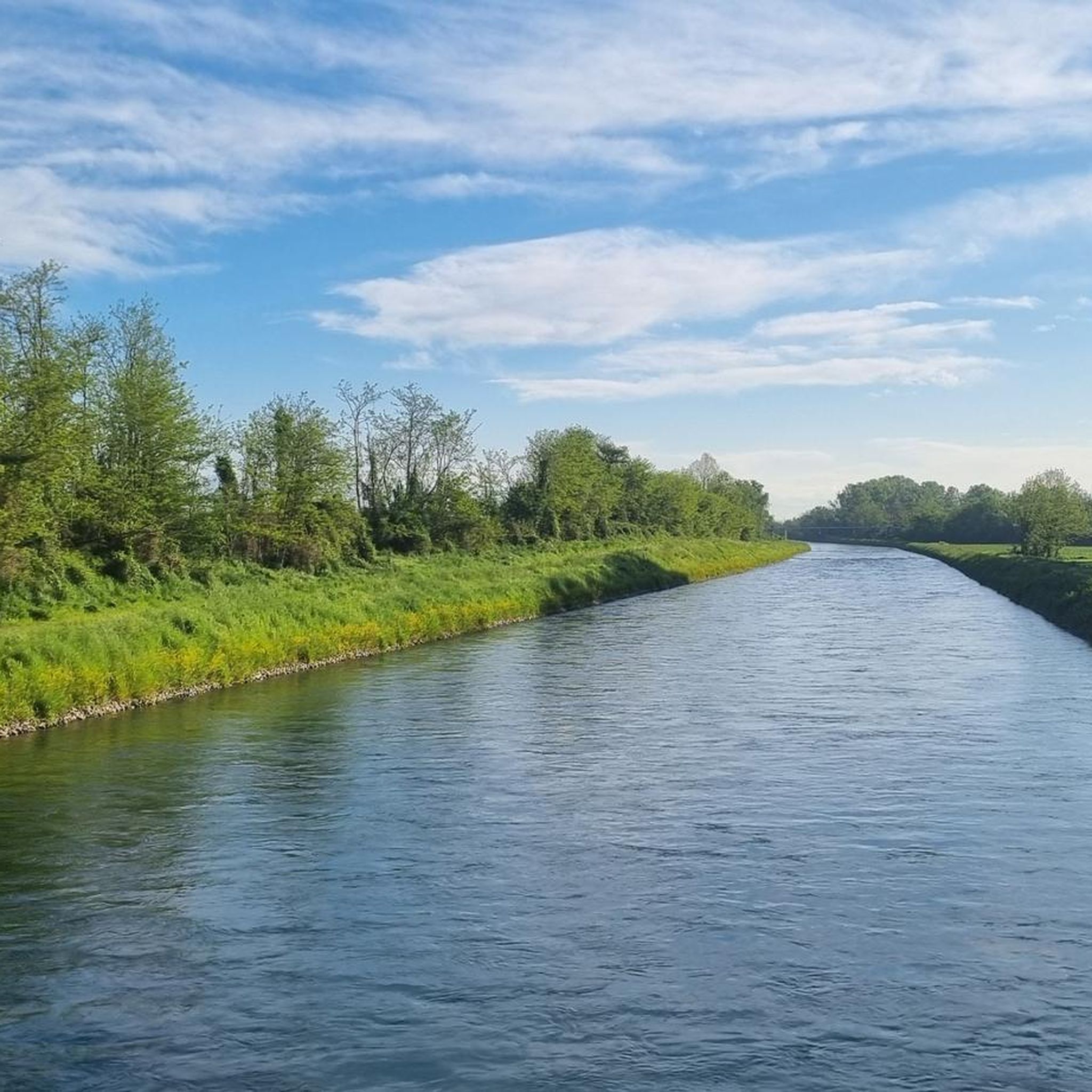
The Naviglio della Martesana, definitively completed in 1496 under the guidance of Ludovico il Moro, flows from Trezzo sull’Adda to Milan for a total length of 38 km. The route runs alongside the ancient Roman road (the current SS 11 padana superiore) which crossed the Adda with two branches: at Vaprio and Cassano. Irrigation of the land located above the spring belt was for a long time the predominant use of the canal, so much so that initially navigation was limited to two days a week; concurrently with the improvement of the agricultural structure thanks to irrigation, a notable flourishing of stately villas occurred in the Baroque era, intended to enjoy the convenience of travel on water and to control owned lands.
1
0
Naviglio della Martesana is perhaps the least known of the ancient artificial canals connecting Milan to the great Lombard rivers. It originates from the Adda in Concesa, a hamlet of Trezzo d’Adda, crosses the Martesana sub-region, northeast of the provincial capital, and once in the city, it plunges underground beneath Via Melchiorre Gioia, at the height of Cassina de’ Pomm. It measures approximately 38 km in length, with a width varying from 9 to 18 meters. However, once upon a time, the Naviglio della Martesana continued in the open air all the way to the center, where a lock system centered on the Conca dell’Incoronata connected it to the short Naviglio di S. Marco and the urban network of the Navigli. The lock was inaugurated in 1496, utilizing lock gates designed by Leonardo da Vinci. The canal had been opened in 1471, under Francesco Sforza. By connecting it to the other Navigli, Leonardo laid the foundations for realizing a dream of the Sforzas: to travel by water from the Ticino, and therefore from Lake Maggiore, all the way to the Adda.
1
0
Frequently Asked Questions
How many hiking trails are available around Pozzuolo Martesana?
There are over 240 hiking routes in the Pozzuolo Martesana area. These include a diverse range of options, with over 110 easy trails, more than 120 moderate routes, and a few challenging hikes for experienced adventurers.
What makes hiking in Pozzuolo Martesana unique?
Hiking in Pozzuolo Martesana offers a unique blend of historical waterways and rich natural reserves. The region is characterized by the historic Naviglio Martesana canal, which provides scenic paths, and the Oasi della Martesana, a significant naturalistic area known for its abundant birdlife and wetland habitats. You'll find trails that combine natural beauty with historical elements, perfect for exploring the Lombardy countryside.
What do other hikers say about the trails in Pozzuolo Martesana?
The trails in Pozzuolo Martesana are highly regarded by the komoot community, with an average rating of 4.3 stars from over 400 reviews. More than 4000 hikers have used komoot to explore the area, often praising the accessible paths, the peaceful canal-side walks, and the opportunities for wildlife spotting.
Are there easy hiking trails suitable for beginners or casual walkers?
Yes, Pozzuolo Martesana offers many easily-accessible trails perfect for beginners or casual walkers. For example, the Farmhouse loop from Inzago is an easy 6.1-kilometer (3.8-mile) route that takes just under 1.5 hours to complete, leading through pleasant agricultural landscapes.
Are there any challenging hikes in the area?
While many trails are easy to moderate, there are options for more challenging hikes. One notable route is A walk in the Adda Nord Park – the industrial town of Crespi d'Adda. This difficult 25.3-kilometer (15.7-mile) trail takes over 6 hours and explores the Adda Nord Park, featuring historical industrial architecture.
What natural features or wildlife can I expect to see while hiking?
You can expect to encounter diverse natural features, especially along the Naviglio Martesana and within the Oasi della Martesana. The Oasi is particularly rich in birdlife, with over 110 recorded species, as well as amphibians, dragonflies, and butterflies. The region's historic canals, such as the Naviglio Martesana, also offer picturesque water views and lush riparian vegetation.
Are there any circular hiking routes around Pozzuolo Martesana?
Yes, many routes in the area are circular, allowing you to start and end at the same point. An example is the Farmhouse – Martesana Canal loop from Gessate, a moderate 9.5-kilometer (5.9-mile) path that follows sections of the historic Martesana Canal, offering scenic views of the waterway and surrounding countryside.
Can I bring my dog on the hiking trails in Pozzuolo Martesana?
Generally, dogs are welcome on most hiking trails in Pozzuolo Martesana, especially on the canal paths and through agricultural areas. However, it's always advisable to keep your dog on a leash, particularly in natural reserves like the Oasi della Martesana, to protect local wildlife and ensure a pleasant experience for all hikers.
Are there any family-friendly hiking options?
Pozzuolo Martesana is well-suited for family-friendly hikes due to its many accessible and relatively flat trails. The paths along the Naviglio Martesana are particularly good for families, offering easy walking and cycling opportunities. The naturalistic areas also provide engaging environments for children to explore nature.
What interesting landmarks or attractions are near the hiking trails?
Beyond the natural beauty, you can find several interesting landmarks. Along the Naviglio Martesana, look for the Rudun Water Wheel of Groppello d'Adda, an engineering work from 1618. The region also features several castles, such as the Corneliano Bertario Castle and the Visconti Castle of Cassano d'Adda. For natural attractions, Increa Park with its artificial lake is also nearby.
What is the best time of year to hike in Pozzuolo Martesana?
The best time to hike in Pozzuolo Martesana is generally during spring and autumn when the weather is mild and pleasant. Spring brings blooming flora, while autumn offers beautiful foliage along the canals and in the natural reserves. Summer can be warm, but the shaded canal paths provide some relief. Winter hikes are also possible, offering a different, quieter perspective of the landscape.
Are there opportunities for wildlife spotting in the area?
Yes, the Oasi della Martesana is an excellent spot for wildlife spotting. This naturalistic area is a significant habitat for over 110 species of birds, including sedentary, wintering, and migratory birds. The wetland environment also attracts various amphibians, dragonflies, and butterflies, making it a rich area for nature observation.
Can I reach hiking trails using public transport?
Pozzuolo Martesana is located in the Metropolitan City of Milan, and while specific trailheads might require a short walk or local bus connection, the region is generally accessible. For detailed public transport information to specific starting points, it's recommended to check local transit schedules or use online route planners.
Most popular routes around Pozzuolo Martesana
Most popular attractions around Pozzuolo Martesana

Get inspired with the komoot mobile app


Explore more
Browse the best Hikes in other regions.
