The best cycling routes around Pozzuolo Martesana
4.3
(1269)
9,735
riders
17
rides
Touring cycling routes around Pozzuolo Martesana are primarily characterized by the flat, accessible terrain along the historic Martesana Canal. This region, part of the Lombardy countryside, features cultivated fields and waterways. Natural features include the Oasi della Martesana, a restored wetland area known for its birdlife. The landscape offers a blend of natural serenity and historical points of interest, making it suitable for various cycling experiences.
Best touring cycling routes around Pozzuolo Martesana
- The most popular touring cycling route is…
Last updated: July 17, 2026
4.7
(61)
614
riders
58.7km
04:06
490m
490m
Hard bike ride. Very good fitness required. Mostly paved surfaces. Suitable for all skill levels.
3.6
(5)
49
riders
45.9km
02:57
170m
170m
Moderate bike ride. Good fitness required. Mostly paved surfaces. Suitable for all skill levels.

Sign up for free
16
riders
94.8km
06:32
310m
310m
Hard bike ride. Very good fitness required. Mostly paved surfaces. Suitable for all skill levels.
5.0
(1)
19
riders
13.6km
00:46
30m
30m
Easy bike ride. Great for any fitness level. Mostly paved surfaces. Suitable for all skill levels.
12
riders
82.2km
05:07
590m
590m
Hard bike ride. Very good fitness required. Mostly paved surfaces. Suitable for all skill levels.
Get access to more routes and recommendations from other explorers.
Sign up for free
Already have an account?
Our route recommendations are based on thousands of hikes, rides, and runs completed by other people on komoot.
Start today with a free account
Your next adventure awaits.
Login or Signup
Tips from the Community

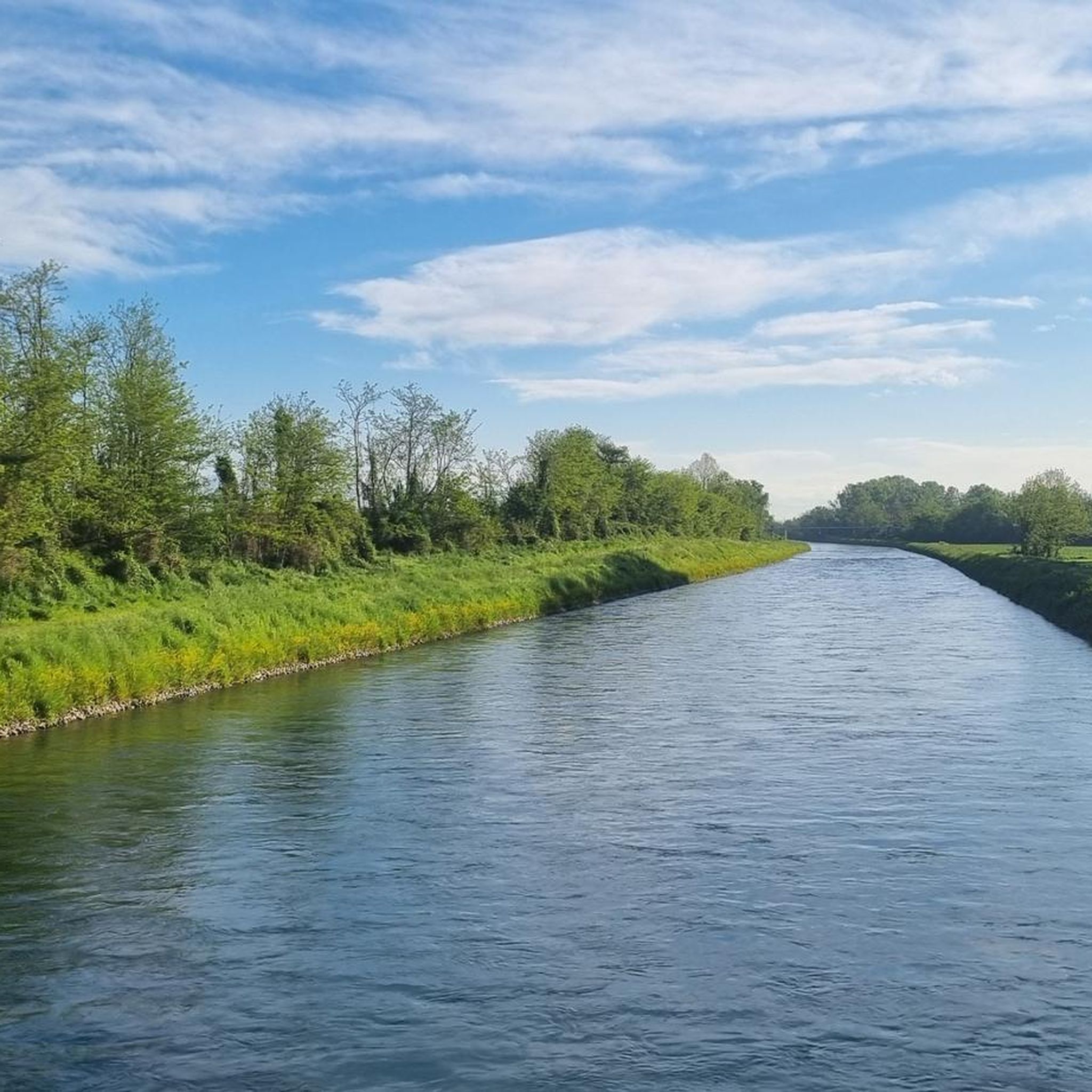
The section of the Naviglio Martesana cycle path between Bellinzago Lombardo and Inzago is a flat, entirely asphalted stretch without technical difficulties, ideal for cycle tourists of all levels. This specific rural fragment runs for about 3-4 kilometers along the Martesana canal in a protected area.
0
0

nice place to ride with a gravel bike, relaxing with many spots worth a stop.
0
0
The Naviglio della Martesana, initially known as Naviglio Piccolo, is one of the Milanese canals that connects Milan with the course of the Adda river through the municipalities of Martesana. Commissioned in the 15th century by Francesco Sforza, it was used for irrigating the countryside but also represented the ambitious project of connecting Milan with Lake Como and thus with the Alps and Ticino. The Naviglio della Martesana is a place rich in history and beauty, a heritage for everyone that, however, today is still little known and protected. Along the Naviglio runs a rather busy cycle path, which allows you to admire the landscape and cultural beauties, such as the rich flora, fauna, or the numerous historic villas, including the Renaissance Villa Melzi d’Eril in Vaprio d’Adda.
1
0
Leonardo's locks on the Naviglio della Martesana, particularly the Conca dell'Incoronata and the Conca di San Marco in Milan, are 15th-16th century engineering systems designed to overcome water level differences and connect the Martesana to the inner network of canals. Designed by Leonardo da Vinci, these locks used wooden leaf gates, designed to facilitate the passage of barges loaded with goods.
0
0

In Groppello d'Adda, along the Martesana Canal, there is a large waterwheel called "el rudun." It is not a mill, but a noria that was used to raise water for irrigation. It was built in 1618 at the behest of Cardinal Federico Borromeo. It was used to irrigate the vegetable gardens and gardens of the Archbishop's Villa. Tradition attributes the design to Leonardo da Vinci. The water also fed kitchens, washhouses, and livestock watering troughs. The original wheel was dismantled in the late 19th century. The current one is a 1989 reconstruction, restored several times. It has a diameter of 11 meters and eight large blades. Today, it is a historical and educational symbol that tells the story of the area's past.
2
0

Surroundings of Cassano d'Adda
2
0

In the center of town, on the right bank of the Martesana Canal, stands an imposing waterwheel (popularly known as a rudun) said to have been designed by Leonardo da Vinci himself. Despite appearances, the wheel is not a mill, but a noria. Its function, in fact, was never to grind grain or power machinery, but rather to lift water from the canal to channel it into an irrigation system.
0
0

We are in Groppello, a hamlet in the municipality of Cassano d'Adda, and we must go back in time to 1618, when Cardinal Federico Borromeo commissioned this large wheel to convey the water needed to irrigate the vegetable gardens and gardens of the Archbishop's Villa. It is said that this majestic work, at the Cardinal's request, was designed by Leonardo da Vinci himself. Which, if anything, adds to its charm.
1
0
Frequently Asked Questions
How many touring cycling routes are available around Pozzuolo Martesana?
There are over 14 touring cycling routes around Pozzuolo Martesana, offering a variety of experiences. These include 3 easy routes, 8 moderate routes, and 3 difficult routes, catering to different skill levels.
What kind of terrain can I expect on touring cycling routes in Pozzuolo Martesana?
The terrain around Pozzuolo Martesana is predominantly flat, especially along the historic Martesana Canal. You'll cycle through serene Lombardy countryside, cultivated fields, and alongside waterways, making it suitable for relaxed touring.
Are there touring cycling routes suitable for beginners or families?
Yes, the region offers several easy touring cycling routes perfect for beginners and families. The flat paths along the Martesana Canal are particularly well-suited for a leisurely ride. An example is the Martesana Canal – Martesana Canal loop from Pozzuolo Martesana, which is an easy 14.7 km route.
Are there any longer touring cycling routes for experienced cyclists?
For experienced cyclists looking for a longer challenge, routes like the Fara Gera d'Adda footbridge – Malpaga Castle loop from Trecella offer a substantial ride. This difficult 93 km route connects historical landmarks and provides extensive views along the Adda River.
What natural features can I explore along the touring cycling routes?
Beyond the canal, you can explore the Increa Park, which features an artificial lake. The nearby Oasi della Martesana, a restored wetland, is also a significant natural feature known for its diverse birdlife and biodiversity.
What historical landmarks or points of interest can I see while cycling?
The routes are rich in history. You can admire historic villas along the Martesana Canal, visit the Church of San Francesco, and see the parish church of the Nativity of Mary Virgin in Pozzuolo Martesana. The Mill on the Martesana – Groppello Water Wheel loop from Trecella highlights the region's historical hydraulic structures, including the famous 'el rudun' water wheel in Groppello d'Adda.
Are there any castles accessible by bike near Pozzuolo Martesana?
Yes, you can cycle to several impressive castles. Notable ones include Corneliano Bertario Castle and the Visconti Castle of Cassano d'Adda, offering a glimpse into the region's rich past.
When is the best time of year to go touring cycling in Pozzuolo Martesana?
The best time for touring cycling in Pozzuolo Martesana is generally during spring and autumn when the weather is mild and pleasant. While popular on weekends, weekdays offer a more peaceful experience along the canal paths.
Is it possible to bring my dog on touring cycling routes?
Many of the canal paths and countryside routes are suitable for cycling with dogs, provided they are well-behaved and kept on a leash where necessary. Always ensure your dog is comfortable with the distance and terrain.
Where can I find parking for touring cycling routes in Pozzuolo Martesana?
Parking is generally available in and around Pozzuolo Martesana and the towns along the Martesana Canal, such as Trecella, which serves as a common starting point for many routes. Look for designated parking areas in these municipalities.
What do other touring cyclists enjoy the most about touring cycling in Pozzuolo Martesana?
The area is highly rated by the komoot community, with an average score of 3.8 stars from over 18 reviews. Reviewers often praise the flat, accessible terrain along the historic Martesana Canal, the blend of natural serenity and historical points of interest, and the well-maintained paths suitable for various cycling experiences.
Are there any circular touring cycling routes in the area?
Yes, many routes in the area are designed as loops, allowing you to start and end in the same location. For example, the Groppello Water Wheel – Fara Gera d'Adda footbridge loop from Trecella is a moderate 46.1 km circular trail.
Most popular routes around Pozzuolo Martesana
Most popular attractions around Pozzuolo Martesana

Get inspired with the komoot mobile app


Explore more
Browse the best Cycling routes in other regions.
