Attractions and Places To See around Caldas De Reis - Top 20
Best attractions and places to see around Caldas De Reis include thermal waters, historical sites, and natural landscapes. This town in Pontevedra, Spain, is known for its position along the Portuguese Way of the Camino de Santiago and its thermal tradition. Visitors can explore a variety of landmarks, cultural sites, and natural features, including rivers and waterfalls. The area offers a mix of historical architecture and scenic outdoor environments.
Best attractions and places to see around Caldas De Reis
- The most popular attractions is Santa Mariña de Carracedo Church, a religious building linked to the Camino de Santiago. This Romanesque church features a large Baroque tower and is located at the foot of the Camino Portugues.
- Another must-see spot is Church of Santa María de Adina (Iria Flavia), a religious building and historical site. This church, remodeled over two and a half centuries ago, is considered one of the oldest in Galicia and the first Marian church in the world.
- Visitors also love Caldas de Reis Thermal Baths, an other man-made facility and historical site. The thermal waters, ranging between 23 and 45 °C, are known for their therapeutic properties for various conditions.
- Caldas De Reis is known for its thermal springs, Roman bridges, and Romanesque churches. The region offers a variety of attractions to see and explore, from historical monuments to natural river landscapes.
- The attractions around Caldas De Reis are appreciated by the komoot community, with over 585 upvotes and 203 photos shared.
Last updated: July 6, 2026
Santa Mariña de Carracedo Church
Highlight • Religious Site
Translated by Google •
Tip by

Church of Santa María de Adina (Iria Flavia)
Highlight • Religious Site
Translated by Google •
Tip by

Sign up now to discover places like this
Get recommendations on the best single tracks, peaks, & plenty of other exciting outdoor places.
Sign up for free
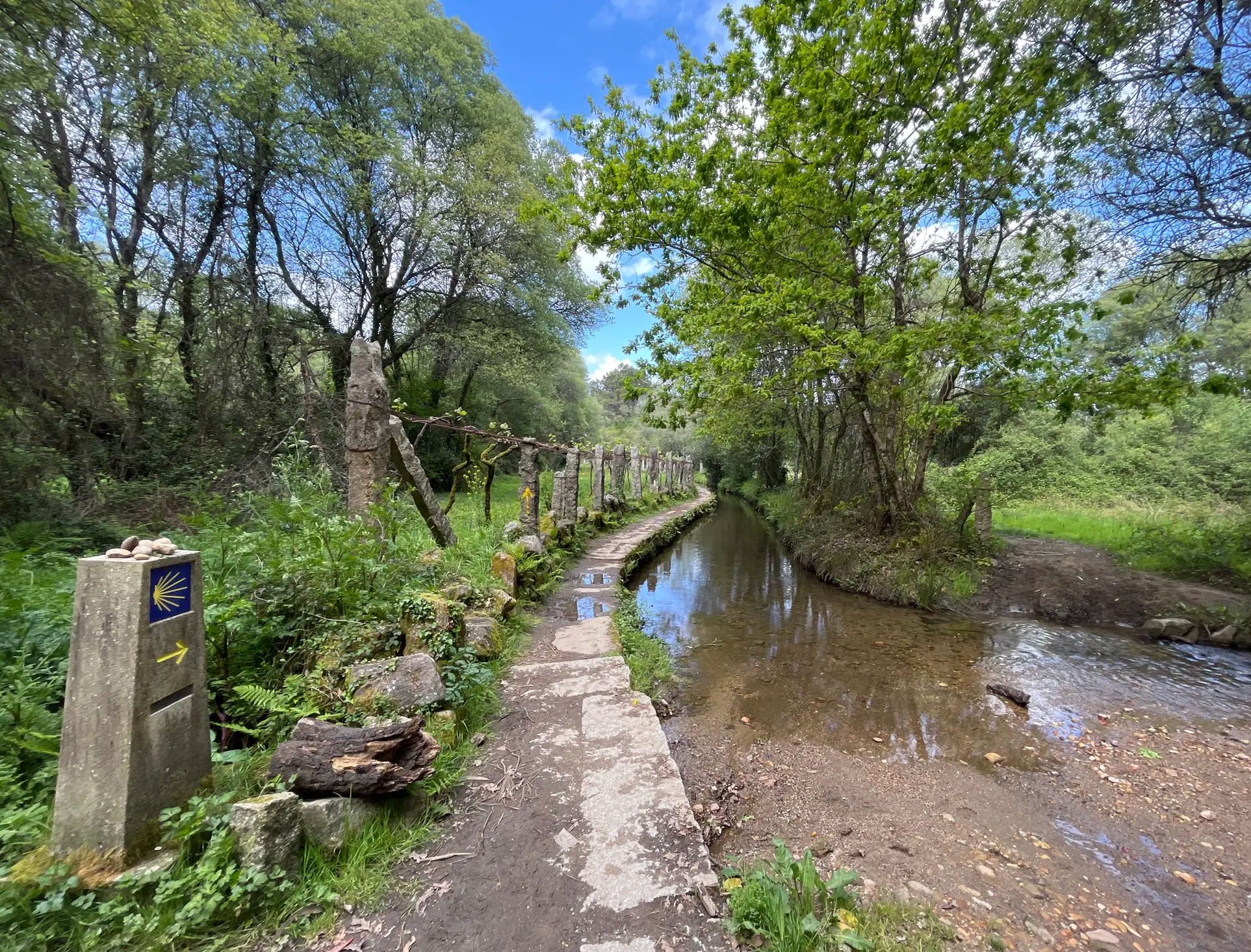
Camino de Santiago Milestone – Km 60
Highlight • Monument
Yellow arrows: These arrows will guide you throughout the entire route. They indicate the direction to follow, especially at crossroads. The yellow color is due to the contribution of the parish priest Elías Valiña, a key figure in the resurgence of the Camino de Santiago in the 20th century.
Cairns or milestones: These concrete blocks include an arrow, a yellow shell on a blue background and the distance in kilometers to Santiago de Compostela. You will find them every 500 meters in Galicia.
Scallop shells: In addition to being drawn on the markers, scallop shells are distributed throughout the Camino. They are universal symbols and have been carried by pilgrims for centuries. The open part of the shell indicates the direction towards Santiago.
Good way! 🚶♂️🌟
Translated by Google •
Tip by
Caldas de Reis Thermal Baths
Highlight • Structure
Translated by Google •
Tip by
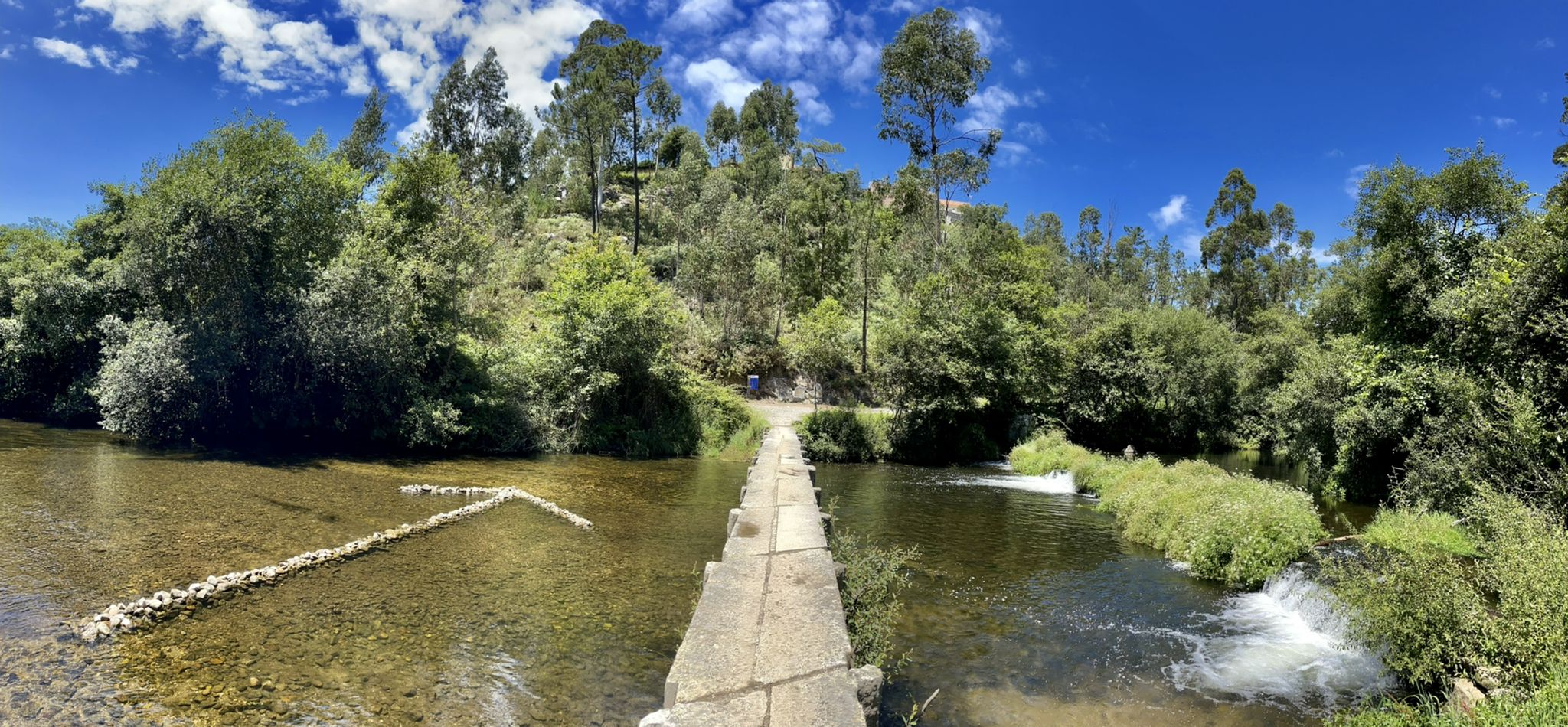
Valga River Forest Trail
Highlight • Trail
Translated by Google •
Tip by
Sign up for free to discover even more attractions around Caldas De Reis.
Sign up for free
Already have an account?
Start today with a free account
Your next adventure awaits.
Login or Signup
Popular around Caldas De Reis
The challenge that knows no frontiers — Portuguese Coast Path
Na Rota dos Peregrinos – o Caminho Central Português
Hiking around Caldas De Reis
Running Trails around Caldas De Reis
MTB Trails around Caldas De Reis
Cycling around Caldas De Reis
Road Cycling Routes around Caldas De Reis

Gravel biking around Caldas De Reis


Tips from the Community


The Church of Santa Maria de Iria Flavia is an important pilgrimage site and is considered one of the oldest churches in Galicia. It is also one of the main points of interest in the town of Padrón.
1
0
The Church and Cemetery of Adina are located in Iria Flavia, Padrón. The cemetery has archaeological remains from the Roman and Suebian era, such as anthropomorphic sarcophagi from the 6th century ¹. The church, also known as Santa María la Mayor de Iria Flavia, is an old collegiate church that houses the cemetery where the grave of Camilo José Cela is located, under one of the four centuries-old olive trees ² ³. There is also a tombstone in honor of Rosalía de Castro, who was buried there from 1885 to 1891 ⁴ ².
0
0

The goal is the path.
1
1
The nice thing is that you don't need navigation.
0
1
Beautiful city with many murals.
1
0

Signage on the Camino de Santiago is essential for pilgrims. Yellow arrows: These arrows will guide you throughout the entire route. They indicate the direction to follow, especially at crossroads. The yellow color is due to the contribution of the parish priest Elías Valiña, a key figure in the resurgence of the Camino de Santiago in the 20th century. Cairns or milestones: These concrete blocks include an arrow, a yellow shell on a blue background and the distance in kilometers to Santiago de Compostela. You will find them every 500 meters in Galicia. Scallop shells: In addition to being drawn on the markers, scallop shells are distributed throughout the Camino. They are universal symbols and have been carried by pilgrims for centuries. The open part of the shell indicates the direction towards Santiago. Good way! 🚶♂️🌟
7
0
The beauty of the cemeteries here makes me dream a little.
1
0
Frequently Asked Questions
What historical and cultural sites can I explore in Caldas de Reis?
Caldas de Reis offers a rich history, particularly along the Camino de Santiago. You can visit the Santa Mariña de Carracedo Church, a Romanesque church with a large Baroque tower, or the Church of Santa María de Adina (Iria Flavia), considered one of Galicia's oldest churches. Don't miss the Roman bridges, such as the Puente de Bermaña, and the replica of the Bronze Age 'Tesouro de Caldas de Reis' at the Auditorio Municipal.
Where can I experience the thermal waters of Caldas de Reis?
Caldas de Reis is famous for its thermal tradition. You can visit the Caldas de Reis Thermal Baths, where waters range between 23 and 45 °C and are known for therapeutic properties. For a public experience, the Fuente de las Burgas offers hot spring water at around 40 degrees Celsius, complete with lion-head spouts and an adjacent laundry area.
What natural attractions are available for visitors?
The town is surrounded by beautiful natural features. The Umia River flows through Caldas de Reis, offering picturesque scenery. You can also visit the impressive Segade Waterfall (Fervenza de Segade), located about 6 km from town, surrounded by a forest with restored mills. The Botanical Garden and Carballeira, with its ancient oak trees and diverse plant species, is another beautiful green space to explore.
Are there family-friendly activities or attractions in Caldas de Reis?
Yes, several attractions are suitable for families. The Santa Mariña de Carracedo Church and the Church of Santa María de Adina (Iria Flavia) are listed as family-friendly historical sites. The Botanical Garden and Carballeira offer a large, pleasant green space for walks and relaxation, appealing to all ages. Exploring the Roman bridges and the Segade Waterfall area can also be enjoyable for families.
What outdoor activities, like hiking, can I do near Caldas de Reis?
Caldas de Reis is an excellent base for outdoor activities. You can find various hiking routes, including the 'Thermal Washhouse – View of Segade Waterfall loop' or the 'Roman Bridge over the Bermaña River – Caldas de Reis Bridge loop'. For more options, explore the hiking guide for Caldas de Reis.
What is the significance of Caldas de Reis for the Camino de Santiago?
Caldas de Reis is a crucial stop on the Portuguese Way of the Camino de Santiago. Pilgrims often utilize the town's hot springs for rest and recovery. You'll find significant Camino landmarks like the Camino de Santiago Milestone – Km 60, indicating the remaining distance to Santiago. Churches like Santa Mariña de Carracedo are also historically linked to the Camino.
Are there any cycling routes around Caldas de Reis?
Yes, there are several cycling opportunities. For mountain biking, you can try routes like 'Caldas de Reis - vuelta de Moliños' or 'Castro de Arcos loop'. If you prefer gravel biking, options include 'Mysterious forest – Pathway Through Vineyards loop'. You can find more details in the MTB Trails around Caldas de Reis guide and the Gravel biking around Caldas de Reis guide.
What are some unique natural features or 'hidden gems' in the area?
Beyond the well-known thermal springs and rivers, Caldas de Reis features unique rocky monuments like Pedra Filga and Pedra da Grada, which are significant for understanding the region's ancient geological history. The Carballeira, with its over 200 century-old oak trees, is also a recognized Asset of Cultural Interest and a natural gem.
What do visitors enjoy most about Caldas de Reis?
Visitors particularly appreciate the town's blend of historical significance, especially its connection to the Camino de Santiago, and its relaxing thermal waters. The natural beauty of the Umia River, the Botanical Garden, and the Segade Waterfall also receive high praise for providing serene environments for walks and outdoor enjoyment. The overall calm and relaxing atmosphere is a recurring highlight.
Can I visit other Romanesque churches in the vicinity of Caldas de Reis?
Beyond the main churches, the region boasts several other Romanesque churches. These include the Church of Santo Tomás Becket, unique for being the only one in the region dedicated to St. Thomas Becket, and the Church of Santa María de Bemil, which preserves a rosette and a semicircular apse. The Church of Santo André de Cesar and the Church of San Estevo de Saiar also have Romanesque origins, though they have undergone Baroque reforms.
Are there any places to see related to the Umia River?
The Umia River is central to the natural beauty of Caldas de Reis. You can enjoy scenic walks along its banks, and it's also where you'll find the impressive Segade Waterfall. The river contributes significantly to the town's calm environment, offering opportunities for canoeing and kayaking.
Most popular routes around Caldas De Reis
Most popular attractions around Caldas De Reis

Get inspired with the komoot mobile app


Explore more
Still not found the Highlight you’re looking for? See guides of the top attractions in other regions:
