Top 6 Castles around Olevano Romano
Castles around Olevano Romano offer a glimpse into the region's rich medieval history. Located in the Lazio region, the area features historical sites like the Rocca di Olevano Romano and Palazzo Colonna-Marcucci. These structures provide insights into past defensive strategies and noble families. The surrounding landscape includes panoramic views of the Sacco Valley and various mountain ranges.
Best castles around Olevano Romano
- The most popular castles is Castel San Pietro Romano, a settlement that originated in the late Bronze…
Last updated: May 18, 2026
Castel San Pietro Romano
Highlight • Settlement
Translated by Google •
Tip by

Rocca Abbaziale di Subiaco
Highlight • Castle
Translated by Google •
Tip by

Sign up now to discover places like this
Get recommendations on the best single tracks, peaks, & plenty of other exciting outdoor places.
Sign up for free
Rocca dei Colonna in Castel San Pietro Romano
Highlight • Castle
Translated by Google •
Tip by

Paliano Fortress
Highlight • Castle
Translated by Google •
Tip by
Genazzano
Highlight • Settlement
Translated by Google •
Tip by

Sign up for free to discover even more castles around Olevano Romano.
Sign up for free
Already have an account?
Start today with a free account
Your next adventure awaits.
Login or Signup
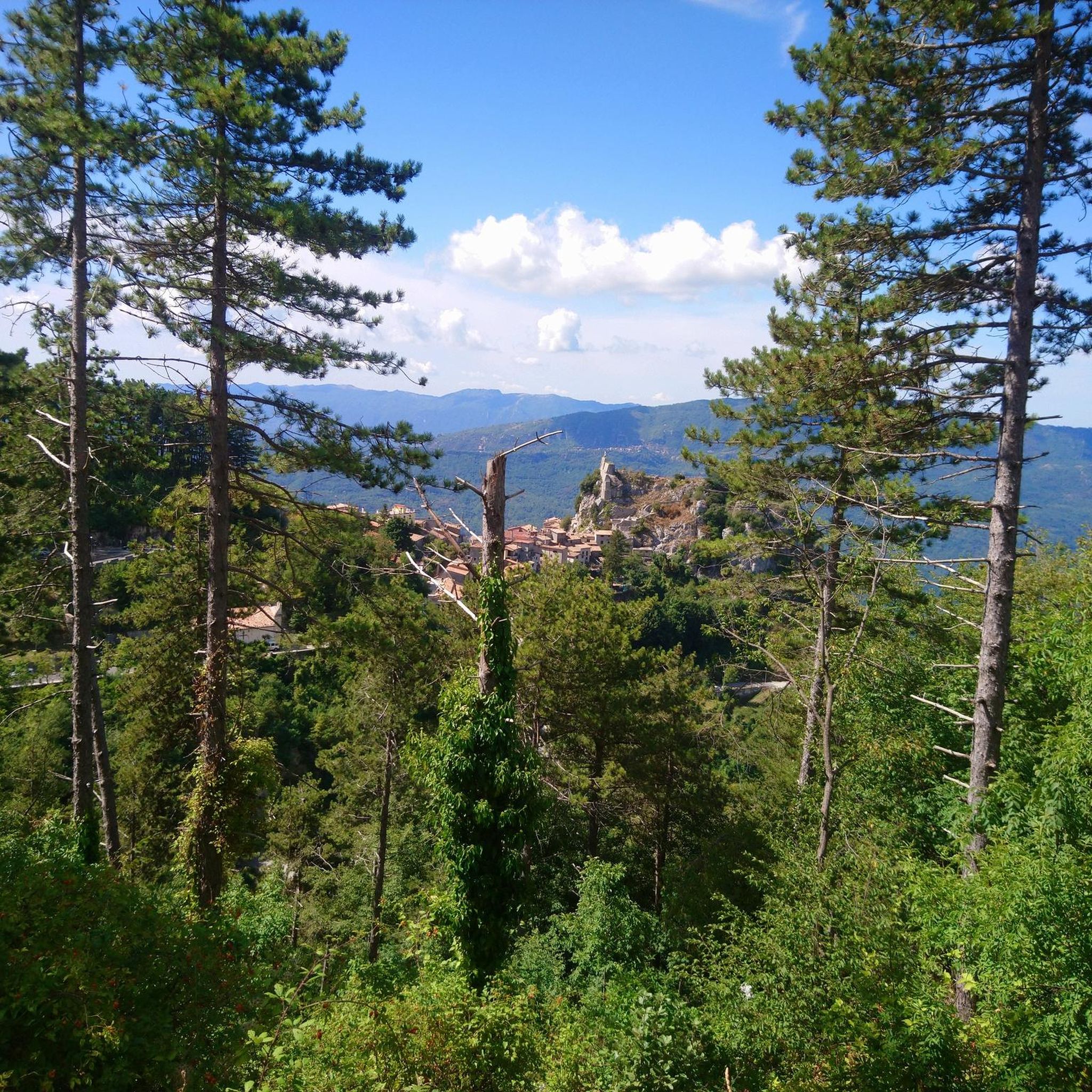
Tips from the Community

A museum-not-museum in the heart of the Rocca Abbaziale, a multimedia journey enriched with reconstructions of historical instruments to understand the role of communication in the development of civilization and to remember the records of Subiaco. It was in Subiaco, in the monastery of Santa Scolastica, that the first book with movable type in the history of Italy was printed. The MACS helps to retrace the stages of this invention that contributed to the transformation of an entire era.
3
0
Large castle complex overlooking the city. Abbey Fortress of Subiaco The Rocca Abbaziale di Subiaco, also called Rocca dei Borgia, is a thousand-year-old place where you can travel through the history of a municipality, among precious works of art and bold architecture. From its gardens you can admire a unique panorama of the Aniene valley, while the noble apartments offer a view of important cycles of paintings and decorations. Everything contributes to conveying the charm of a building that was the first home of Lucrezia Borgia. The Museum MACS - Museum of Paper and Printing Activities A museum-not-museum in the heart of the Rocca Abbaziale, a multimedia journey enriched with reconstructions of historical instruments to understand the role of communication in the development of civilization and to remember the records of Subiaco.
2
0

Very beautiful and lively village, the oven is notable which alone is worth the visit.
0
0

Genazzano is an Italian town in the province of Rome. This picturesque place offers a mix of medieval history, contemporary art and natural beauty.
1
0

Genazzano is a jewel of the Prenestini mountains. In addition to its architectural beauties from the Colonna era (the castle and Bramante's nymphaeum), it is worth visiting on the first Sunday of July for the Infiorata. On this day the streets of the town are covered with artistic carpets. Just in 2012 Genazzano won the Guinness record for the largest carpet of flower petals in the world!
3
0

very very nice village
3
0

With its height of 763 meters above sea level, it overlooks the western quadrant of Rome and the Cannucceta Valley
0
0

Paliano, whose origins date back to antiquity, nestled between the Prenestini and Ernici mountains, is inextricably linked to the name of the Colonna family, who had one of their cornerstones here. The period of greatest development for Paliano was the seventeenth century. The Palazzo Ducale dates from this period, built at the behest of Filippo Colonna with the adjacent Collegiate Church of S. Andrea, burial place of the family and the Fortress, which dominates the entire valley of the river Sacco, now a maximum security prison. Noteworthy in it is the pictorial cycle (attributed to Zuccari and his school) which represents Marcantonio Colonna's triumphal entry into Rome after the battle of Lepanto (1571). Today Paliano is still surrounded by walls with three access gates to the city and with ramparts arranged in green. Paliano owes notoriety also to its naturalistic and landscape aspects. (source: https://www.ciociariaturismo.it/it/la-ciociaria/i-91-comuni/tutti91comuni/120-paliano.html)
1
0
Frequently Asked Questions
What are the main historical castles and fortresses to visit in Olevano Romano?
Olevano Romano is home to the historic Rocca di Olevano Romano (Olevano Fortress), which includes the Palazzo Colonna-Marcucci. This site, with its 12th-century origins and 13th-century medieval architecture, offers a deep dive into the town's past. The medieval tower, 'Jo Picocco,' provides commanding views. Other notable castles in the wider region include Castel San Pietro Romano, Rocca Abbaziale di Subiaco, and Rocca dei Colonna.
What kind of views can I expect from the castles around Olevano Romano?
From the medieval tower ('Jo Picocco') at the Rocca di Olevano Romano, you can enjoy breathtaking panoramic views of the surrounding Lazio countryside. This includes the Sacco Valley, the Lepini, Prenestini, and Simbruini Mountains, and Monte Scalambra. Many castles in the region, such as Castel San Pietro Romano and Rocca Abbaziale di Subiaco, are strategically located to offer similar impressive vistas.
Are there family-friendly castles or activities near Olevano Romano?
While the castles themselves offer historical exploration, the town of Olevano Romano and its surroundings provide a charming experience for families. Castel San Pietro Romano is listed as family-friendly, offering a historical settlement to explore. The medieval atmosphere of Olevano Romano's historic center, with its narrow streets, can be an engaging experience for all ages. For outdoor activities, consider the nearby hiking trails.
What outdoor activities can I do near the castles of Olevano Romano?
The region around Olevano Romano is excellent for outdoor activities. You can find numerous hiking, mountain biking, and road cycling routes. For hiking, explore trails like the Monte Scalambra Trail or loops around Capranica Prenestina. Mountain bikers can enjoy routes such as the Serrone–Fiuggi Rail Trail. For more details on routes and their difficulties, check out the Hiking around Olevano Romano, MTB Trails around Olevano Romano, and Road Cycling Routes around Olevano Romano guides.
What is the best time of year to visit the castles and area around Olevano Romano?
The region's pleasant climate makes it enjoyable for visiting castles and outdoor activities for much of the year. Spring and autumn generally offer mild temperatures, ideal for exploring historical sites and hiking. Summer can be warm, but the panoramic views from the elevated castle locations can provide refreshing breezes. Winter offers a quieter experience, though some outdoor activities might be limited by weather.
Are there any specific historical facts or unique features about the castles in Olevano Romano?
The Rocca di Olevano Romano, including the Palazzo Colonna-Marcucci, dates back to the 12th century and was built by Oddone Colonna. It features cyclopean walls predating Roman times (8th century BC) and has been meticulously restored. Castel San Pietro Romano originated in the late Bronze Age and features polygonal walls from the 6th century BC. Rocca Abbaziale di Subiaco, also known as Rocca dei Borgia, houses the MACS - Museum of Paper and Printing Activities, commemorating Italy's first book printed with movable type.
Where can I find accommodation or places to eat near the castles in Olevano Romano?
Olevano Romano's historic center offers various options for accommodation, cafes, and restaurants. The town retains a medieval atmosphere, providing a charming setting for dining and staying. You'll find local establishments within walking distance of the Rocca di Olevano Romano. For specific recommendations, exploring the town center upon arrival is advised.
What is the significance of the Colonna family in the history of Olevano Romano's castles?
The Colonna family played a crucial role in the history of Olevano Romano. The Rocca di Olevano Romano was originally built by Oddone Colonna in the 12th century. The Palazzo Colonna-Marcucci within the fortress was also owned by the Colonna family. Additionally, Rocca dei Colonna, erected in 970 AD, was renovated by Stephanus Columna in 1482, highlighting their extensive influence and presence in the region's defensive structures.
Can I combine a visit to the castles with a nature walk or hike?
Absolutely. Many castles, including the Rocca di Olevano Romano, are situated in scenic locations that lend themselves to walks. The town itself is surrounded by natural beauty, and you can easily find local hiking trails that offer views of the castles and the surrounding countryside. For more structured routes, refer to the Hiking around Olevano Romano guide for trails of varying difficulty.
What other historical sites are worth visiting near Olevano Romano's castles?
Beyond the castles, the region offers other significant historical sites. The town of Genazzano is a jewel with architectural beauties from the Colonna era, including a castle and Bramante's nymphaeum. Also, the Palazzo Barberini – National Archaeological Museum of Palestrina, located on top of an ancient temple, houses important artifacts like the Nile Mosaic of Palestrina.
Is there parking available when visiting the castles in Olevano Romano?
Olevano Romano is a historic town, and while specific parking for the Rocca di Olevano Romano might be limited directly at the site, there are usually public parking areas available within the town or at its periphery. It's advisable to check local signage or inquire upon arrival for the most convenient parking options when visiting the historic center and its fortress.
Most popular attractions around Olevano Romano

Get inspired with the komoot mobile app


Explore more
Looking for the best castles somewhere else? Discover other guides around Olevano Romano:
