Attractions and Places To See around Assisi - Top 20
Attractions and places to see around Assisi are centered on its historical and spiritual significance, nestled on the slopes of Mount Subasio in the Umbrian valley. This UNESCO World Heritage Site is renowned as the birthplace of Saint Francis and Saint Clare. The region offers a blend of ancient Roman history, medieval architecture, and serene natural landscapes within Mount Subasio Park.
Best attractions and places to see around Assisi
- The most popular attractions is Basilica of Saint Francis, a…
Last updated: August 16, 2026
Basilica of Saint Francis
Highlight • Religious Site
Translated by Google •
Tip by

Historic Center of Bevagna
Highlight • Historical Site
Translated by Google •
Tip by

Sign up now to discover places like this
Get recommendations on the best single tracks, peaks, & plenty of other exciting outdoor places.
Sign up for free
Piazza del Comune, Assisi
Highlight • Historical Site
Translated by Google •
Tip by

Cathedral of San Rufino and the Fountain, Assisi
Highlight • Religious Site
+ of Saint Francis (see komoot.com/de-de/highlight/138624 ) and
+ of Saint Clara (see komoot.com/de-de/highlight/2665025 ). …
Translated by Google •
Tip by
Historic Center of Assisi
Highlight • Historical Site
Translated by Google •
Tip by
Sign up for free to discover even more attractions around Assisi.
Sign up for free
Already have an account?
Start today with a free account
Your next adventure awaits.
Login or Signup
Popular around Assisi
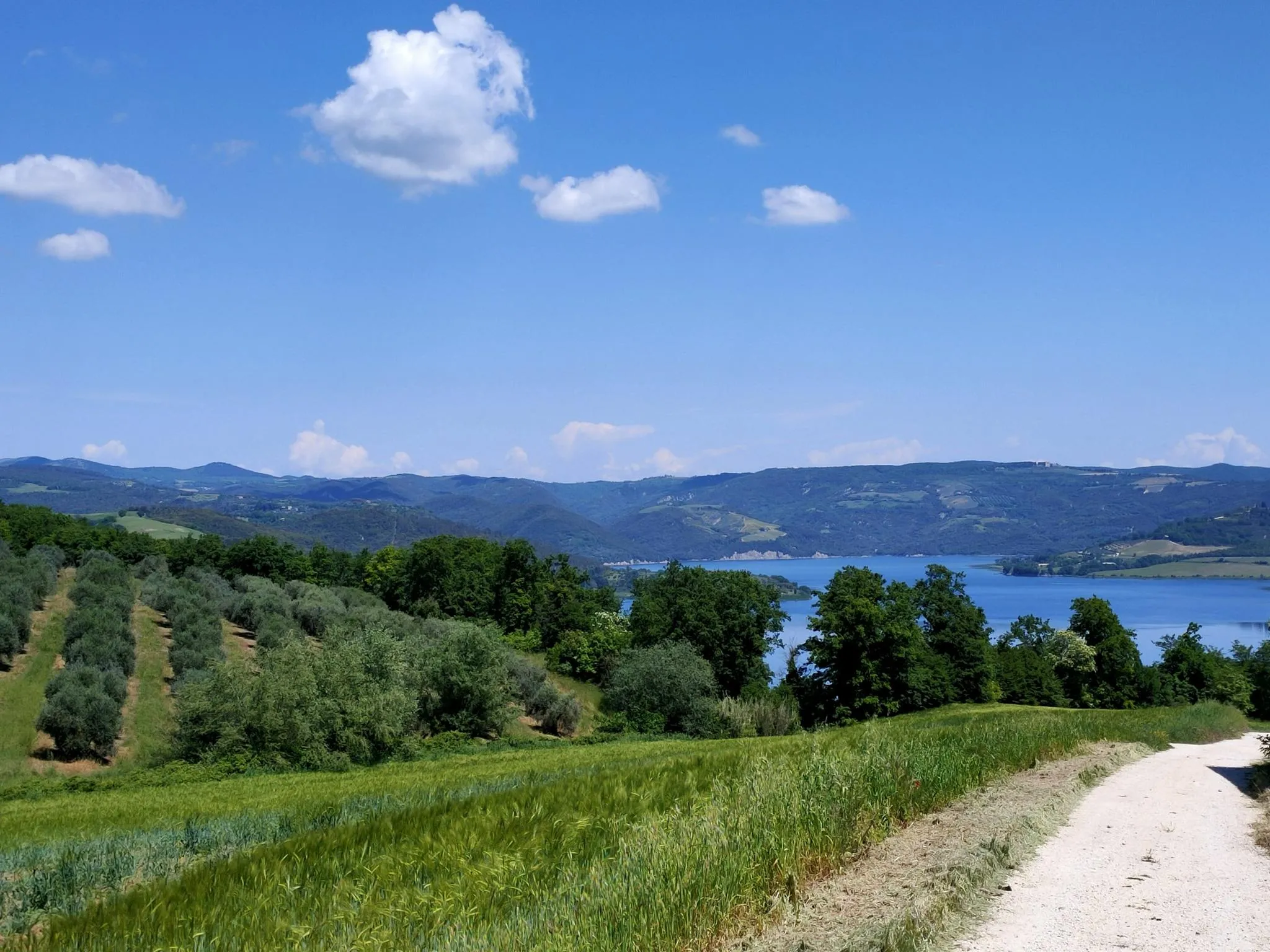
Italian Coast2Coast – From Portonovo to Orbetello
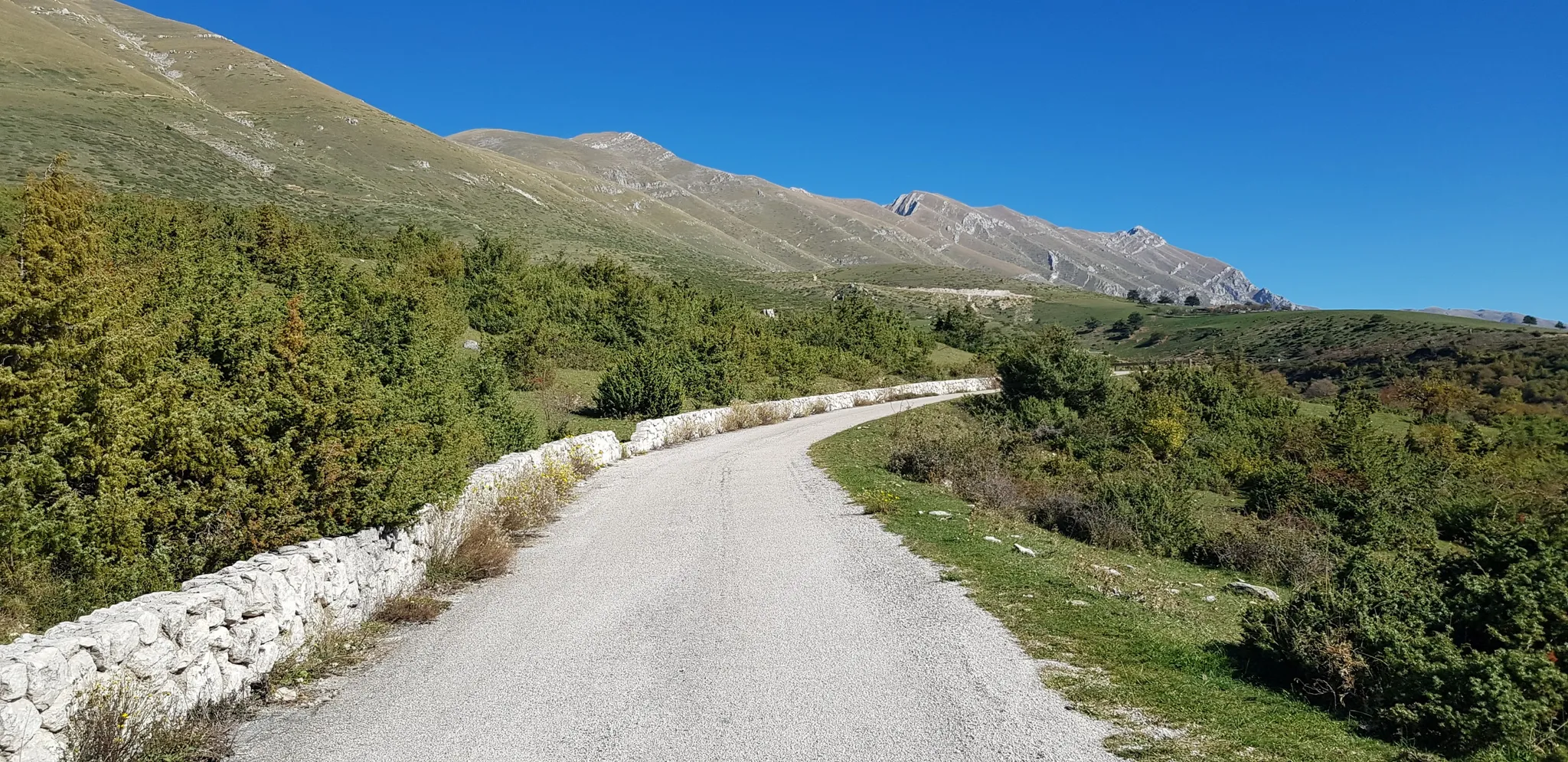
The Apennine Cycleway (Part 2) - From Umbria to Calabria
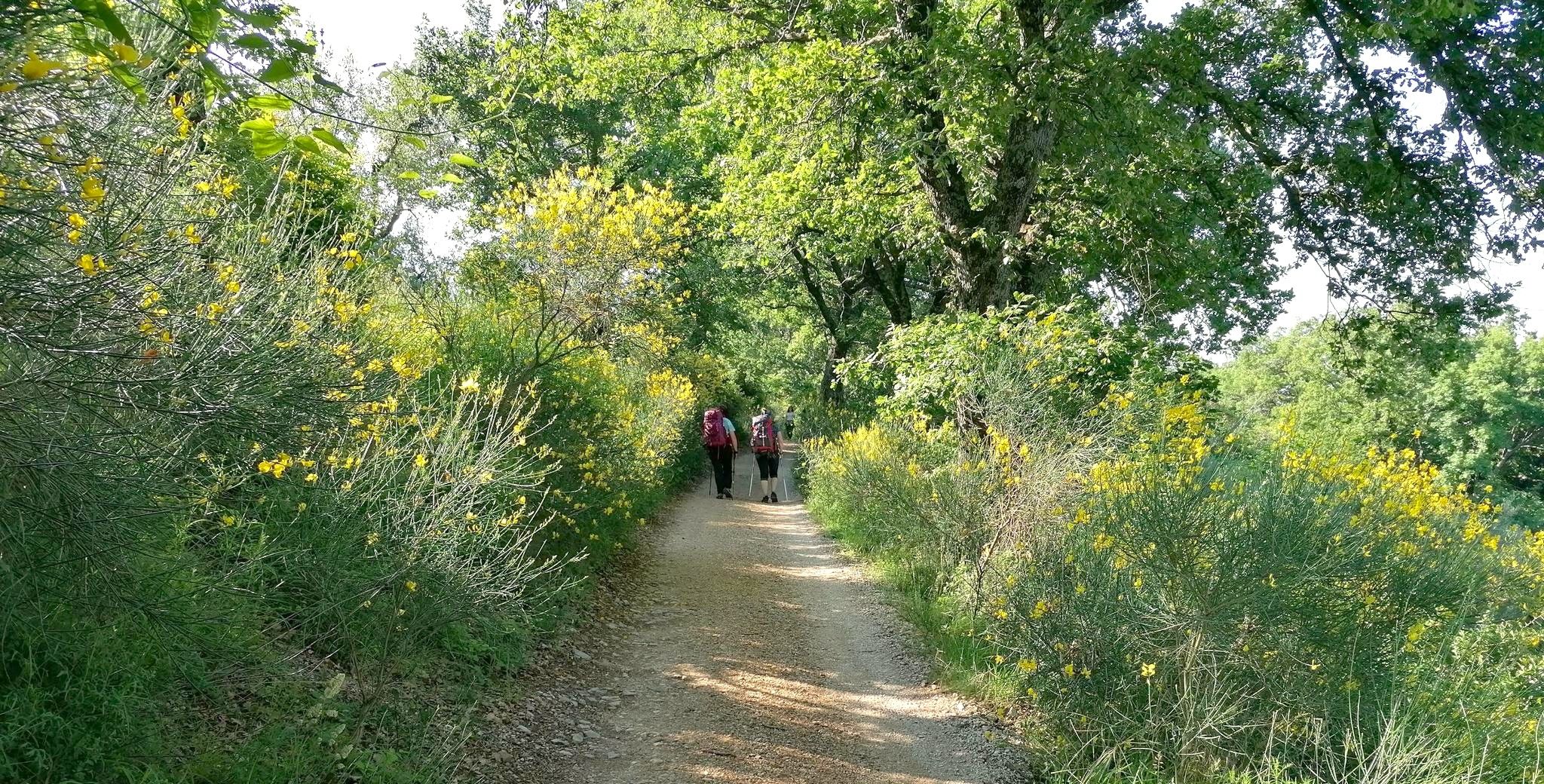
A journey of faith between Umbria and Marche – Via Lauretana
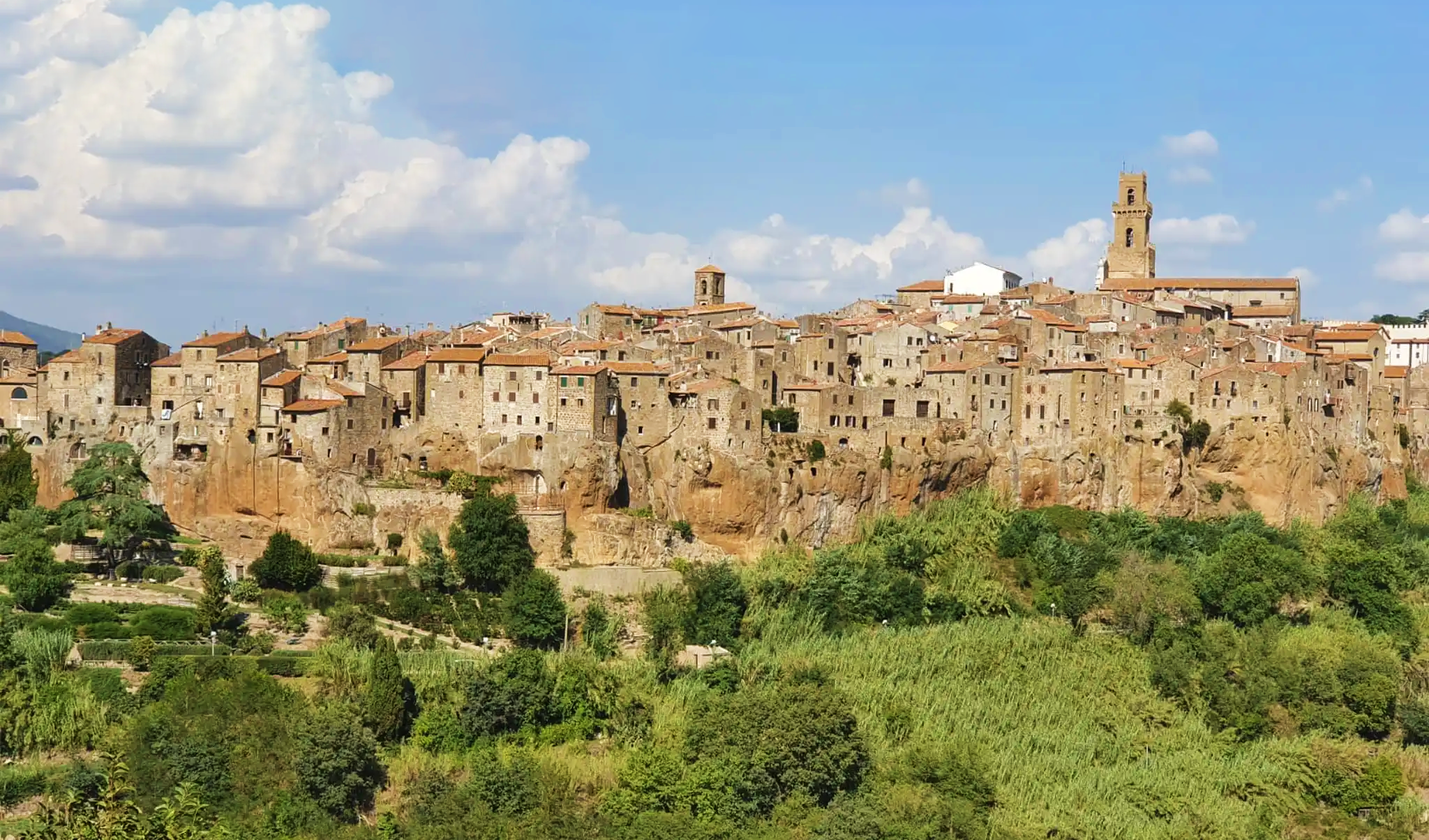
Italy coast to coast by bike – Orbetello to Senigallia
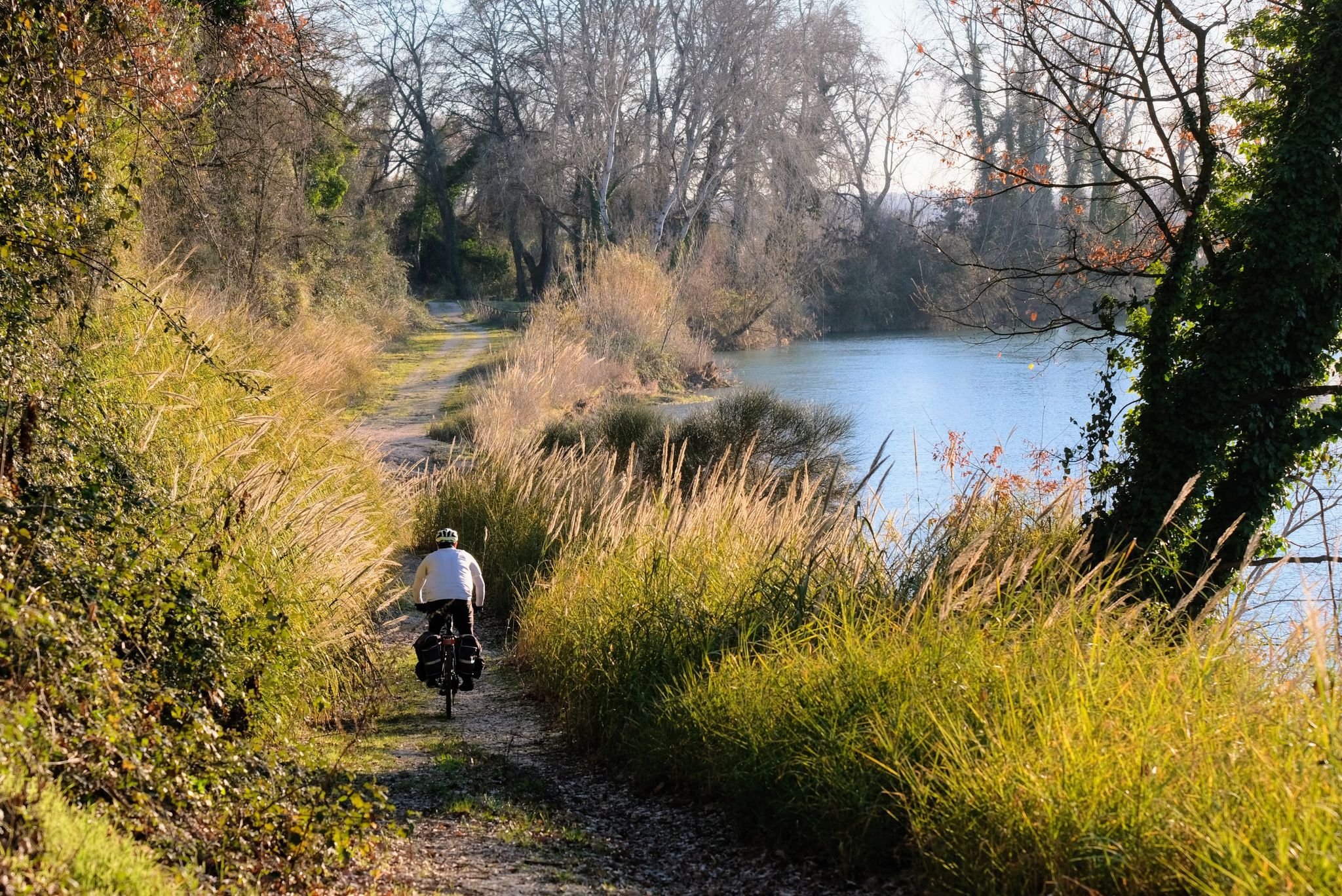
Assisi to Rome – Via dell'Acqua
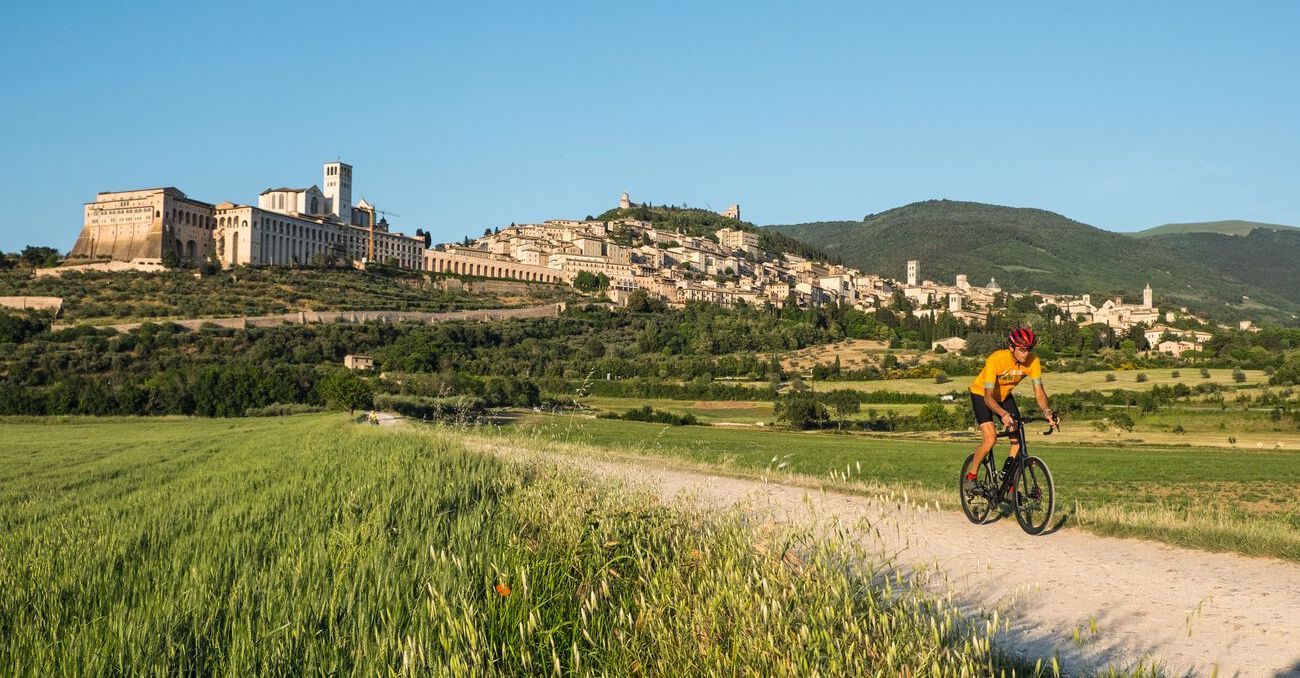
Umbria - Italy's hilly center
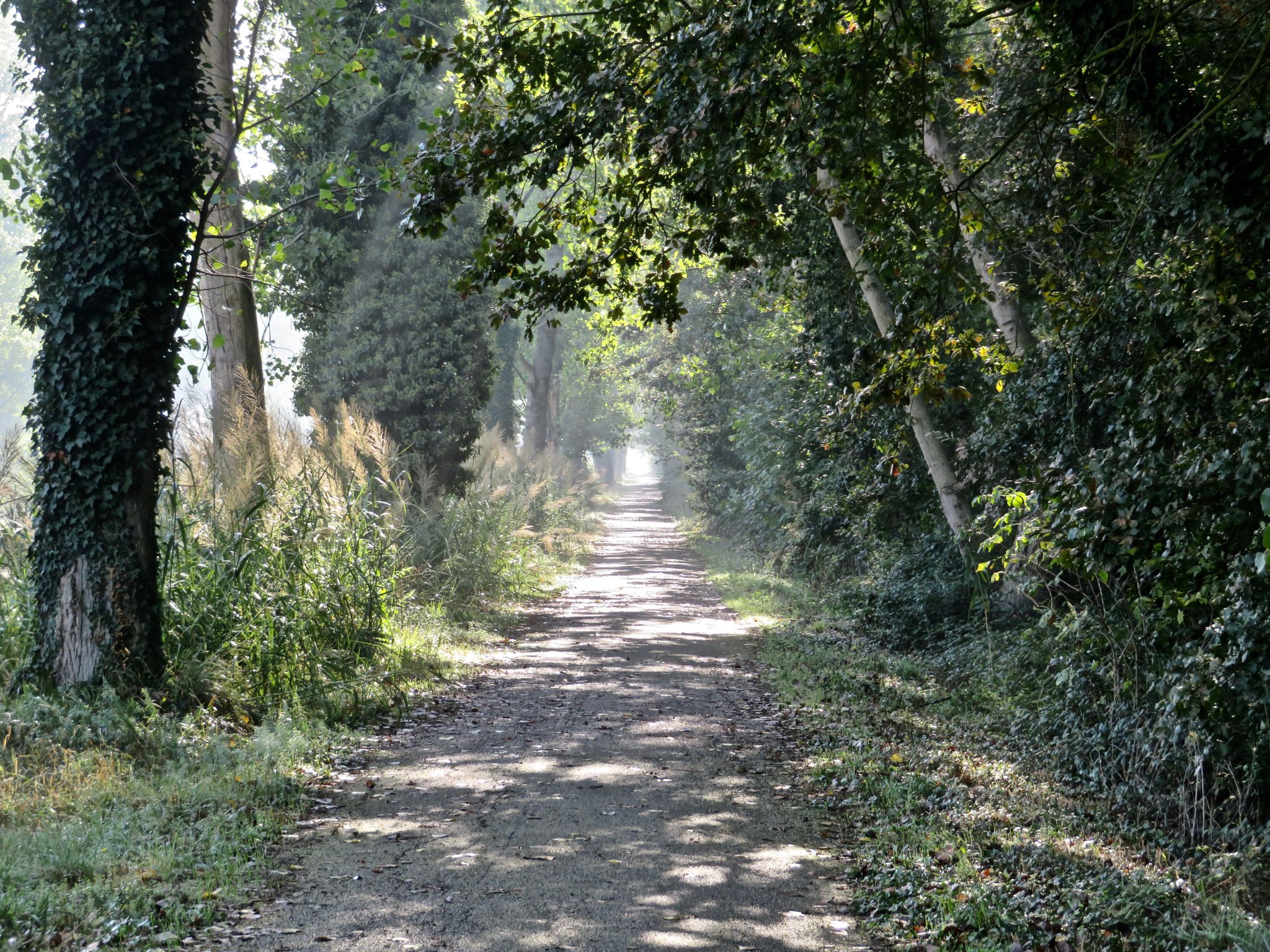
The old railroad – Assisi-Spoleto-Norcia Cycle Route
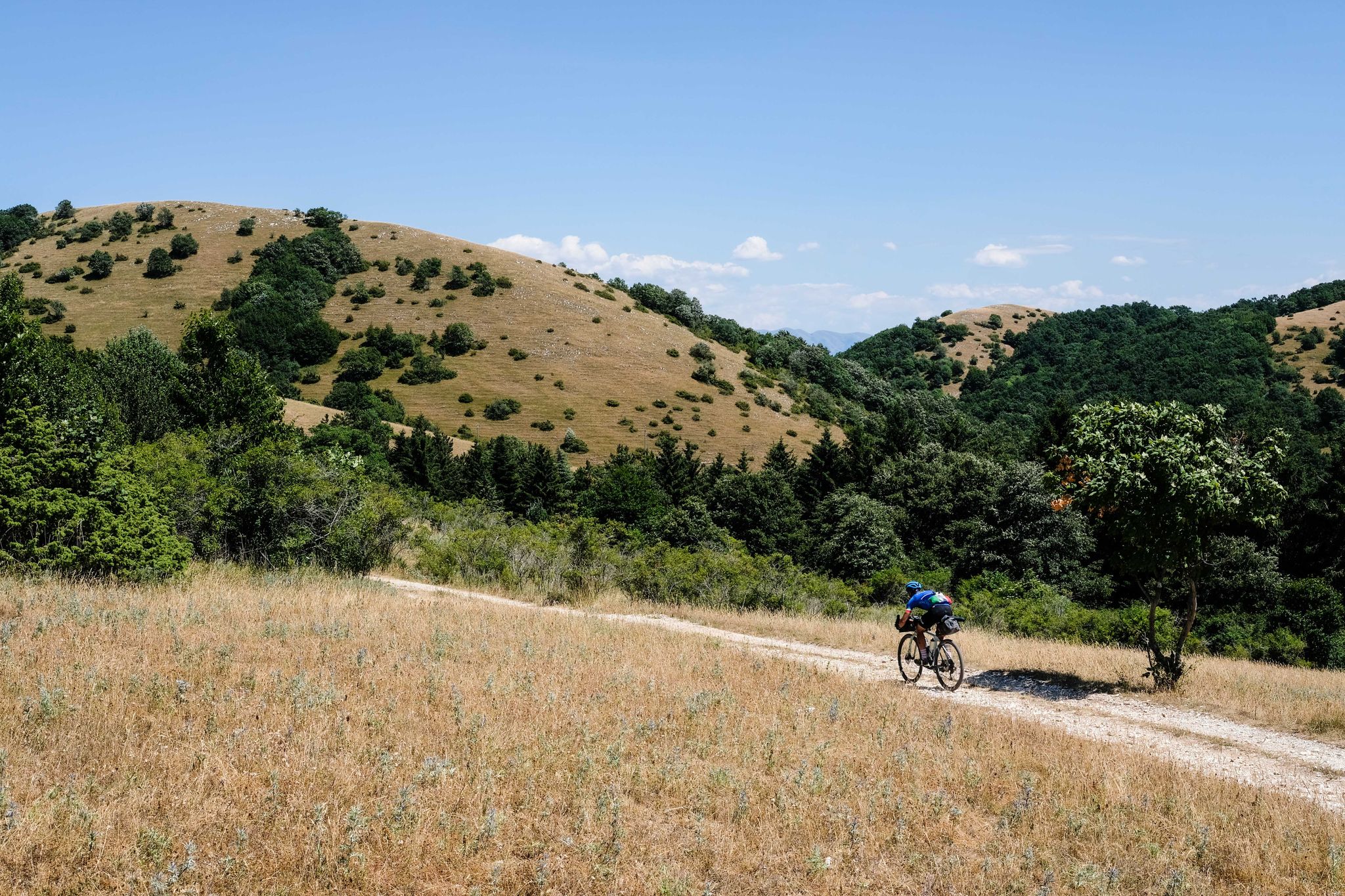
In the footsteps of Saint Francis of Assisi – gravel biking in Italy’s Umbria
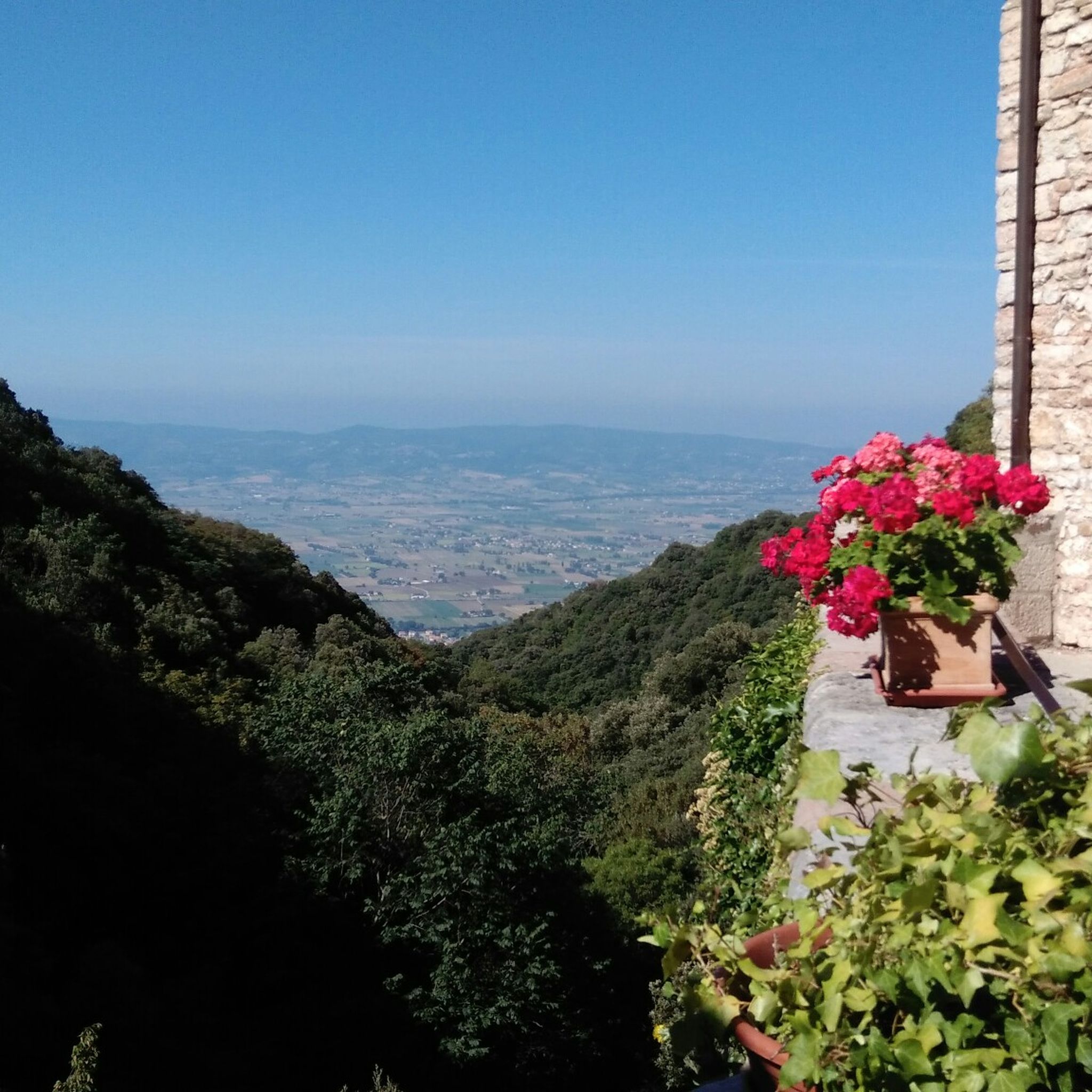
Hiking around Assisi
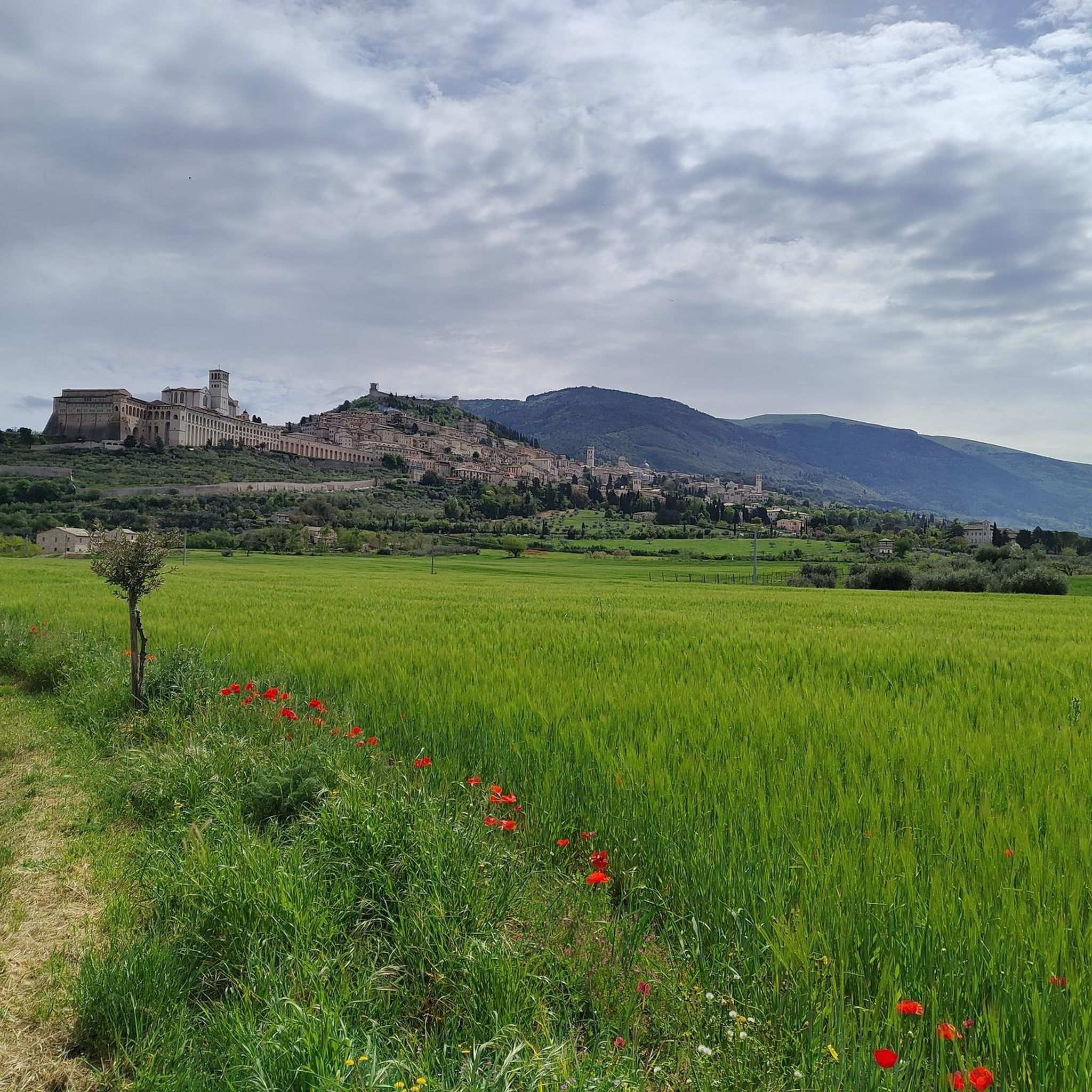
Running Trails around Assisi
Other adventures around Assisi


Tips from the Community

Bevagna / Region – Umbria / Province – Perugia (PG) The town, surrounded by a city wall with towers and gates, has an intact medieval structure (12th-13th centuries). In the upper part of the town, numerous Roman remains can still be seen: the ruins of a temple, the theater, and a thermal bath complex, of which a frigidarium with a magnificent black and white floor mosaic depicting marine figures from the 2nd century AD survives. The medieval town structure, with its squares and noble houses, developed over the Romanesque foundations: The magnificent Piazza Silvestri is home to the Palazzo dei Consoli (1270), which houses the Torti Theater, the Romanesque churches of San Silvestro and San Michele Arcangelo, both from the late 12th century, and the church of San Domenico e Giacomo (1291). Worth seeing is the Palazzo Comunale (late 18th century), which houses the historical archives, the library, and the art gallery. The Baroque churches of the Monastery of Santa Margherita and San Filippo are also very interesting. At the highest point in the town stands the Church of San Francesco (late 13th century). Next to the altar, one can see the stone on which St. Francis knelt when he preached to the flock of birds at Pian d'Arca. The 18th-century Palazzo Lepri houses the Museum of Bevagna, with works that tell the story of the town from pre-Roman times to the 18th century: archaeological finds from the ancient city of Mevania, medieval documents, and paintings by Dono Doni, Fantino, and Corrado Giaquinto. In the surrounding area, the Sanctuary of Madonna delle Grazie (late 16th century), the Sanctuary of Madonna della Valle, and the Monastery of Annunziata (11th century), formerly a defensive castle, rise up against the hillsides. Text / Source: Umbria Tourism.it contatti@umbriatourism.it https://www.umbriatourism.it/de/bevagna
14
1
Assisi With its world-famous city walls, declared a UNESCO World Heritage Site, Assisi promises visitors a wealth of culture and history. Shopping and long walks in the old town are also part of Assisi's itinerary. Near Perugia, the capital of Umbria, lies Assisi. The birthplace and place of work of St. Francis and St. Clare, it is a city worth visiting, and not only because of its famous children. Assisi's medieval city center and city walls are so well preserved that they were declared a UNESCO World Heritage Site in 2000. The city walls and the Basilica of San Francesco are therefore popular attractions for travelers. Founded by the Romans under the name Asisium, the terraced layout of the oldest Roman part of the city can still be seen today. The forum, an amphitheater, and the temples of the goddess Minerva (goddess of wisdom) are almost completely preserved. Text / Source: italien.de GmbH https://www.italien.de/staedte/assisi
13
0

It's hard to believe that 25 years ago, the earthquake here was so strong (two with magnitudes of 5.6 and 5.8) that 80,000 residents in the region were left homeless. The reconstruction of the old town was a magnificent feat.
0
0

For many visitors to Assisi, the more well-known destinations are probably the Holy Sepulchre Churches + of Saint Francis (see https://www.komoot.com/de-de/highlight/7134144 ) and + of Saint Clara (see https://www.komoot.com/de-de/highlight/2665025 ). However, these two churches are more recent (compared to this one). The ancient, venerable and original main church of the city and thus also of the diocese is of course the cathedral, the seat of the bishop. Francis and Clara also received the sacrament of baptism in this cathedral, dedicated to Saint RUFINO.
4
0

The town (Latin Asisium, older Italian/Tuscan Ascesi or Scesi, no longer in use today) was colonized by the Romans in 399 BC and built in terraces on a rocky ridge on the west side of Monte Subasio. It was previously an acropolis of the Umbrians. The city walls, the forum (or market square Piazza del Comune), a theater, an amphitheater and the Temple of Minerva, which was later converted into the church of Santa Maria sopra Minerva, can still be found from Roman times. In 328 the town was Christianized by the current patron saint Rufino di Assisi (San Rufino). In 545 the town was largely destroyed by the Ostrogoths, later came under the rule of the Lombards and was then placed under the control of the Dukes of Spoleto. In the 12th century, Assisi became a free commune and adopted a Ghibelline orientation, which was in contrast to the Guelph neighboring city of Perugia. Saint Francis of Assisi, who was born in Assisi in 1181/1182, was taken prisoner as a young man during these conflicts. In the 13th/14th centuries, the city expanded beyond the Roman city walls, and the walls were extended several times. In the late Middle Ages, Assisi was under the alternating rule of the popes, various condottieri, the dukes of Milan and Urbino, and finally returned to the Papal States in the 15th century. The city owes the fact that Assisi was saved from fighting and thus possibly from destruction in 1944 to the then commander of the German occupation troops, Colonel Valentin Müller, who was able to persuade the German commander in Italy, Field Marshal Albert Kesselring, to declare Assisi an undefended, open hospital city. At the same time, Bishop Giuseppe Placido Nicolini and the Franciscan Rufino Niccacci, with helpers from the Catholic Church, organized the hiding of politically and racially persecuted people, including many Jews, in monasteries and other church buildings.
3
0
Medieval historians refer to this place as that of a Roman temple dedicated to the Bona Mater. Saint Peter Damian wrote that on this site there was a basilica containing the remains of Saint Rufinus, dating back to 412, and that Bishop Hugo (11th century) was at odds with the people because he wanted to take it to the then Cathedral of Santa Maria Maggiore with the victory of the citizens of Assisi. In the feudal city, the church of San Rufino was the fulcrum of the "citadel of the canons" and the foundation of the current church probably dates back to the eighth century. It was rebuilt for the first time in a larger form by Hugo himself, who gave it the title of cathedral in 1036. In 1140 a new reconstruction was started, based on a project by Giovanni da Gubbio, which lasted several decades. In 1210, the community, which used the churchyard for meetings, hoped for a speedy completion, attributing to the unfinished building the bad luck that animated the fighting between the factions. In 1228, the high altar was consecrated by Pope Gregory IX and in 1253 the entire church was consecrated by Innocent IV. In 1571, the interior of the cathedral was renovated according to a design by Galeazzo Alessi and took on its current form.
6
0

In my opinion, together with Spello, the most beautiful village in the eastern Umbrian Valley
1
0

Beautiful city with ancient origins.
0
0
Frequently Asked Questions
What historical and spiritual sites can I explore in Assisi?
Assisi is rich in historical and spiritual landmarks. You can visit the iconic Basilica of Saint Francis, a UNESCO World Heritage site comprising two churches and the crypt of Saint Francis. Other significant religious sites include the Basilica of Santa Chiara, housing the tomb of Saint Clare, and the Cathedral of San Rufino, where both Saint Francis and Saint Clare were baptized. Don't miss the Basilica of Santa Maria degli Angeli, which encloses the Porziuncola chapel, central to Saint Francis's movement.
Are there any ancient Roman ruins to visit in Assisi?
Yes, Assisi has a fascinating Roman past. In the central Piazza del Comune, you'll find the remarkably preserved Temple of Minerva, dating back to the 1st century BC. Beneath the piazza, the Roman Forum and Archaeological Museum offer further insights into the city's ancient history with artifacts from the Roman forum.
Where can I find the best panoramic views of Assisi and the Umbrian valley?
For breathtaking panoramic views, head to the Rocca Maggiore, a grand medieval fortress perched atop a hill. Its strategic location offers expansive vistas of Assisi and the surrounding Umbrian valley. Additionally, the slopes of Mount Subasio, where Assisi is nestled, provide numerous scenic viewpoints of the countryside, olive groves, and ancient stone houses.
What natural areas are there for outdoor activities near Assisi?
Assisi is situated on the slopes of Mount Subasio, which is part of a regional park. This area offers a blend of nature and spirituality with hiking trails and stunning views. You can also explore Il Bosco di San Francesco, a special park spanning 64 hectares with woodlands and paths for contemplation. The Eremo delle Carceri, a serene hermitage in the mountains, is another natural retreat where Saint Francis meditated.
Are there hiking trails suitable for different skill levels around Assisi?
Yes, the Mount Subasio Regional Park offers a variety of hiking trails. For example, you can find moderate routes like the "From Assisi to the Eremo delle Carceri" loop, which is about 8.3 km. There are also easier options such as "The sanctuary city of Assisi – loop tour" (around 5.3 km) and more challenging ones like the "From Assisi to Monte Subasio – ring tour" (about 14.8 km). You can find more details and routes in the Hiking around Assisi guide.
What cycling routes are available near Assisi?
For cyclists, there are several routes around Assisi catering to different preferences. You can embark on a challenging 72 km "Assisi – loop tour" or a moderate 37 km loop from Assisi to the Historic Center of Bevagna. Mountain biking enthusiasts can explore trails like the 33.8 km "Parco Regionale del Monte Subasio - giro ad anello." Discover more options in the Cycling around Assisi and MTB Trails around Assisi guides.
Are there family-friendly attractions in Assisi?
Many of Assisi's attractions are suitable for families. The Basilica of Saint Francis and the Historic Center of Assisi are considered family-friendly, offering cultural and historical exploration. The Rocca Maggiore, with its panoramic views, can also be an engaging visit for children. Exploring the medieval streets and squares provides an immersive experience for all ages.
What is the best time of year to visit Assisi?
The best time to visit Assisi generally depends on your preferences. Spring (April-May) and autumn (September-October) offer pleasant weather for exploring the town and its natural surroundings, including hiking on Mount Subasio. These seasons avoid the peak summer heat and crowds, making them ideal for both cultural visits and outdoor activities.
Can I visit other charming towns or villages near Assisi as a day trip?
Absolutely. Assisi is well-located for exploring other beautiful Umbrian towns. The Historic Center of Bevagna, with its intact medieval structure and Roman remains, is a popular choice. Its narrow streets and fortified walls offer a journey back in time. The fan-out queries also suggest interest in Spello, another picturesque town worth considering for a day trip.
What do visitors enjoy most about Assisi?
Visitors frequently praise Assisi for its profound spiritual significance, stunning medieval architecture, and the serene beauty of its natural setting. The Basilica of Saint Francis is often highlighted as a masterpiece of art and history. Many appreciate the opportunity to wander through the well-preserved Historic Center of Assisi and enjoy the breathtaking views of the Umbrian valley from various points, such as the Rocca Maggiore.
Are there any dog-friendly places or walks in Assisi?
The Historic Center of Assisi is generally considered dog-friendly for walks, allowing you to explore the medieval streets with your canine companion. Many outdoor areas and parks around Mount Subasio also welcome dogs, offering opportunities for scenic walks and hikes. Always ensure your dog is on a leash and follow local regulations.
What is the significance of the Porziuncola chapel?
The Porziuncola chapel is a small, ancient chapel of immense spiritual importance. It is located within the grand Basilica of Santa Maria degli Angeli, just outside Assisi's historic center. This is where Saint Francis began his Franciscan movement, where Saint Clare received her habit, and where Saint Francis composed the Canticle of the Creatures. It's a deeply sacred place for followers of Saint Francis.
Most popular attractions around Assisi

Get inspired with the komoot mobile app


Explore more
Still not found the Highlight you’re looking for? See guides of the top attractions in other regions:
